Product-quality safety
Peptide Injection Site Reactions: Red Flags, Evidence, and Product-Quality Risks
A research-backed safety guide to peptide injection-site reactions, sterility and compounding risks, dosing-error signals, and how to read product-quality claims.

Peptide injection-site reactions are a common search concern because the same visible symptom can have very different explanations. A small temporary lump is not the same as an infection. Redness after an approved medicine is not the same evidence problem as redness after a research-market vial. A dosing mistake is not the same as a molecule-specific adverse effect.
This guide is not an injection manual and does not diagnose symptoms. It gives readers a safer evidence frame: how to separate expected local reactions, dosing or measurement errors, product-quality problems, sterility concerns, and medical red flags. That separation matters because peptide marketing often talks about the molecule while skipping the product.
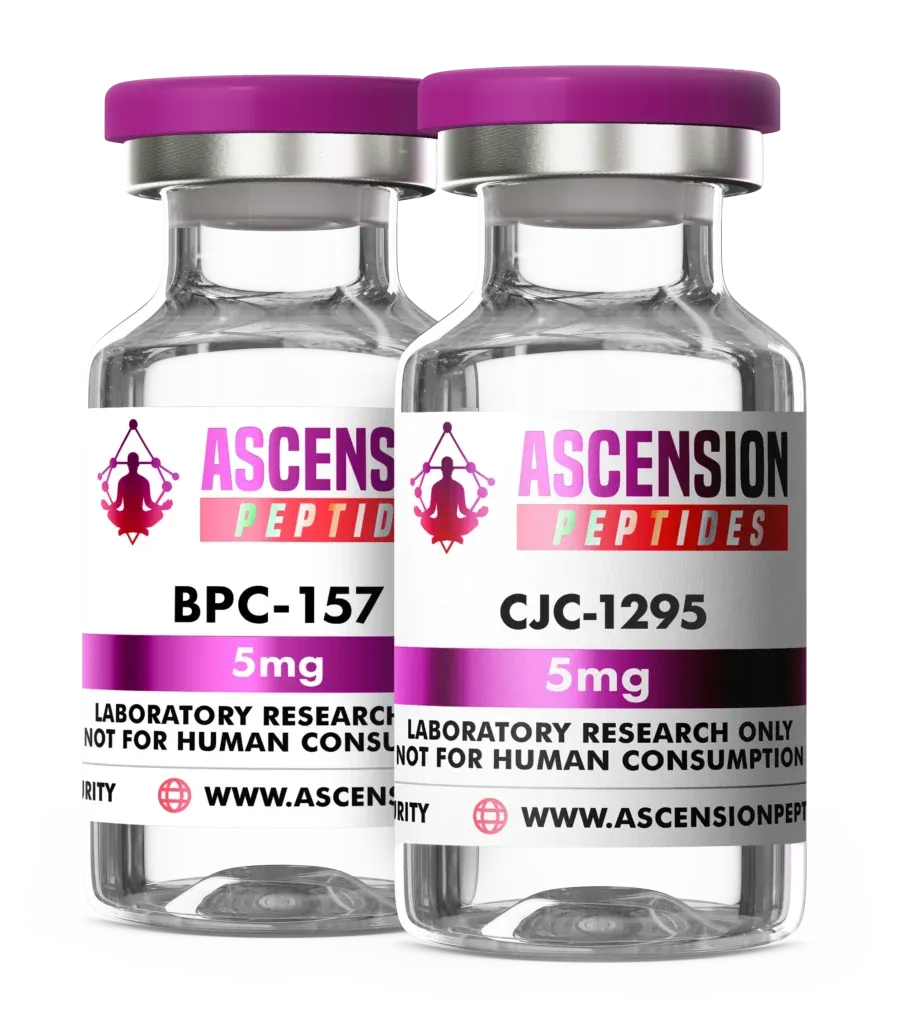
The clearest public examples come from regulated and compounded GLP-1 discussions, but the framework also applies to research-market peptides such as ipamorelin, BPC-157, CJC-1295, and TB-500. Evidence must stay tied to the exact product, route, formulation, and population.
Risk Map
| Category | Examples | How to read it |
|---|---|---|
| Expected local reaction | Temporary redness, itching, soreness, swelling, or a small lump after an injection. | Can occur with approved injectable drugs, but frequency and context depend on the product, route, population, and label. |
| Administration or measurement error | Wrong concentration, wrong volume, misunderstood units, repeated use of a product outside its intended context. | FDA and poison-center reports around compounded GLP-1 products show how dosing and preparation errors can create real harm. |
| Product-quality problem | Unknown sterility, endotoxin status, impurity profile, aggregation, identity, potency, or stability after storage. | This is a core concern for unapproved, compounded, or research-market peptides because clinical safety does not transfer from a name alone. |
| Infection or sterile inflammation | Spreading redness, warmth, drainage, fever, severe pain, abscess-like swelling, or persistent inflammatory nodules. | A local reaction is not enough to diagnose cause. Medical evaluation may be needed to distinguish infection, allergy, irritation, or sterile abscess. |
| Molecule or disease-specific risk | GI effects, glucose changes, allergy, immune response, contraindications, or warnings tied to a regulated product class. | Approved-product labels and trial data matter, but they do not validate unapproved copies, custom mixtures, or unrelated research peptides. |
What Counts As An Injection-Site Reaction?
In clinical literature and product labeling, injection-site reactions often include local findings such as pain, tenderness, redness, itching, swelling, bruising, irritation, or a small lump. Those words describe location and timing. They do not automatically identify the cause.
Cause can vary. A reaction may be related to the molecule, excipients, concentration, local irritation, injection technique, skin sensitivity, allergy, infection, formulation, repeated exposure, immune response, or product quality. For approved products, labels and clinical trials help define known risks. For unapproved or research-market products, that label-level evidence is usually absent.
The word "common" also needs context. In an approved-drug label, common usually comes from a defined clinical program, population, dose presentation, route, follow-up period, and adverse-event collection method. In a seller FAQ or forum thread, common may only mean many people are talking about it. Those are not equivalent evidence standards.
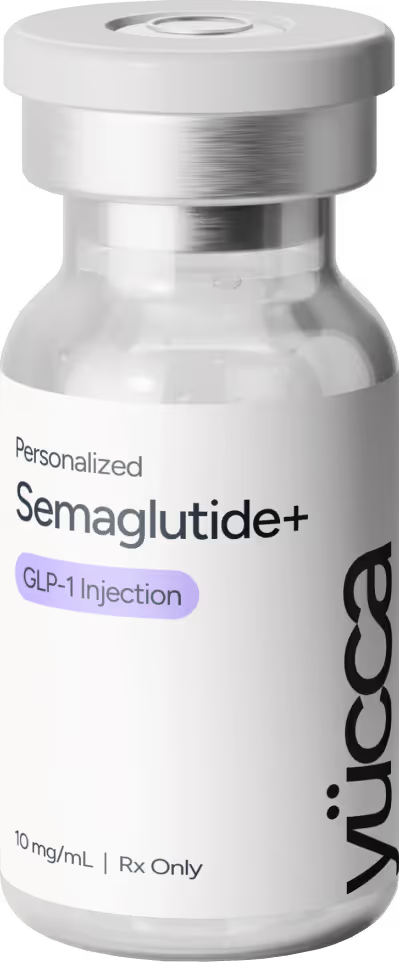
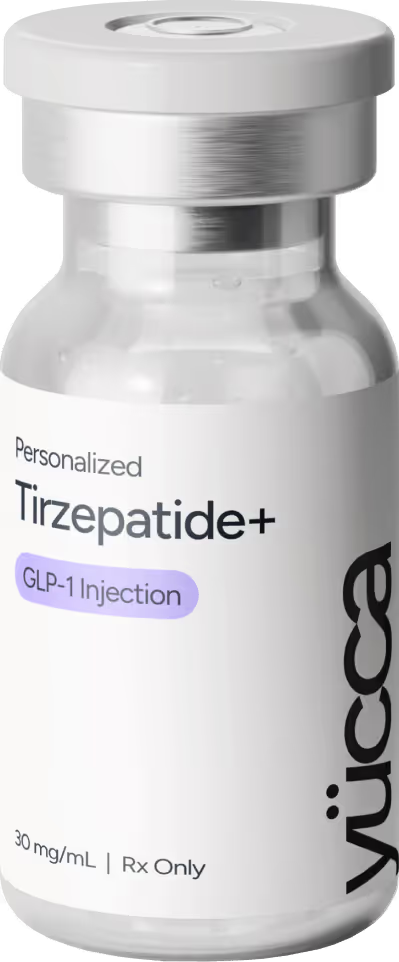
This distinction is why GLP-1 side-effect evidence reads differently from a claim about a research peptide. Approved semaglutide and tirzepatide products have regulator-reviewed labels, trial programs, and postmarketing systems. A look-alike or compounded product can share an active-ingredient name while differing in concentration, container, instructions, ingredients, sterility controls, and oversight.
The same point applies outside GLP-1s. FDA safety-risk materials list several peptide bulk drug substances in compounding contexts, including names that appear often in peptide-market discussion. The concern is not only whether a peptide has a plausible mechanism. It is whether the product has been characterized well enough for the route and use being claimed.
What The Evidence Can And Cannot Show
A PubMed-indexed review on pharmacy compounding describes broad risk categories such as contamination, strength variability, stability problems, and limited oversight compared with FDA-approved products. That source is not a peptide-only paper, but it is relevant because many peptide questions move quickly from a molecule name to a compounded or research-use product.
Recent GLP-1 literature gives more specific examples. A safety analysis of compounded GLP-1 receptor agonists used adverse-event reporting systems to examine reported outcomes involving compounded semaglutide and tirzepatide. Spontaneous reports cannot prove incidence or causality, but they can identify signals that deserve careful review.
That limitation cuts both ways. A small number of reports cannot prove that a product category is broadly harmful, but the absence of a large published dataset also cannot prove that it is low risk. For many compounded or research-market peptide products, readers are left with a thin evidence base, incomplete denominator data, and product-level uncertainty. That is why cautious interpretation is more defensible than either panic or reassurance.
A separate case series described semaglutide overdoses during GLP-1 receptor agonist initiation. The key lesson is not limited to one product. Measurement and preparation can be part of the risk. If users are asked to translate milligrams, milliliters, units, vial concentration, or syringe markings without a regulated product presentation, errors become easier.
PubMed-indexed semaglutide safety reviews and label-based GLP-1 discussions also show why approved-drug evidence has boundaries. Local injection reactions may be part of an approved product's safety profile, but that does not certify custom mixtures, compounded versions, research vials, or different salt forms. The compounded semaglutide and tirzepatide rules guide covers that regulatory issue in more detail.
There is also literature showing that sterile inflammatory reactions can occur in peptide-containing research settings. A PubMed-indexed HIV-peptide vaccine study reported sterile abscess concerns with a peptide vaccine in Montanide ISA-51. That is not evidence about consumer peptide vials, and it should not be used that way. It is a useful reminder that formulation, adjuvant, route, and immune context can dominate the local-reaction story.
Product Quality Is Part Of The Safety Question
Peptide discussions often focus on purity percentage. Purity can matter, but it is not the whole quality picture. Sterility, endotoxins, bioburden, identity, concentration, peptide-related impurities, aggregation, residual solvents, counterions, excipients, container closure, storage, shipping conditions, and beyond-use timing can all matter depending on route.
A certificate of analysis may help answer some identity or purity questions, but it is not a clinical safety document. It may not show sterility testing, endotoxin limits, validated stability after reconstitution, container integrity, route suitability, adverse-event data, or whether the tested batch matches the product in hand. A COA is one quality clue, not a substitute for a regulator-reviewed finished product.
FDA's page on unapproved GLP-1 drugs warns that compounded products are not FDA-approved and may carry risks related to dosing errors, salt forms, and other product differences. FDA's dosing-error alert around compounded injectable semaglutide products gives a practical example of how vial-based products and variable syringe-unit instructions can contribute to mistakes.
FDA's significant-safety-risk page is also relevant to non-GLP-1 peptides. It identifies concerns such as immunogenicity, aggregation, peptide-related impurities, active-ingredient characterization, and limited route-specific safety information for certain nominated bulk drug substances. That is why the category framework in approved, investigational, compounded, and research peptides is not academic. It changes the safety question.
The reconstitution calculator and reconstitution math guide can help readers understand concentration arithmetic. They cannot make a product sterile, verify a certificate of analysis, detect endotoxin, identify an impurity, diagnose a skin reaction, or decide whether a product is appropriate for any person.
Red Flags That Need Medical Context
A search result cannot tell whether a local reaction is benign irritation, allergy, infection, sterile abscess, dosing error, or a product-quality problem. Symptoms that are spreading, severe, persistent, hot, draining, associated with fever, associated with shortness of breath, associated with facial or throat swelling, or tied to severe systemic symptoms need qualified medical evaluation.
Timing can help clinicians, but timing alone is not diagnosis. A reaction that appears soon after use may involve irritation, allergy, formulation, or technique. A reaction that worsens over days may raise different concerns. A persistent nodule may have another explanation. The responsible move is not to assign cause from a search page. It is to preserve the product information, avoid guessing from anecdotes, and get appropriate care when symptoms warrant it.
The point is not to make every small local reaction sound catastrophic. It is to avoid the opposite mistake: treating every reaction as normal because a seller, forum thread, or anecdote says lumps happen. A reaction after a regulated medicine belongs in one evidence context. A reaction after an unapproved or poorly characterized product belongs in another.
Readers should also separate urgent symptom questions from long-term evidence questions. "Should this symptom be evaluated?" is a medical-safety question. "Does this peptide have human evidence?" is a research-literacy question. "Can this product be trusted?" is a quality and regulatory question. One answer should not be used to shortcut the others.
How To Read Injection-Site Claims
Start with product identity. Is the source discussing an FDA-approved finished drug, a compounded product, a research-use vial, a custom mixture, or an anecdote? If the source does not name the category, it is missing the main risk variable.
Next, ask what is actually known about route-specific safety. A peptide studied topically, orally, ophthalmically, intravenously, or in animals should not be assumed to have the same local reaction profile when used another way. Route transfer is one of the fastest ways marketing outruns evidence.
Third, watch for math confidence. A source may explain units, milligrams, micrograms, or concentration correctly and still have no evidence that the product is sterile, accurately filled, stable, or clinically appropriate. Measurement literacy is necessary, but it is not enough.
Also look for what the source leaves out. Does it discuss adverse-event reporting, sterility, endotoxins, route-specific data, approved-product labels, and the difference between clinical-trial materials and market products? Does it acknowledge that forum discussion is discovery, not proof? A source that cannot answer those questions should not be treated as a safety authority.
Finally, be cautious with anecdote-driven reassurance. Forum reports can reveal what people are worried about, but they cannot establish incidence, causality, product identity, sterility, dose accuracy, or safety. A more responsible claim says: local reactions can happen in injectable drug contexts, but symptom severity, product category, route, and medical context determine what the reaction means.
References
- Potential risks of pharmacy compounding, Drugs in R&D / PubMed.
- Safety analysis of compounded glucagon-like peptide-1 receptor agonists, PubMed.
- Compounded Semaglutide and Tirzepatide Products Use Unique Formulations Not Available in FDA-Approved Products, PubMed.
- Challenges with Glucagon-Like Peptide-1 Receptor Agonist Initiation: A Case Series of Semaglutide Overdoses, PubMed.
- Safety of Semaglutide, Frontiers in Endocrinology / PubMed.
- A novel, widespread impurity in mass-compounded tirzepatide/B12 products, PubMed.
- Immunization with HIV-derived peptides in Montanide ISA-51 is associated with sterile abscesses, Clinical and Vaccine Immunology / PubMed.
- FDA Concerns with Unapproved GLP-1 Drugs Used for Weight Loss, U.S. Food and Drug Administration.
- FDA alerts health care providers, compounders, and patients of dosing errors associated with compounded injectable semaglutide products, U.S. Food and Drug Administration.
- Certain Bulk Drug Substances for Use in Compounding that May Present Significant Safety Risks, U.S. Food and Drug Administration.
- Injection Safety, U.S. Centers for Disease Control and Prevention.
Disclaimer
This page is educational and is not medical advice. It does not provide injection instructions, dosing, reconstitution instructions, diagnosis, treatment, compounding guidance, sourcing advice, purchasing advice, or individualized recommendations for peptide products. Injection-site symptoms, suspected infection, allergic symptoms, severe or spreading reactions, medication errors, and product-quality concerns should be handled with qualified healthcare professionals and current regulator-reviewed information.
Next steps
Continue with the closest guide, peptide profile, or research tool.