Profile snapshot
Quick facts
These fields are educational context only. Typical dose information is not dosing guidance.
- Type
- Research peptide; routes vary in studies
- Half-life
- Not well established in humans
- Typical dose
- No approved or standardized dose; study context varies.
- Regulatory status
- Not an FDA-approved medication
Current status
BPC-157 is not an FDA-approved consumer medicine. As of May 23, 2026, FDA compounding materials still flag limited safety information and peptide-quality concerns, and WADA lists BPC-157 as prohibited under its non-approved substances category.
Plain-English summary
Overview
BPC-157, also called Body Protection Compound 157 or pentadecapeptide BPC-157, is a synthetic 15-amino-acid peptide discussed mostly in tissue-repair, gastrointestinal, vascular, and sports-medicine research. It is commonly framed as a stable fragment related to a gastric protective protein sequence, but the important practical point is simpler: it remains an investigational research compound rather than an approved public medication. [1][4]
The online reputation of BPC-157 is much stronger than the human clinical evidence behind it. A 2025 sports-medicine systematic review found mostly preclinical studies and only one small clinical musculoskeletal study, so claims about routine human healing, recovery, or pain benefits should be treated as unproven. [4]
- Evidence base: broad animal and cell research, very limited human data. [4][5][6][7]
- Regulatory context: FDA materials identify safety-information and peptide-quality concerns for compounded BPC-157-related products. [1][2]
- Sports context: WADA lists BPC-157 as prohibited at all times for tested athletes. [8]
Biology context
Mechanism / Biology Context
BPC-157 is often discussed through vascular and repair biology. In preclinical and cell-based work, researchers have studied nitric-oxide signaling, endothelial function, angiogenesis, inflammatory signaling, collagen-related repair, and growth-factor pathways. [4][5]
A Scientific Reports study in rat aorta and endothelial-cell models reported endothelium-dependent vasodilation and nitric-oxide generation linked to Src-Caveolin-1-eNOS signaling. That helps explain why BPC-157 is discussed as a vascular-repair signal, but it does not establish clinical benefit in injured humans. [5]
The main caution is translation. A mechanism that looks useful in a dish, rat, dog, or rabbit can fail in humans or reveal safety problems only after larger, controlled trials. Mechanistic plausibility should not be treated as proof of treatment effect. [4][6][7]
What has actually been studied
Evidence / Human Data
The strongest body of BPC-157 literature is preclinical. The 2025 orthopaedic sports-medicine systematic review identified 36 included studies, with 35 preclinical studies and one clinical study. The authors described promising musculoskeletal findings in animal models, while also emphasizing the lack of meaningful clinical safety data. [4]
A small 2025 pilot study evaluated intravenous BPC-157 safety in two healthy adults and reported no immediate adverse events or meaningful short-term biomarker changes. That is useful as an early signal, but a two-person pilot cannot detect uncommon adverse events, long-term effects, or effectiveness. [7]
A Phase 2 trial for acute hamstring muscle strain is registered on ClinicalTrials.gov and was listed as recruiting when accessed on May 23, 2026. Until results are posted and peer reviewed, it should be treated as an active research question, not established evidence. [3]
Separating marketing from evidence
Claimed Benefits vs Evidence
Common claims include faster tendon recovery, ligament healing, muscle repair, joint pain improvement, gut lining support, and reduced inflammation. The reasonable summary is that many of these ideas have preclinical support, but the human evidence is too thin to turn them into confident treatment claims. [4]
For musculoskeletal injuries, the animal literature is the most developed. Preclinical models have reported improvements in structural, functional, or biomechanical healing outcomes, but those results do not answer whether BPC-157 improves recovery time, pain, reinjury risk, or function in real-world patients. [4][6]
For gastrointestinal and wound-healing claims, older and review literature describes protective and repair effects across animal models. That makes BPC-157 scientifically interesting, but it still leaves the central clinical questions unresolved: who benefits, by how much, by which route, and with what safety tradeoffs. [4][6]
- Better-supported statement: BPC-157 has preclinical tissue-repair and vascular-signaling data. [4][5][6]
- Not established: BPC-157 reliably heals human injuries or replaces evidence-based rehab, surgery, medication, or clinician-guided care. [4][7]
- Not appropriate for this site: dosing protocols, cycles, stacking guidance, or purchase recommendations.
Known unknowns
Safety Context
FDA has flagged compounded BPC-157 for potential immunogenicity with some routes, peptide-related impurities, and active-ingredient characterization challenges. FDA also states that it has no, or only limited, safety-related information for proposed routes of administration and therefore lacks enough information to know whether it would cause harm in humans. [1]
Preclinical toxicology work in animals has reported tolerability across several species, but animal safety studies do not replace adequate human safety trials. They are an early research layer, not a clinical green light. [6][7]
Theoretical risks deserve restraint rather than certainty. Because BPC-157 research often involves angiogenesis and repair signaling, long-term questions around abnormal tissue growth, cancer biology, vascular effects, immune reactions, contaminants, and product variability remain unresolved. [1][4][5]
Athletes have an additional compliance issue: the 2026 WADA Prohibited List includes BPC-157 under non-approved substances, meaning tested athletes should treat it as prohibited regardless of wellness or recovery claims online. [8]
No public product label
Storage and Handling Limits
There is no FDA-approved BPC-157 public prescribing label with consumer storage, preparation, route, or beyond-use instructions. Storage instructions from sellers should not be treated as evidence of product quality, legality, sterility, or clinical appropriateness. [1][2]
For research settings, handling belongs to the study protocol, institutional safety procedures, chain-of-custody records, and qualified lab or pharmacy controls. This profile should not be used to infer reconstitution steps, injection technique, storage time, or administration route. [1][3]
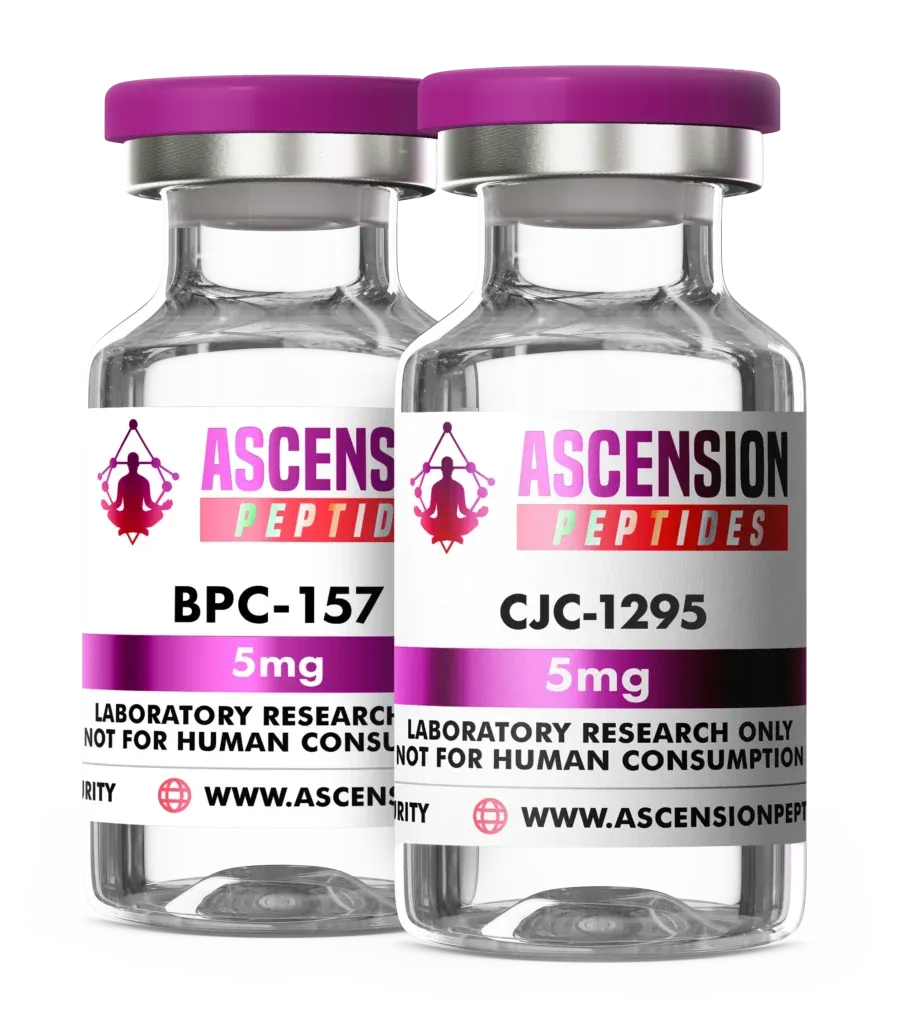
FDA specifically highlights peptide-related impurities and active pharmaceutical ingredient characterization as concerns. That matters because a vial labeled BPC-157 may not prove identity, purity, concentration, sterility, or stability without appropriate regulated testing. [1]
FAQ
Is BPC-157 FDA approved?
No FDA-approved consumer medicine label for BPC-157 is identified in the FDA materials cited here. FDA compounding materials also flag limited safety information and peptide-quality concerns for BPC-157-related compounded products. [1][2]
Does BPC-157 have human evidence?
Human evidence is very limited. A 2025 systematic review found nearly all musculoskeletal evidence was preclinical, and a tiny 2025 pilot safety study included only two adults. A registered Phase 2 hamstring trial was recruiting as of May 23, 2026, but results were not yet available. [3][4][7]
What is BPC-157 supposed to do?
Most claims center on tissue repair, tendon or ligament healing, muscle injury, gut protection, vascular signaling, and inflammation. These ideas are mainly supported by preclinical research, not by strong human outcome trials. [4][5][6]
Is BPC-157 allowed in tested sport?
No. The 2026 WADA Prohibited List includes BPC-157 under the S0 non-approved substances category, which applies at all times unless the relevant anti-doping rules say otherwise. [8]
References
-
[1] Certain Bulk Drug Substances for Use in Compounding that May Present Significant Safety Risks
U.S. Food and Drug Administration. Content current April 22, 2026; accessed May 23, 2026.
https://www.fda.gov/drugs/human-drug-compounding/certain-bulk-drug-substances-use-compounding-may-present-significant-safety-risks -
[2] Bulk Drug Substances Nominated for Use in Compounding Under Section 503A of the Federal Food, Drug, and Cosmetic Act
U.S. Food and Drug Administration. Updated May 14, 2026; accessed May 23, 2026.
https://www.fda.gov/media/94155/download -
[3] BPC 157 for Acute Hamstring Muscle Strain Repair: NCT07437547
ClinicalTrials.gov. Record accessed May 23, 2026.
https://clinicaltrials.gov/study/NCT07437547 -
[4] Emerging Use of BPC-157 in Orthopaedic Sports Medicine: A Systematic Review
HSS Journal. July 31, 2025.
https://journals.sagepub.com/doi/10.1177/15563316251355551 -
[5] Modulatory effects of BPC 157 on vasomotor tone and the activation of Src-Caveolin-1-endothelial nitric oxide synthase pathway
Scientific Reports. October 13, 2020.
https://www.nature.com/articles/s41598-020-74022-y -
[6] Preclinical safety evaluation of body protective compound-157, a potential drug for treating various wounds
Regulatory Toxicology and Pharmacology. July 2020.
https://www.sciencedirect.com/science/article/pii/S027323002030091X -
[7] Safety of Intravenous Infusion of BPC157 in Humans: A Pilot Study
Alternative Therapies in Health and Medicine / PubMed. 2025; accessed May 23, 2026.
https://pubmed.ncbi.nlm.nih.gov/40131143/ -
[8] The 2026 Prohibited List
World Anti-Doping Agency. Valid January 1, 2026; accessed May 23, 2026.
https://www.wada-ama.org/sites/default/files/2025-09/2026list_en_final_clean_september_2025.pdf