Evidence ranking and buyer guide
Best Peptides for Muscle Growth in 2026: Evidence Ranking and Buyer Guide
A buyer-focused ranking of muscle growth peptides that separates human hypertrophy outcomes from GH and IGF-1 biomarkers, with current Ascension prices, COA checks, and research-use limits.

Quick Answer: Which Peptides Have Human Muscle-Growth Evidence?
No peptide on the common bodybuilding market has established FDA-reviewed efficacy for increasing muscle size or strength in healthy adults. Tesamorelin has the closest direct human body-composition evidence, including a secondary CT analysis that found small changes in selected trunk muscles. The participants had HIV and abdominal obesity, and the analysis focused on tesamorelin responders. That is not a general bodybuilding trial.
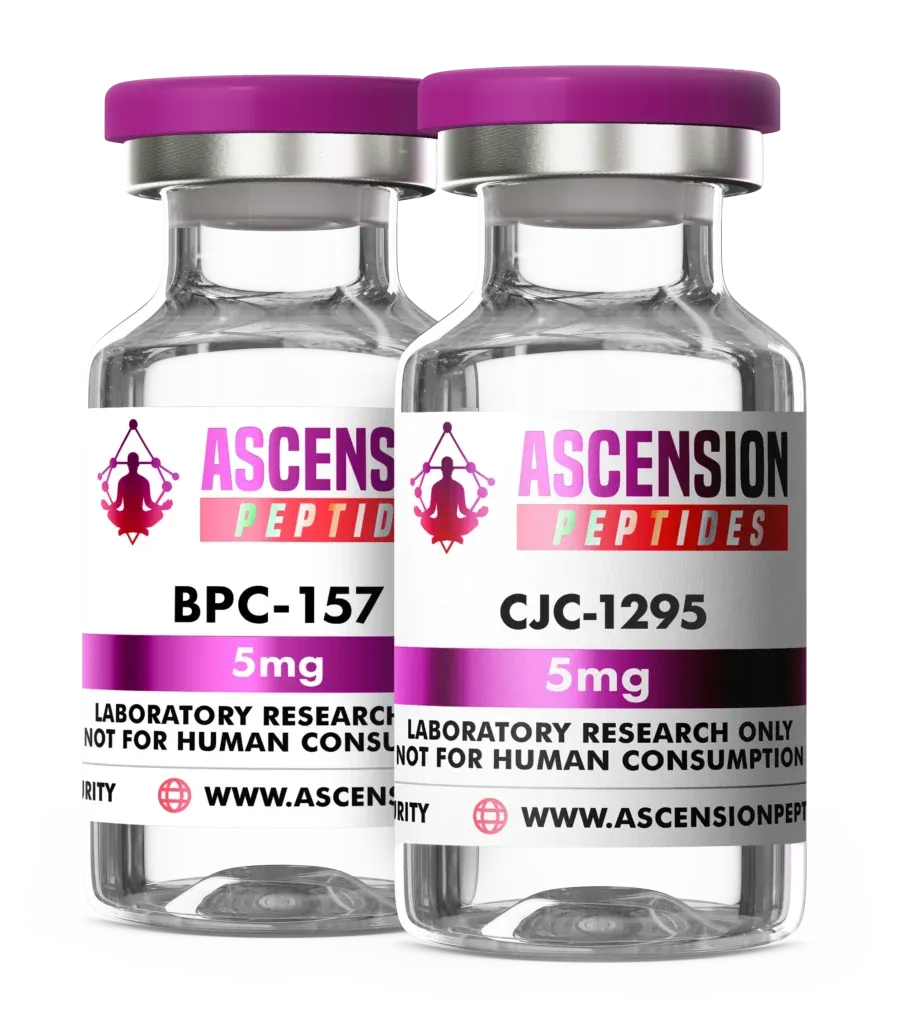
CJC-1295 and ipamorelin rank next because each has human pharmacology data showing an effect on the GH axis. Those trials measured hormones, not hypertrophy. The distinction matters because systematic reviews of growth hormone in healthy young adults found increases in lean mass without consistent gains in strength or aerobic capacity.
For qualified laboratory procurement, Ascension Peptides currently lists CJC-1295 no DAC, ipamorelin, tesamorelin, and sermorelin with product-level batch records. Apply code PEPTIDESDE, verify the live total, and match the exact vial to its current report. These are research materials, not approved muscle-building medicines.
Qualified research procurement
Ascension GH-axis research catalog
Current batch records and code PEPTIDESDE
Best Peptides for Muscle Growth, Ranked by Evidence
This ranking measures how close the available human evidence comes to the muscle-growth claim. It is not a recommendation to use any compound. A direct change in muscle area ranks above a hormone response, while animal biology and product-adjacent studies rank lower. Regulatory status, study population, and whether the tested material matches the product being sold are part of the judgment.
| Rank | Compound | What humans show | What is missing | Buyer verdict |
|---|---|---|---|---|
| 1 | Tesamorelin | Randomized body-composition trials and an exploratory muscle CT analysis in adults with HIV and abdominal obesity | No established hypertrophy or strength trial in healthy lifters | Closest human outcome data, but only for a narrow clinical population |
| 2 | CJC-1295 | Small healthy-adult trials measured sustained GH and IGF-1 elevation | No direct muscle size, strength, or training-performance outcome | Useful for GH-axis research, not proven muscle growth |
| 3 | Ipamorelin | Dose-escalation pharmacology showed a short GH-release episode in healthy men | No controlled hypertrophy, lean-mass, or strength program | Human biomarker evidence only |
| 4 | Sermorelin | Established GHRH receptor biology and historical clinical use for GH evaluation | No current muscle-building indication or convincing healthy-adult hypertrophy trial | A pathway comparator, not an outcome-backed bodybuilding peptide |
| 5 | IGF-1 LR3 | No established human efficacy trial for the online research compound | Clinical mecasermin evidence cannot be transferred to LR3 | Mechanistic and preclinical research, with a large identity gap |
| 6 | Follistatin-344 | Human myostatin-pathway studies used gene therapy or distinct biologic drugs | An online FS344 vial is not AAV gene therapy or ACE-031 | Compelling pathway, poor product-level extrapolation |
A ranking based on market popularity would put the CJC-1295 and ipamorelin combination first. A ranking based on direct human muscle outcomes cannot do that. There is human evidence that the two compounds interact with different parts of GH signaling, but no controlled trial showing that the retail combination adds a defined amount of muscle or strength.
Hormone Levels, Lean Mass, Muscle Size, and Strength Are Different Outcomes
Peptide marketing often moves through a chain of assumptions: a compound raises GH, GH can raise IGF-1, IGF-1 participates in muscle biology, therefore the compound builds muscle. Each step is biologically plausible, but the final claim needs an outcome trial. The same problem appears when a change in DXA lean mass is described as pure new muscle.
| Reported measure | What it supports | What it does not establish |
|---|---|---|
| GH or IGF-1 concentration | The endocrine pathway responded | Muscle fibers grew or strength improved |
| DXA lean mass | Non-fat mass changed | All change was contractile skeletal muscle; water and other lean tissue contribute |
| CT or MRI muscle area | A defined muscle region changed in size or density | Whole-body hypertrophy or improved performance |
| Strength testing | Force output changed under the test conditions | Every sport or training outcome improved |
| Recovery or soreness report | A subjective or functional recovery signal may exist | New muscle tissue was gained |
The strongest caution comes from research on growth hormone itself. A 2008 systematic review found an average 2.1 kg increase in lean body mass in healthy young participants, but strength and exercise capacity did not improve. A later meta-analysis reached a similar conclusion: body composition changed, while muscle strength and aerobic capacity did not. Fluid retention also contributes to apparent lean mass and was a recurring adverse effect.
1. Tesamorelin: Closest Human Outcome Data, Narrowest Valid Claim
Tesamorelin is a GHRH analogue with a real FDA-approved drug, EGRIFTA WR, for reducing excess abdominal fat in adults with HIV and lipodystrophy. Its pivotal trials measured visceral adipose tissue, waist measures, IGF-1, glucose variables, and other body-composition outcomes. The label specifically says it is not indicated for weight-loss management. It also has no muscle-growth or athletic-performance indication.
An exploratory analysis of CT scans from prior randomized trials is why tesamorelin leads this evidence ranking. Among participants with HIV and abdominal obesity, tesamorelin responders had increases in density and lean area across selected trunk muscles compared with placebo. The reported area changes were small, responder selection limits the inference, and the study did not establish improved strength, training capacity, or hypertrophy in healthy lifters.
This is a classic population-bound result. It can support research questions about GHRH signaling, visceral fat, muscle fat, and trunk composition in a specific metabolic setting. It cannot support a promise that a tesamorelin research vial will build muscle in a healthy buyer. Our tesamorelin visceral-fat review covers the approved indication and label warnings in more detail.
2 and 3. CJC-1295 and Ipamorelin: Human Hormone Data, No Hypertrophy Trial
CJC-1295 is a modified GHRH analogue. In two small randomized studies in healthy adults, the long-acting DAC form produced sustained, dose-dependent increases in mean GH and IGF-1. A later analysis in 11 men examined serum protein changes after exposure. Neither publication measured muscle thickness, MRI muscle volume, strength progression, or resistance-training outcomes.
The product distinction is important. Ascension's current listing is CJC-1295 no DAC, while the best-known healthy-adult paper studied long-acting CJC-1295 with a drug affinity complex. The forms differ in duration and exposure. Treating the DAC pharmacokinetic result as direct proof for a no-DAC vial is already an extrapolation before the muscle-growth claim is considered. See the CJC-1295 DAC vs no-DAC guide for that identity problem.
Ipamorelin is a ghrelin-receptor agonist and GH secretagogue. Its clearest published human study used 15-minute intravenous infusions in healthy male volunteers and modeled the resulting GH pulse. That demonstrates pharmacology, not a consumer protocol and not muscle gain. FDA's current compounding-risk page also says ipamorelin may present immunogenicity and impurity-characterization concerns and that the agency lacks enough information to determine harm for certain injectable routes.
Combining CJC-1295 and ipamorelin is mechanistically attractive because GHRH-receptor and ghrelin-receptor signals can converge on GH release. The market often turns that rationale into a guaranteed stack. No verified human trial in healthy lifters establishes the combination's effect on muscle size, strength, recovery, or long-term safety. Our CJC-1295 and ipamorelin stack review keeps the synergy claim within the data.
4. Sermorelin: A Useful GHRH Comparator, Not a Modern Muscle Drug
Sermorelin contains the biologically active 1-29 fragment of human GHRH. It has a coherent role in endocrine research because it stimulates pituitary GH release through the GHRH receptor. Historical diagnostic and pediatric uses are often cited in wellness marketing, but they do not establish a current FDA-approved muscle-building indication.
Sermorelin is best treated as a pathway control or comparator. A laboratory may use it to contrast shorter GHRH signaling with modified analogues such as CJC-1295 or tesamorelin. Buyers should not accept claims that a shorter or more physiologic pulse automatically means safer long-term use, better sleep, more recovery, or measurable hypertrophy. Those outcomes need their own controlled evidence.
5 and 6. IGF-1 LR3 and Follistatin-344: Direct Pathways, Indirect Product Evidence
IGF-1 LR3 is marketed as a direct anabolic peptide because it modifies the IGF-1 sequence to reduce binding-protein interactions. The biological rationale is stronger than the product-level human evidence. There is no established clinical efficacy program showing that online LR3 material increases muscle or strength in healthy adults. It is also not interchangeable with mecasermin, the regulated recombinant human IGF-1 drug used for narrow pediatric indications. The IGF-1 LR3 vs mecasermin review explains why prescription evidence cannot be borrowed by name.
Myostatin inhibition has more direct human muscle data, but the products studied matter. A single dose of ACE-031, a soluble activin receptor type IIB biologic, increased DXA lean mass and thigh muscle volume in healthy postmenopausal women. A six-person Becker muscular dystrophy trial delivered the FS344 gene through an adeno-associated viral vector into the quadriceps. Those interventions are not equivalent to a lyophilized product labeled follistatin-344.
The correct conclusion is not that the myostatin pathway is fictional. It is that a valid pathway and a positive trial do not authenticate a different retail molecule, formulation, exposure, or manufacturing process. A buyer page that cites the gene-therapy study as proof for a vial skips the most important translational step.
BPC-157, TB-500, and MK-677 Do Not Belong in the Same Evidence Bucket
BPC-157 and TB-500 appear in muscle-growth lists because recovery is commercially adjacent to training. Neither has convincing human evidence for increasing skeletal muscle mass or strength. Animal tissue-repair findings, cell migration, reduced soreness, and return-to-training anecdotes are not direct hypertrophy outcomes. The Wolverine Stack review covers the recovery evidence boundary.
MK-677, or ibutamoren, is not a peptide. It is an orally active, non-peptide ghrelin-receptor agonist. It belongs in a broader GH-secretagogue comparison, but labeling it a peptide makes an already confusing market less precise. Collagen peptides are peptides in the nutritional sense, yet they are also a separate category from injectable signaling compounds and research chemicals.
A Buyer Framework for Muscle-Growth Peptide Research
Buyer intent does not remove the need for evidence discipline. The first question is not which vial has the strongest marketing claim. It is whether the planned experiment studies GH release, IGF signaling, body composition, muscle cells, animal muscle, or a human outcome. That decision determines the relevant molecule, comparator, assay, controls, and documentation.
Define the experimental endpoint
A GH-release assay, cell-signaling experiment, animal hypertrophy model, and human muscle outcome study need different materials and cannot answer the same question.
Match the exact molecule
CJC-1295 with DAC and no DAC are not interchangeable. Mecasermin is not IGF-1 LR3. Gene-delivered FS344 is not a retail follistatin vial.
Match the vial to the report
Confirm compound, amount, lot number, sample identifier, test date, laboratory, method, and result. A report for a different amount or older batch is supporting context only.
Separate purity from suitability
HPLC purity and mass confirmation do not establish sterility, endotoxin control, fill accuracy, stability, clinical efficacy, or suitability for administration.
Price the delivered order
Enter PEPTIDESDE, then check the final subtotal, shipping, insurance, tax, amount per vial, and whether the matching batch report is still posted.
Reject protocol marketing
A research seller should not convert weak evidence into a human dose, cycle, stack, guaranteed timeline, or treatment claim.
Use the peptide vendor COA checklist to connect a report to a delivered lot, and read the COA red-flags guide before treating a purity percentage as complete quality control. The reconstitution calculator performs concentration arithmetic for a defined laboratory plan; it does not recommend a human dose, route, diluent, cycle, or stack.
Current Ascension Muscle-Research Listings
We checked the four relevant Ascension product pages on July 13, 2026. Each page displayed a current price, vial amount, research-use boundary, and at least one named third-party laboratory record. Reports are batch-specific. A posted report supports only the tested sample and listed methods, not every vial, future lot, or unmeasured quality attribute.
| Listing | Amount | Checked price | Batch record snapshot | Product page |
|---|---|---|---|---|
| Ipamorelin | 5 mg | $44 | MZ Biolabs and Kovera records displayed | Check listing |
| CJC-1295 no DAC | 5 mg | $50 | June 2026 Kovera record plus MZ records displayed | Check listing |
| Tesamorelin | 5 mg | $50 | February 2026 MZ Biolabs record displayed | Check listing |
| Sermorelin | 10 mg | $72 | June 2026 Kovera record plus MZ record displayed | Check listing |
Apply code PEPTIDESDE and verify the live discount before payment. Compare the final delivered total and amount per vial, not the crossed-out list price alone. Then open the current certificate and confirm that the compound, amount, and batch match what is being sold. The best peptide vendors comparison explains how Ascension's documentation and prices compare with other research suppliers.
Safety, Regulatory Limits, and Tested-Sport Rules
FDA lists CJC-1295 and ipamorelin among bulk substances that may present significant safety risks in compounding. The agency cites possible immunogenicity, aggregation, peptide-related impurities, characterization complexity, and limited route-specific safety information. For CJC-1295, FDA also notes serious adverse events including increased heart rate and a systemic vasodilatory reaction in limited clinical data.
The approved tesamorelin label warns about elevated IGF-1, fluid retention, glucose intolerance or diabetes, hypersensitivity, injection-site reactions, and malignancy-related concerns. The finished EGRIFTA product has formulation-specific instructions and controls that should not be assigned to an RUO vial. A research listing is not a generic prescription product.
Athletes subject to testing should check the current World Anti-Doping Agency list before any exposure. The 2026 list prohibits growth hormone, its releasing factors and analogues, GH secretagogues, and related growth factors under the applicable categories. A product being easy to order, labeled research use only, or absent from a prescription database does not make it acceptable in tested sport.
FAQ
What is the best peptide for muscle growth in 2026?
No peptide in this comparison has established FDA-reviewed efficacy for building muscle in healthy adults. Tesamorelin has the closest human muscle and body-composition outcomes, but the studies involved adults with HIV and abdominal obesity and do not establish a bodybuilding indication. CJC-1295 and ipamorelin have human GH-axis biomarker evidence, not direct hypertrophy evidence.
Do CJC-1295 and ipamorelin build muscle?
Human studies show that CJC-1295 can raise GH and IGF-1 and that ipamorelin can trigger GH release. Controlled trials have not established that either compound, alone or together, increases muscle size or strength in healthy resistance-trained adults. The combination is popular in the market, but popularity is not an efficacy endpoint.
Is tesamorelin a muscle-building peptide?
Tesamorelin is FDA approved to reduce excess abdominal fat in adults with HIV and lipodystrophy, not to build muscle. An exploratory analysis in treatment responders found small increases in selected trunk muscle area and density. That result is interesting but population-specific, secondary, and not proof of general hypertrophy or strength improvement.
Is IGF-1 LR3 the same as prescription IGF-1?
No. Mecasermin is a regulated recombinant human IGF-1 drug for defined pediatric indications. IGF-1 LR3 is a modified research analogue with a different sequence and binding behavior. Evidence, labeling, dosing, manufacturing controls, and safety data for mecasermin cannot be copied onto an LR3 vial.
Are BPC-157 and TB-500 good for muscle growth?
They are usually marketed for injury recovery and tissue repair, not direct hypertrophy. Neither has convincing human evidence showing increased skeletal muscle mass or strength. Recovery language should not be converted into a muscle-growth claim.
What is the Ascension Peptides coupon code?
Use PEPTIDESDE. Ascension currently advertises the code as 50% off, but confirm that it applies to the selected item and compare the live delivered total. Research listings are for qualified laboratory use only, not human or veterinary use.
Compare Ascension's GH-axis research catalog
Review the exact vial amount and current batch record, then apply code PEPTIDESDE. These listings are for qualified research use only.
View muscle-research peptidesReferences
- Growth hormone research product catalog, Ascension Peptides.
- Certificates of Analysis library, Ascension Peptides.
- Tesamorelin 5 mg product listing and batch record, Ascension Peptides.
- CJC-1295 no DAC 5 mg product listing and batch records, Ascension Peptides.
- Ipamorelin 5 mg product listing and batch records, Ascension Peptides.
- Sermorelin 10 mg product listing and batch records, Ascension Peptides.
- EGRIFTA WR prescribing information, revised March 2025, U.S. Food and Drug Administration.
- Certain Bulk Drug Substances for Use in Compounding That May Present Significant Safety Risks, U.S. Food and Drug Administration.
- 2026 Prohibited List, World Anti-Doping Agency.
- Prolonged Stimulation of GH and IGF-I Secretion by CJC-1295 in Healthy Adults, Journal of Clinical Endocrinology and Metabolism / PubMed, PMID 16352683.
- Activation of the GH/IGF-1 Axis by CJC-1295 Results in Serum Protein Profile Changes, Growth Hormone and IGF Research / PubMed, PMID 19386527.
- Pharmacokinetic-Pharmacodynamic Modeling of Ipamorelin in Human Volunteers, Pharmaceutical Research / PubMed, PMID 10496658.
- Effects of Tesamorelin in HIV-Infected Patients with Abdominal Fat Accumulation, Journal of Acquired Immune Deficiency Syndromes / PubMed, PMID 20101189.
- Tesamorelin Phase 3 Trials with Safety Extension Data, Journal of Clinical Endocrinology and Metabolism / PubMed, PMID 20554713.
- Tesamorelin Decreases Muscle Fat and Increases Muscle Area in Adults with HIV, Journal of Frailty and Aging / PubMed, PMID 31237318.
- Systematic Review: The Effects of Growth Hormone on Athletic Performance, Annals of Internal Medicine / PubMed, PMID 18347346.
- Impact of GH Administration on Athletic Performance in Healthy Young Adults, Growth Hormone and IGF Research / PubMed, PMID 28514721.
- A Single Ascending-Dose Study of Muscle Regulator ACE-031 in Healthy Volunteers, Muscle and Nerve / PubMed, PMID 23169607.
- A Phase 1/2a Follistatin Gene Therapy Trial for Becker Muscular Dystrophy, Molecular Therapy / PubMed, PMID 25322757.
Disclaimer
This page is educational and does not provide medical advice, a treatment recommendation, or purchasing advice for human use. The Ascension materials discussed here are labeled for research use only and are not approved for human or veterinary use. This page does not provide dosing, injection, stacking, cycle, treatment, or reconstitution instructions. Consult a licensed clinician for medical questions and the relevant sport authority for anti-doping rules.
Next steps
Continue with the closest guide, peptide profile, or research tool.