Profile snapshot
Quick facts
These fields are educational context only. Typical dose information is not dosing guidance.
- Type
- GIP/GLP-1 receptor agonist medicine
- Half-life
- About 5 days
- Typical dose
- Prescription-only; label-directed dosing varies by indication.
- Regulatory status
- FDA-approved for specific indications
Current status
Tirzepatide is FDA-approved only in specific prescription products with product-specific labeling. Current as of May 23, 2026, this profile is educational and does not provide individualized treatment, dosing, compounding, or purchasing guidance.
Plain-English summary
Overview
Tirzepatide is a dual glucose-dependent insulinotropic polypeptide receptor and glucagon-like peptide-1 receptor agonist, usually shortened to a GIP and GLP-1 receptor agonist. It is the active ingredient in the FDA-approved prescription products Mounjaro and Zepbound. [1][2]
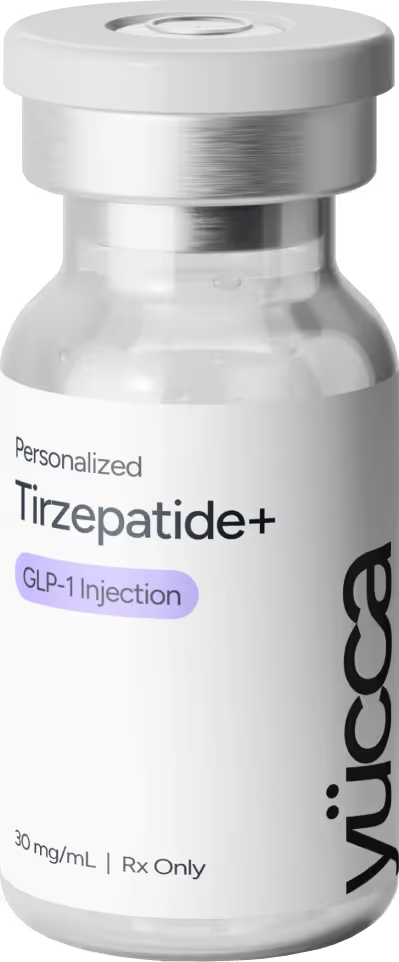
The important distinction is that tirzepatide is not one generic internet peptide category. Mounjaro and Zepbound have different FDA-approved indications, patient populations, packaging formats, and label instructions. Online research powders, compounded products, or products marketed as tirzepatide should not be assumed equivalent to FDA-approved medicines. [1][2][9]
As of May 23, 2026, Mounjaro is labeled as an adjunct to diet and exercise to improve glycemic control in adults and pediatric patients 10 years of age and older with type 2 diabetes mellitus. Zepbound is labeled, in combination with reduced calorie intake and increased physical activity, for adult chronic weight reduction and long-term maintenance in obesity or overweight with at least one weight-related comorbidity, and for adults with obesity and moderate-to-severe obstructive sleep apnea. [1][2][3][4]
- Primary drug class: dual GIP and GLP-1 receptor agonist. [1][2]
- Approved U.S. products: Mounjaro for type 2 diabetes and Zepbound for adult weight-related and obesity-related OSA indications. [1][2][3][4]
- Evidence base: SURPASS diabetes trials, SURMOUNT obesity trials, SURMOUNT-OSA studies, and FDA-reviewed prescribing information. [1][2][5][6][7][8]
How it works biologically
Mechanism
Official labeling describes tirzepatide as a molecule that selectively binds to and activates both GIP and GLP-1 receptors, the targets for the native incretin hormones GIP and GLP-1. The molecule includes a fatty diacid component that supports albumin binding and prolongs its half-life. [1]
In type 2 diabetes labeling, tirzepatide is described as enhancing first- and second-phase insulin secretion and reducing glucagon levels in a glucose-dependent manner. The label also reports lower fasting and postprandial glucose concentrations, reduced food intake, and body-weight reduction in patients with type 2 diabetes. [1][5][8]
For weight reduction, FDA describes Zepbound as activating GIP and GLP-1 receptors to reduce appetite and food intake. For obstructive sleep apnea, FDA states that improvement in apnea-hypopnea index is likely related to body-weight reduction with Zepbound, rather than a stand-alone airway mechanism independent of weight loss. [3][4]
Tirzepatide also delays gastric emptying. That effect can contribute to gastrointestinal tolerability issues and can affect absorption of some oral medications, including special considerations for oral contraceptives in product labeling. [1][2]
Label status as of May 23, 2026
Approved Uses / Evidence
Mounjaro is FDA-labeled as an adjunct to diet and exercise to improve glycemic control in adults and pediatric patients 10 years of age and older with type 2 diabetes mellitus. FDA originally approved Mounjaro in May 2022 based on a clinical program that included thousands of adults with type 2 diabetes. [1][5]
Zepbound is FDA-labeled for chronic weight reduction and long-term maintenance in adults with obesity, or adults with overweight in the presence of at least one weight-related comorbid condition, when used with reduced calorie intake and increased physical activity. [2][3]
Zepbound is also FDA-labeled to treat moderate-to-severe obstructive sleep apnea in adults with obesity, again in combination with reduced calorie intake and increased physical activity. FDA described this December 2024 approval as the first drug treatment option for certain patients with obstructive sleep apnea. [2][4]
These approvals are brand-, indication-, and population-specific. Trial findings should be read in the context of study eligibility criteria, endpoints, background care, and product labeling rather than generalized to any product sold under the tirzepatide name. [1][2][6][7][8][9]
What major studies reported
Benefits Discussed in Trials
In SURPASS-2, a randomized trial in adults with type 2 diabetes receiving metformin, tirzepatide was compared with once-weekly semaglutide. The trial reported greater HbA1c reductions with tirzepatide across studied groups and also reported body-weight reductions. Those results support glycemic-control evidence, not unsupervised consumer use. [1][5][8]
In SURMOUNT-1, a 72-week randomized trial in adults with obesity or overweight without diabetes, tirzepatide produced substantial average body-weight reductions compared with placebo. FDA later summarized weight-management evidence from two placebo-controlled trials and reported statistically significant weight reduction at all approved dose levels versus placebo. [3][6]
FDA noted that in the larger weight-management trial without diabetes, participants randomized to the highest approved Zepbound dose lost an average of 18% of body weight compared with placebo. In the trial population with type 2 diabetes, the comparable FDA summary was about 12% average body-weight loss at the highest approved dose compared with placebo. [3]
In SURMOUNT-OSA, two 52-week randomized, double-blind, placebo-controlled studies enrolled adults with obesity and moderate-to-severe obstructive sleep apnea without type 2 diabetes. FDA reported clinically meaningful reductions in apnea-hypopnea index compared with placebo, and greater proportions of participants reached remission or mild OSA with symptom resolution. [4][7]
These trial outcomes are group averages. They do not predict an individual result, and they do not replace clinical evaluation of contraindications, tolerability, concurrent medicines, diabetes status, sleep apnea severity, or long-term monitoring needs. [1][2][3][4]
Risk context
Safety Context
Mounjaro and Zepbound labeling includes a boxed warning about thyroid C-cell tumors observed in rats. The products are contraindicated in people with a personal or family history of medullary thyroid carcinoma, in people with multiple endocrine neoplasia syndrome type 2, and in people with known serious hypersensitivity to tirzepatide or product excipients. [1][2]
Common adverse reactions in labeling are largely gastrointestinal, including nausea, diarrhea, vomiting, constipation, dyspepsia or indigestion, abdominal pain, and decreased appetite or related symptoms depending on the product label. Severe gastrointestinal adverse reactions are also part of the warning context. [1][2][3][4]
Other labeled safety issues include acute pancreatitis, gallbladder disease, hypoglycemia risk when used with insulin or insulin secretagogues, acute kidney injury related to volume depletion, hypersensitivity reactions, diabetic retinopathy complications in patients with type 2 diabetes, and pulmonary aspiration during general anesthesia or deep sedation. [1][2][3][4]
Because tirzepatide delays gastric emptying, labels warn about effects on oral medications. Zepbound labeling also advises backup or non-oral contraception around treatment initiation and dose escalation for people using oral hormonal contraceptives. [1][2]
FDA has warned separately about unapproved GLP-1 products, including semaglutide and tirzepatide products marketed for weight loss. FDA concerns include lack of FDA review for safety, effectiveness, and quality; improper storage during shipping; fraudulent compounded products; dosing errors; and adverse events reported with compounded versions. [9]
Official-label handling only
Storage and Handling From Official Labeling
Storage and handling are product-specific. Mounjaro and Zepbound labels should be followed for the exact dispensed product and packaging format; general online storage claims are not a substitute for official labeling or pharmacist instructions. [1][2]
Both labels state not to freeze the product and not to use it if frozen. They also instruct users to store the product in the original carton to protect it from light. [1][2]
For single-dose pens and single-dose vials, official labeling uses refrigerated storage at 36 to 46 degrees F, with an allowance for storage up to 86 degrees F for up to 21 days if needed. Zepbound labeling says single-dose pens or vials stored at room temperature should not be returned to the refrigerator. [1][2]
For multi-dose vial formats, official labels include different discard limits after room-temperature storage, first use, or taking four weekly doses. Those limits belong to the FDA-approved product label and should not be copied onto research powders, compounded vials, or non-approved products. [1][2][9]
FDA has also warned that injectable GLP-1 drugs requiring refrigeration may have quality issues if improperly shipped, including products that arrive warm or with inadequate cooling. That concern is especially relevant to unapproved or compounded products where FDA has not reviewed the product for quality before marketing. [9]
FAQ
Is tirzepatide FDA-approved?
Yes, but only as specific FDA-approved prescription products with product-specific labeling. Mounjaro is labeled for type 2 diabetes, while Zepbound is labeled for adult weight reduction and long-term maintenance and for moderate-to-severe OSA in adults with obesity. [1][2][3][4]
Is tirzepatide the same as semaglutide or retatrutide?
No. Tirzepatide activates GIP and GLP-1 receptors. Semaglutide is a GLP-1 receptor agonist, while retatrutide is an investigational triple agonist designed for GIP, GLP-1, and glucagon receptors. [1][2]
Does tirzepatide work for weight loss in everyone?
No. Trials and FDA summaries report group averages in defined study populations. Individual results depend on clinical factors, tolerability, adherence to the studied program, concurrent conditions, and whether the person meets the labeled indication. [2][3][6]
Is Zepbound a cure for sleep apnea?
No. Zepbound is approved for moderate-to-severe OSA in adults with obesity, and FDA states that improvement in apnea-hypopnea index is likely related to body-weight reduction. Sleep apnea still requires clinical diagnosis, monitoring, and individualized management. [2][4][7]
Can compounded or research tirzepatide be assumed equivalent to Mounjaro or Zepbound?
No. FDA-approved products have FDA-reviewed labeling, manufacturing controls, and quality standards. FDA has warned that unapproved and compounded GLP-1 products may raise safety, quality, dosing, shipping, and fraud concerns. [9]
Does this page provide a dose or treatment plan?
No. Label and trial details are included only for research literacy. This site does not provide individualized dosing, dose escalation, reconstitution instructions, treatment protocols, or purchasing guidance.
References
-
[1] Mounjaro (tirzepatide) injection prescribing information
FDA AccessData. Revised January 2026.
https://www.accessdata.fda.gov/drugsatfda_docs/label/2026/215866s041lbl.pdf -
[2] Zepbound (tirzepatide) injection prescribing information
FDA AccessData. Revised January 2026.
https://www.accessdata.fda.gov/drugsatfda_docs/label/2026/217806s037lbl.pdf -
[3] FDA Approves New Medication for Chronic Weight Management
U.S. Food and Drug Administration. November 8, 2023.
https://www.fda.gov/news-events/press-announcements/fda-approves-new-medication-chronic-weight-management -
[4] FDA Approves First Medication for Obstructive Sleep Apnea
U.S. Food and Drug Administration. December 20, 2024.
https://www.fda.gov/news-events/press-announcements/fda-approves-first-medication-obstructive-sleep-apnea -
[5] Drug Trials Snapshot: Mounjaro
U.S. Food and Drug Administration. Original approval May 13, 2022.
https://www.fda.gov/drugs/drug-approvals-and-databases/drug-trials-snapshots-mounjaro -
[6] Tirzepatide Once Weekly for the Treatment of Obesity
New England Journal of Medicine / PubMed. July 21, 2022.
https://pubmed.ncbi.nlm.nih.gov/35658024/ -
[7] Tirzepatide for the Treatment of Obstructive Sleep Apnea and Obesity
New England Journal of Medicine / PubMed. June 21, 2024.
https://pubmed.ncbi.nlm.nih.gov/38912654/ -
[8] Tirzepatide versus Semaglutide Once Weekly in Patients with Type 2 Diabetes
New England Journal of Medicine / PubMed. August 5, 2021.
https://pubmed.ncbi.nlm.nih.gov/34170647/ -
[9] FDA Concerns with Unapproved GLP-1 Drugs Used for Weight Loss
U.S. Food and Drug Administration. Current FDA safety information accessed May 23, 2026.
https://www.fda.gov/drugs/postmarket-drug-safety-information-patients-and-providers/fdas-concerns-unapproved-glp-1-drugs-used-weight-loss