Profile snapshot
Quick facts
These fields are educational context only. Typical dose information is not dosing guidance.
- Type
- Injectable modified peptide analog
- Half-life
- Formulation dependent
- Typical dose
- Study/protocol dependent; no FDA-approved dosing.
- Regulatory status
- Not an FDA-approved medication
Current status
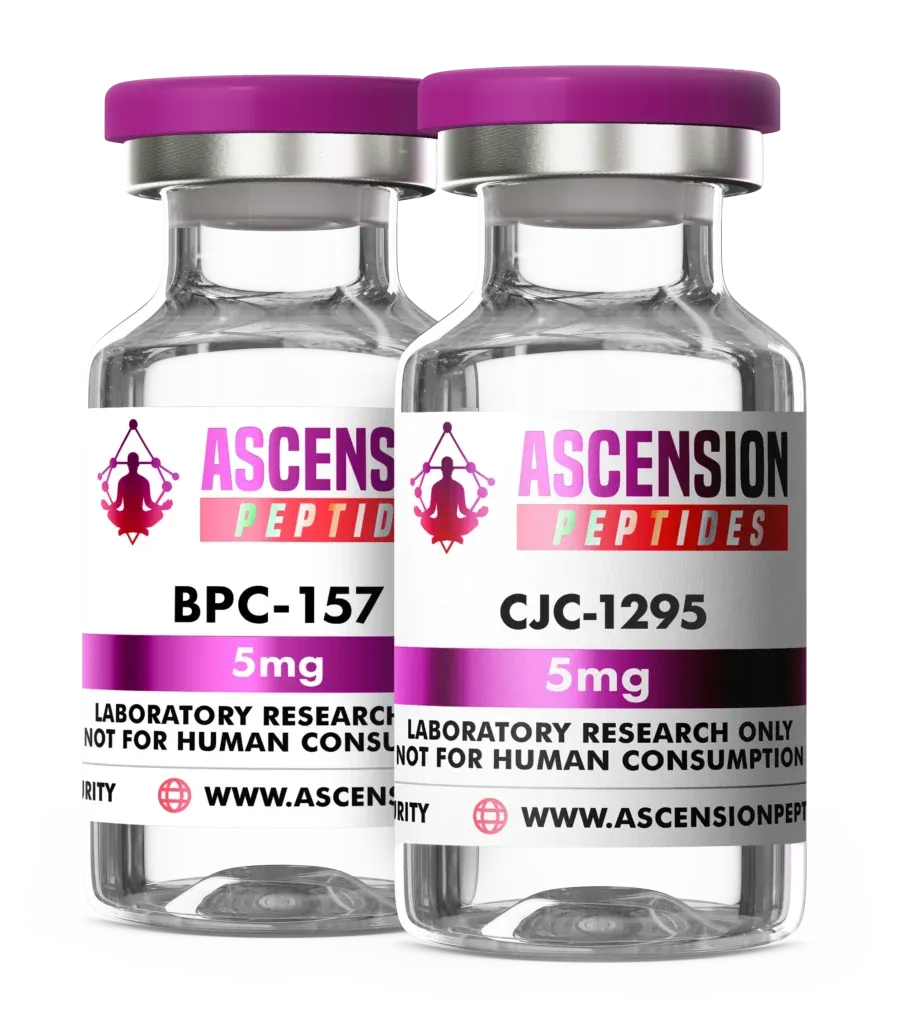
CJC-1295 is an investigational GHRH analog profile topic. As of this May 23, 2026 review, no FDA-approved public prescribing label was identified, and FDA materials flag safety and quality concerns for compounded products containing CJC-1295.
Plain-English summary
Overview
CJC-1295 is a synthetic analog of growth hormone-releasing hormone, usually shortened to GHRH. The best-known published human work studied a long-acting, albumin-binding form designed to stimulate the pituitary GH/IGF-1 axis for longer than native GHRH. [1][2]
The practical distinction matters: many online listings use CJC-1295 loosely, sometimes separating "with DAC" and "without DAC" products. This draft focuses on the CJC-1295 described in the primary human literature as a long-acting GHRH analog, not on consumer peptide-market naming. [1]
CJC-1295 should be discussed as an investigational research compound, not as an established wellness treatment. The human evidence base is small, older, and mainly biomarker-oriented: it shows changes in growth hormone and IGF-1, but it does not prove broad claims about muscle gain, fat loss, recovery, sleep, or anti-aging outcomes. [1][2][3]
- Class: synthetic GHRH analog / growth hormone secretagogue context. [1][2]
- Main measured pathway: increased GH secretion and downstream IGF-1 response in controlled human studies. [1][2]
- Regulatory context: FDA materials identify limited clinical data and safety/quality concerns for compounded CJC-1295-containing products. [3][5]
Biology context
Mechanism / Biology Context
Native GHRH is a hypothalamic signal that acts on pituitary somatotroph cells to promote growth hormone release. CJC-1295 was designed to mimic GHRH signaling while extending exposure through albumin binding. [1][2]
In the early human pharmacology study, CJC-1295 produced sustained GH and IGF-1 increases after controlled subcutaneous administration. The same paper estimated a multi-day half-life, which helps explain why the DAC-style compound behaves differently from short-acting GHRH analogs. [1]
Another human study found that GH pulsatility was preserved after CJC-1295 exposure, with higher trough and mean GH secretion and increased IGF-1. That is mechanistically interesting, but it remains a biomarker finding rather than proof of a specific clinical benefit. [2]
What has actually been studied
Evidence / Human Data
The central human study was a pair of randomized, placebo-controlled, double-blind ascending-dose trials in healthy adults. It reported dose-dependent increases in mean plasma growth hormone and IGF-1, with effects lasting days to weeks depending on the measurement and study phase. [1]
The same paper reported no serious adverse reactions in the studied healthy volunteers and described CJC-1295 as relatively well tolerated in that limited setting. This should not be generalized into long-term safety, treatment efficacy, or safety for unregulated products. [1][3]
A separate small clinical trial in healthy men used frequent overnight blood sampling and found preserved pulsatile GH secretion after CJC-1295, while basal GH, mean GH, and IGF-1 increased. This supports pathway activity, not consumer outcome claims. [2]
There is preclinical work in GHRH-knockout mice showing growth and body-composition effects under controlled experimental conditions. Animal data can help explain biology, but it should not be presented as evidence that CJC-1295 improves human body composition or recovery. [6]
Marketing claims need separation from data
Claimed Benefits vs Evidence
Claim: "Raises growth hormone and IGF-1." Evidence: supported as a pharmacodynamic biomarker effect in small, controlled human studies of the long-acting CJC-1295 compound. [1][2]
Claim: "Improves muscle gain, fat loss, recovery, sleep, or anti-aging." Evidence: not established by large, long-term, patient-centered CJC-1295 outcome trials. These claims are usually extrapolated from the GH/IGF-1 pathway, animal studies, or general growth-hormone biology rather than direct CJC-1295 clinical outcome evidence. [1][2][6]
Claim: "Can substitute for prescribed endocrine care." Evidence: not supported. Evaluation of suspected growth hormone deficiency or other endocrine disease belongs with qualified clinicians using validated diagnostic pathways and approved therapies where appropriate. [4][5]
- Supported: CJC-1295 can alter GH and IGF-1 biomarkers in controlled studies. [1][2]
- Unproven: broad wellness, body-composition, recovery, sleep, and longevity outcomes. [1][2][6]
- High-risk assumption: treating research chemical labels, compounded-product claims, or online anecdotes as equivalent to approved drug evidence. [3][4][5]
Risk framing
Safety Context
The early healthy-adult trial reported no serious adverse reactions in that limited setting, but the sample size and follow-up were not enough to establish broad long-term safety. Biomarker activity over days is not the same as a complete safety profile. [1]
FDA materials specifically flag compounded drugs containing CJC-1295 as having potential safety risks, including immunogenicity for some routes of administration, peptide-related impurities, API characterization complexity, limited clinical data, and serious adverse events associated with CJC-1295 such as increased heart rate and systemic vasodilatory reaction. [3]
FDA also emphasizes that compounded drugs are not FDA-approved, meaning FDA does not verify their safety, effectiveness, or quality before marketing. For peptides sold outside regulated drug pathways, identity, purity, sterility, potency, and labeling are separate safety concerns. [4][5]
Athletes should treat CJC-1295 as a prohibited-substance risk. WADA lists growth hormone-releasing factors, including GHRH analogs such as CJC-1295, within the prohibited peptide hormone/growth factor category. [7]
No public product label standard
Storage and Handling Limits
Because this review did not identify an FDA-approved CJC-1295 prescribing label, there is no official consumer storage standard to cite. Storage language found on seller pages should not be treated as proof of product legitimacy, sterility, potency, or safety. [3][4][5]
For regulated medicines, handling instructions come from validated manufacturing, packaging, stability, and labeling controls. For compounded or research-market peptides, FDA highlights that quality problems can include contamination or incorrect active-ingredient strength. [4][5]
This page should not provide reconstitution steps, injection technique, storage shortcuts, or dosing schedules. Any legitimate handling requirements would need to come from a qualified study protocol, official label, or licensed clinical setting. [4][5]
FAQ
Is CJC-1295 FDA-approved?
This May 23, 2026 review did not identify an FDA-approved public prescribing label for CJC-1295. FDA materials discuss CJC-1295 in the context of compounded bulk substances that may present significant safety risks, not as an approved consumer therapy. [3][4][5]
What does CJC-1295 do in the published human studies?
Small controlled human studies found sustained increases in growth hormone and IGF-1 biomarkers and preserved GH pulsatility after CJC-1295 exposure. Those findings show pathway activity, not proven wellness or body-composition outcomes. [1][2]
Is CJC-1295 with DAC the same as "no DAC" CJC-1295?
No. The main published human CJC-1295 literature describes a long-acting albumin-binding compound. Online "no DAC" products are often discussed as modified GRF(1-29)-type GHRH analogs and should not be treated as interchangeable with the studied long-acting compound. [1]
Does CJC-1295 build muscle or burn fat?
Direct evidence is not strong enough to make that claim. The human studies measured GH and IGF-1 biomarkers; they were not large outcome trials proving muscle gain, fat loss, recovery, or anti-aging benefits. [1][2]
Why does this page avoid dosing instructions?
Trial exposure details are research context, not consumer instructions. This site does not provide dosing protocols, reconstitution instructions, injection guidance, purchase guidance, or individualized medical advice.
Is CJC-1295 allowed in tested sport?
Athletes subject to anti-doping rules should treat it as prohibited. WADA lists growth hormone-releasing factors, including CJC-1295, under the peptide hormone and growth factor category. [7]
References
-
[1] Prolonged stimulation of growth hormone (GH) and insulin-like growth factor I secretion by CJC-1295, a long-acting analog of GH-releasing hormone, in healthy adults
Journal of Clinical Endocrinology & Metabolism / PubMed. March 2006; accessed May 23, 2026.
https://pubmed.ncbi.nlm.nih.gov/16352683/ -
[2] Pulsatile secretion of growth hormone (GH) persists during continuous stimulation by CJC-1295, a long-acting GH-releasing hormone analog
Journal of Clinical Endocrinology & Metabolism / PubMed. December 2006; accessed May 23, 2026.
https://pubmed.ncbi.nlm.nih.gov/17018654/ -
[3] Certain Bulk Drug Substances for Use in Compounding that May Present Significant Safety Risks
U.S. Food and Drug Administration. Content current as of April 22, 2026; accessed May 23, 2026.
https://www.fda.gov/drugs/human-drug-compounding/certain-bulk-drug-substances-use-compounding-may-present-significant-safety-risks -
[4] Compounding and the FDA: Questions and Answers
U.S. Food and Drug Administration. Content current as of September 16, 2025; accessed May 23, 2026.
https://www.fda.gov/drugs/human-drug-compounding/compounding-and-fda-questions-and-answers -
[5] Bulk Drug Substances Used in Compounding
U.S. Food and Drug Administration. Content current as of March 26, 2026; accessed May 23, 2026.
https://www.fda.gov/drugs/human-drug-compounding/bulk-drug-substances-used-compounding -
[6] Once-daily administration of CJC-1295, a long-acting growth hormone-releasing hormone (GHRH) analog, normalizes growth in the GHRH knockout mouse
American Journal of Physiology-Endocrinology and Metabolism / PubMed. December 2006; accessed May 23, 2026.
https://pubmed.ncbi.nlm.nih.gov/16822960/ -
[7] The 2026 Prohibited List: World Anti-Doping Code International Standard
World Anti-Doping Agency. Effective January 1, 2026; accessed May 23, 2026.
https://www.wada-ama.org/sites/default/files/2025-09/2026list_en_final_clean_september_2025.pdf