Semaglutide CKD evidence
Ozempic for CKD: Semaglutide Kidney-Disease Evidence and Label Limits
A source-backed guide to Ozempic for chronic kidney disease, semaglutide FLOW evidence, type 2 diabetes limits, kidney endpoints, side effects, and product boundaries.

Ozempic became a kidney-disease search topic after semaglutide injection gained a US label indication for adults with type 2 diabetes and chronic kidney disease. That label expansion is important, but it is narrow. It does not turn every GLP-1 product into a CKD treatment, and it does not mean kidney disease can be managed from an ingredient name alone.
The core evidence comes from FLOW, a randomized outcomes trial in adults with type 2 diabetes and chronic kidney disease. FLOW is different from ordinary weight-loss trials, from broad GLP-1, GIP, glucagon, and amylin comparisons, and from online claims that describe semaglutide as general kidney support. It studied a high-risk kidney population and measured clinical kidney outcomes, not only weight, glucose, or creatinine snapshots.
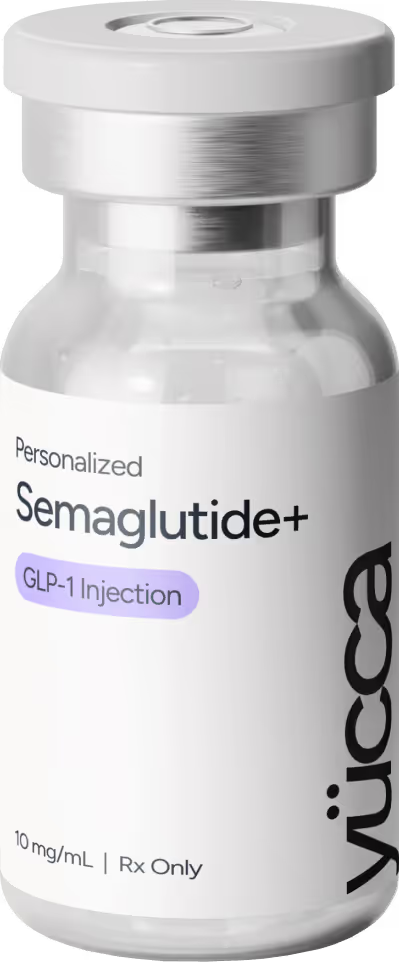
Peptides Defined covers semaglutide as a regulated GLP-1 receptor agonist medicine with product-specific evidence. That distinction matters here. Ozempic injection, Wegovy injection, oral semaglutide products, compounded products, and research powders are not one interchangeable evidence package.
Evidence Snapshot
| Common claim | Evidence picture | Boundary |
|---|---|---|
| Ozempic is a kidney-disease drug for everyone with CKD. | The US Ozempic injection label addresses adults with type 2 diabetes and chronic kidney disease, not all CKD causes or all kidney-risk groups. | A person with kidney disease but no type 2 diabetes, kidney transplant history, glomerulonephritis, polycystic kidney disease, or advanced non-diabetic CKD needs separate evidence and clinician review. |
| The FLOW trial proves semaglutide fixes kidney function. | FLOW showed lower risk of a composite kidney and cardiovascular-death endpoint and a slower eGFR decline in a defined high-risk population. | It does not mean eGFR will rise, albuminuria will normalize, dialysis risk disappears, or monitoring can stop. |
| All semaglutide products share the Ozempic CKD label. | The label belongs to FDA-reviewed Ozempic injection, while semaglutide is also used in other products and research-market listings. | Ingredient names do not verify formulation, device, concentration, sterility, stability, dose schedule, or legal status. |
| Kidney protection is just weight loss. | FLOW studied 1 mg semaglutide in type 2 diabetes with CKD, and kidney endpoints were not simple weight-loss endpoints. | Mechanisms may include glycemic, blood-pressure, albuminuria, inflammatory, hemodynamic, and weight-related pathways, but causal separation is still incomplete. |
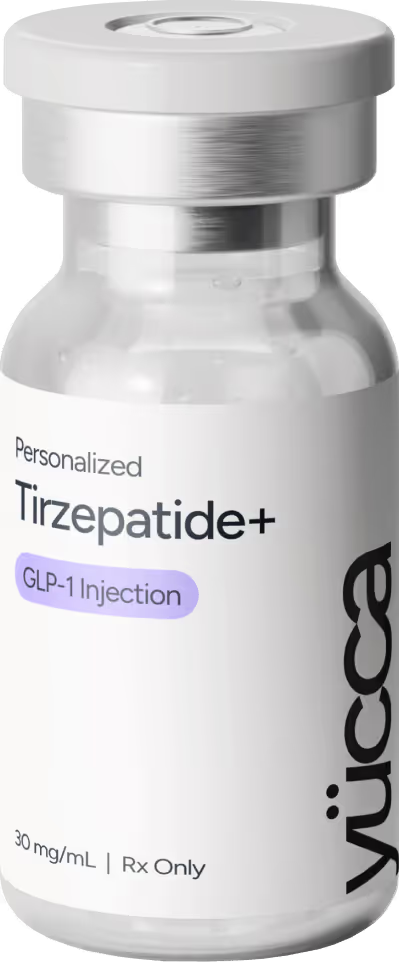
| Tirzepatide or other incretin drugs automatically have the same CKD status. | Tirzepatide has kidney-related analyses and ongoing research, but Ozempic has the product-specific CKD label discussed here. | Class-adjacent cardiometabolic findings should not be treated as interchangeable product labels. |
What The Ozempic CKD Label Says
The current US Ozempic injection label includes use in adults with type 2 diabetes and chronic kidney disease to reduce the risk of sustained eGFR decline, end-stage kidney disease, and cardiovascular death. That is a label for a defined product and population. It is not a general statement that semaglutide should be used for every kidney diagnosis.
The population matters. Chronic kidney disease is not one condition. Diabetes-related CKD, hypertensive kidney disease, immune kidney disease, inherited kidney disease, medication-related injury, kidney-stone complications, transplant-related issues, and acute kidney injury are different clinical problems. FLOW was built around adults with type 2 diabetes and high albuminuria or reduced eGFR within set ranges.
The endpoint also matters. A label that reduces risk of kidney disease worsening is not the same as a claim that kidney function is restored. eGFR is a filtration estimate that can fluctuate. UACR, or urine albumin-to-creatinine ratio, helps describe kidney damage and risk. Dialysis, transplant, major eGFR decline, kidney-related death, and cardiovascular death are harder clinical endpoints. A serious claim should name which endpoint it means.
Background care matters too. In kidney-outcome trials, participants are usually managed against a clinical standard that can include blood-pressure control, renin-angiotensin system therapy when tolerated, SGLT2 inhibitor use in many eligible patients, diabetes care, lipid management, and nephrology follow-up. That makes the result more clinically relevant, but it also means the drug was not tested as a stand-alone substitute for kidney care.
The label boundary is also why the compounded semaglutide and tirzepatide rules are relevant. A vial or listing that says semaglutide is not automatically Ozempic. Product identity, source, formulation, container, sterility, device, concentration, storage, and lawful status are separate questions.
What FLOW Actually Studied
FLOW randomly assigned 3,533 adults with type 2 diabetes and CKD to subcutaneous semaglutide 1 mg once weekly or placebo. Entry criteria used eGFR and UACR ranges that selected a high-risk kidney population. Participants were followed for a median of 3.4 years, and the trial was stopped early after a prespecified interim analysis recommended stopping.
The primary endpoint was a composite of major kidney disease events: kidney failure, at least a 50% sustained reduction in eGFR, or death from kidney-related or cardiovascular causes. The trial reported a lower risk of the primary endpoint with semaglutide than placebo. Confirmatory secondary outcomes also favored semaglutide, including a slower annual eGFR decline, fewer major cardiovascular events, and lower all-cause mortality in the studied population.
Those findings are stronger than a biomarker-only story. FLOW was not just a trial where albuminuria moved in the right direction. It was an outcomes trial with hard kidney and cardiovascular endpoints. That is why the Ozempic CKD label is a different level of evidence than earlier post hoc analyses or mechanistic proposals.
At the same time, FLOW still has boundaries. It studied people with type 2 diabetes and CKD, not people using semaglutide only for weight loss, not adults with simple mild eGFR changes, and not people taking research-market semaglutide. It used a 1 mg Ozempic-type dose schedule, while Wegovy for MASH, Wegovy HD, and chronic weight-management contexts use their own product and dose frames.
Follow-up analyses help refine the picture. FLOW publications have examined kidney and survival outcomes across CKD severity strata, outcomes by baseline SGLT2 inhibitor use, cardiovascular outcomes by CKD severity, and background medicine contexts. These analyses support consistency within the studied population, but they do not erase the original trial design.
Earlier semaglutide kidney analyses also matter because they show why FLOW was needed. SUSTAIN 6 and PIONEER 6 suggested more stable kidney function and lower albuminuria-related risk signals, but many of those kidney findings were secondary or post hoc. FLOW moved the question into a dedicated kidney-outcomes trial, which is why it carries more weight for CKD claims than older cardiovascular-outcome trial subanalyses.
Where Online Kidney Claims Run Too Far
The first overclaim is treating CKD as a single search keyword. A person can have a low eGFR for many reasons. A person can have albuminuria with different causes. A trial in type 2 diabetes with defined CKD risk does not support casual claims for every kidney condition.
The second overclaim is reading risk reduction as reversal. A lower risk of reaching a composite endpoint is meaningful, but it does not mean kidney function returns to normal. It also does not replace blood-pressure control, SGLT2 inhibitor decisions, renin-angiotensin system blockade when appropriate, finerenone consideration in selected patients, glucose management, lipid management, smoking cessation, and specialist monitoring.
The third overclaim is assuming all cardiometabolic peptides carry the same kidney evidence. Tirzepatide has kidney-related analyses and active cardiometabolic research, but it should be read on its own labels and trials. Retatrutide comparisons and investigational multi-receptor agonist headlines do not substitute for a product-specific CKD label.
The fourth overclaim is turning measurement tools into medical verification. The reconstitution calculator can help readers understand milligrams, micrograms, milliliters, and concentration. It cannot verify an Ozempic pen, establish a CKD indication, identify a counterfeit product, adjust kidney medicines, or make a research powder clinically equivalent to an FDA-reviewed medicine.
Side Effects And Kidney-Specific Cautions
Kidney disease does not remove the usual semaglutide safety frame. Ozempic labeling includes warnings for thyroid C-cell tumor risk language, pancreatitis, diabetic retinopathy complications, hypoglycemia risk when used with insulin or insulin secretagogues, acute kidney injury due to volume depletion, severe gastrointestinal adverse reactions, hypersensitivity, acute gallbladder disease, and pulmonary aspiration during anesthesia or deep sedation.
The acute kidney injury warning deserves special attention in CKD discussions. Nausea, vomiting, diarrhea, and reduced intake can cause dehydration. In a person with CKD, diabetes, diuretics, blood-pressure medicines, or other kidney-relevant therapies, volume depletion can become a practical safety issue. That is different from the long-term kidney-outcome benefit seen in FLOW.
Diabetic retinopathy also remains relevant because many people in the Ozempic CKD population have long-standing diabetes. A kidney label does not make eye monitoring irrelevant. The same is true for gallbladder disease, pancreatitis symptoms, perioperative planning, and medication adjustments during illness.
For broader GLP-1 safety context, pair this page with our GLP-1 side effects guide and peptide injection-site reactions and product-quality guide. For oral route questions, see oral GLP-1 pills versus injectable peptides.
How To Evaluate Ozempic CKD Claims
Start with the population. Does the claim name adults with type 2 diabetes and chronic kidney disease, or does it only say kidney support? Does it mention eGFR, UACR, albuminuria, kidney-failure risk, diabetes status, and background standard care?
Next, check the endpoint. "Kidney numbers improved" is weaker than a claim tied to sustained eGFR decline, end-stage kidney disease, kidney-related death, cardiovascular death, albuminuria, or annual eGFR slope. A claim that switches endpoints midstream is usually doing more marketing than analysis.
Then check the product. Ozempic injection has FDA-reviewed labeling and FLOW evidence. Wegovy has separate labels and trial programs. Oral semaglutide has a separate route and evidence base. Compounded or research-market semaglutide does not inherit the Ozempic CKD label because the ingredient name is familiar.
Finally, check the source type. PubMed-indexed trials, FDA labels, and nephrology or diabetes guidelines can support evidence claims. Forums and social media are useful for seeing what people are asking about kidney labs, dehydration, coverage, and side effects. They cannot prove kidney protection or product equivalence.
The restrained takeaway is that Ozempic for CKD is a meaningful semaglutide label expansion in adults with type 2 diabetes and chronic kidney disease. FLOW provides strong human outcomes evidence for that defined setting. It does not support broad kidney-health claims, product substitution, or unsupervised use of semaglutide-containing products.
References
- Ozempic prescribing information, 2025 label, U.S. Food and Drug Administration.
- Effects of Semaglutide on Chronic Kidney Disease in Patients with Type 2 Diabetes, New England Journal of Medicine / PubMed.
- Effects of semaglutide with and without concomitant SGLT2 inhibitor use in participants with type 2 diabetes and chronic kidney disease in the FLOW trial, Nature Medicine / PubMed.
- Kidney and Survival Outcomes with Semaglutide by CKD Severity in the FLOW Trial, Clinical Journal of the American Society of Nephrology / PubMed.
- Cardiovascular outcomes with semaglutide by severity of chronic kidney disease in type 2 diabetes: the FLOW trial, European Heart Journal / PubMed.
- Effects of Once-Weekly Semaglutide on Kidney Disease Outcomes by KDIGO Risk Category in the SUSTAIN 6 Trial, Kidney International Reports / PubMed.
- Post hoc analysis of SUSTAIN 6 and PIONEER 6 trials suggests that people with type 2 diabetes at high cardiovascular risk treated with semaglutide experience more stable kidney function compared with placebo, Kidney International / PubMed.
- Effect of semaglutide on kidney function across different levels of baseline HbA1c, blood pressure, body weight and albuminuria in SUSTAIN 6 and PIONEER 6, Diabetes, Obesity and Metabolism / PubMed.
- Effect of the Glucagon-Like Peptide-1 Receptor Agonists Semaglutide and Liraglutide on Kidney Outcomes in Patients With Type 2 Diabetes, Circulation / PubMed.
- Long-term kidney outcomes of semaglutide in obesity and cardiovascular disease in the SELECT trial, Nature Medicine / PubMed.
Disclaimer
This page is educational and is not medical advice. It does not provide prescribing, dosing, switching, compounding, reconstitution, sourcing, CKD diagnosis, eGFR or albuminuria interpretation, diabetes treatment, kidney-risk management, or individualized guidance for Ozempic, semaglutide, tirzepatide, or related products. Kidney-disease and medication decisions should be made with qualified healthcare professionals using current regulator-reviewed labels, laboratory data, diagnosis, and clinical context.
Next steps
Continue with the closest guide, peptide profile, or research tool.