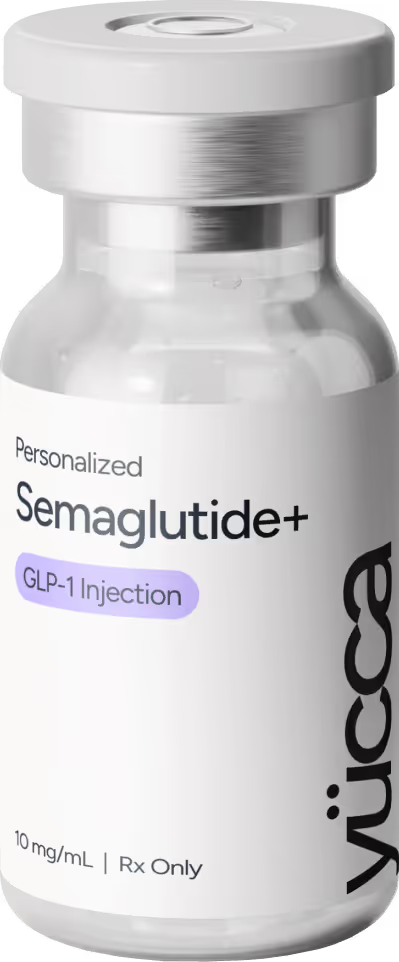
Semaglutide label
Wegovy HD 7.2 mg: STEP UP Evidence, Side Effects, and Label Limits
A source-backed guide to Wegovy HD 7.2 mg, semaglutide STEP UP evidence, FDA label limits, side effects, dysesthesia, and how higher-dose claims should be read.

Wegovy HD became a new semaglutide search topic after FDA approved a 7.2 mg once-weekly injection on March 19, 2026. The new dose matters because it changes the top of the semaglutide injection label, but it should not be read as a new molecule, a consumer dose shortcut, or proof that higher is always better.
The narrow question is what the approval adds to the existing semaglutide evidence base. Wegovy already had weight-management evidence at 2.4 mg, cardiovascular-risk reduction labeling for adults with established cardiovascular disease and obesity or overweight, and a growing set of oral and injectable formulations. Wegovy HD adds a higher injectable option for a specific adult weight-reduction context.
That distinction keeps this guide separate from the oral GLP-1 pills guide and from broader incretin class comparisons. The focus here is STEP UP, side effects, FDA label boundaries, and claim checks around 7.2 mg semaglutide.
Evidence Snapshot
| Common claim | Evidence picture | Boundary |
|---|---|---|
| Wegovy HD replaces every Wegovy dose. | FDA labeling keeps 1.7 mg and 2.4 mg as adult weight-reduction maintenance options and adds 7.2 mg as a maximum option after 2.4 mg tolerance. | The higher dose is not a universal target, pediatric dose, cardiovascular-risk dose, or MASH dose. |
| 7.2 mg triples the result because it triples the dose. | STEP UP compared semaglutide 7.2 mg with semaglutide 2.4 mg and placebo in a defined Phase 3b trial. | Dose size, blood level, weight response, adverse events, and discontinuation are related but not interchangeable. |
| The side-effect profile is the same as 2.4 mg. | The current label reports dose-related dysesthesia, with a higher rate in the 7.2 mg group than the 2.4 mg group. | A short product summary can miss tolerability details that matter to individual patients. |
| Wegovy HD is a reason to compound higher-dose semaglutide. | FDA has warned about dosing errors and product differences with compounded injectable semaglutide products. | A concentration calculation does not establish identity, sterility, label equivalence, or lawful compounding status. |
| Wegovy HD has the same evidence as tirzepatide. | Semaglutide and tirzepatide have different receptor targets, trials, labels, and approved indications. | Cross-drug comparisons need matched populations and endpoints, not headline percentages. |
What FDA Approved
FDA's March 2026 bulletin says the agency approved a new higher dose of Wegovy injection, called Wegovy HD, at 7.2 mg once weekly for weight loss and long-term maintenance of weight loss for certain adult patients. The approval was granted to Novo Nordisk under FDA's Commissioner National Priority Voucher pilot program.
The label is more specific than many headlines. For adult weight reduction, Wegovy injection maintenance dosing remains 1.7 mg or 2.4 mg, with 2.4 mg described as recommended. The label then says that for patients who tolerate the 2.4 mg dosage for at least 4 weeks and for whom additional weight reduction is clinically indicated, the dosage may be increased to a maximum of 7.2 mg once weekly.
That wording matters. It does not say every patient should move to 7.2 mg. It does not turn 7.2 mg into the dose used for cardiovascular-risk reduction. It does not create a pediatric weight-management dose. It also does not change the basic status difference between FDA-approved semaglutide products and research-market or compounded products.
For adjacent comparisons, tirzepatide and retatrutide should still be read on their own evidence. Tirzepatide is a GIP and GLP-1 receptor agonist with approved diabetes and weight-management products. Retatrutide remains investigational. A higher semaglutide dose changes the semaglutide label, not every incretin comparison.
What STEP UP Adds
STEP UP was a randomized, controlled Phase 3b trial of once-weekly semaglutide 7.2 mg in adults with obesity without type 2 diabetes. It compared 7.2 mg with 2.4 mg and placebo, alongside lifestyle intervention, over 72 weeks with follow-up after treatment. That design is useful because it did not compare 7.2 mg only with placebo. It also asked whether the higher dose added weight reduction beyond the established 2.4 mg dose.
Public summaries and trial reports describe greater average weight reduction with 7.2 mg than with 2.4 mg or placebo. FDA labeling and published trial context make the main reading clear: 7.2 mg has human randomized evidence for additional adult weight reduction, but the extra effect should be interpreted beside tolerability, dose modifications, discontinuations, and patient selection.
STEP UP T2D studied semaglutide 7.2 mg in adults with obesity and type 2 diabetes. That paper adds a second population, but it should not be blended carelessly with the non-diabetes obesity trial. Diabetes status can change baseline risk, glycemic endpoints, concurrent medications, and adverse-event interpretation.
The older STEP program remains relevant because it explains why semaglutide 2.4 mg was already evidence-rich before Wegovy HD. STEP 1 showed substantial weight loss with once-weekly semaglutide 2.4 mg versus placebo in adults with overweight or obesity without diabetes. STEP 4 showed the maintenance question after a semaglutide run-in, and STEP 5 extended evidence to two years. These trials support the foundation; STEP UP tests the higher top dose.
SELECT adds a separate outcome layer. It found that semaglutide 2.4 mg reduced major adverse cardiovascular events in adults with established cardiovascular disease and obesity or overweight without diabetes, which supported FDA's March 2024 cardiovascular-risk indication for Wegovy. That does not mean Wegovy HD has the same cardiovascular-risk dose role. The current label ties cardiovascular-risk reduction maintenance dosing to 2.4 mg, or 1.7 mg when appropriate, not 7.2 mg.
The best short summary is therefore precise: Wegovy HD has a 7.2 mg label addition supported by STEP UP evidence for adult weight reduction after tolerance of 2.4 mg. It is not a replacement for reading the complete Wegovy label, and it does not erase the differences among semaglutide, tirzepatide, retatrutide, or cagrilintide.
Side Effects To Read Closely
The broad semaglutide safety frame still starts with gastrointestinal adverse reactions. The Wegovy label includes warnings for severe gastrointestinal adverse reactions and states that Wegovy is not recommended in patients with severe gastroparesis. Nausea, vomiting, diarrhea, constipation, abdominal pain, dyspepsia, and related symptoms remain central tolerability issues in GLP-1 treatment discussions.
Volume depletion is another practical safety boundary. The label includes acute kidney injury due to volume depletion, with postmarketing reports in patients treated with semaglutide, often in the context of nausea, vomiting, or diarrhea leading to dehydration. Higher-dose attention should not reduce the focus on ordinary but clinically important tolerability problems.
Dysesthesia deserves special attention because the 2026 label gives dose-related language. The label describes dysesthesia and related altered skin sensations, including paresthesia, pain of skin, sensitive skin, and burning skin sensation. It reports a higher rate with Wegovy 7.2 mg injection than with Wegovy 2.4 mg injection or placebo in clinical trials with patients with and without type 2 diabetes.
That signal should be handled carefully. Dysesthesia in a label is not a reason for panic, and it is not proof that every patient on 7.2 mg will have altered skin sensation. It is a reason to reject overly simple claims that 7.2 mg only adds more weight loss with no meaningful tolerability tradeoff.
The older GLP-1 side effects guide remains useful for pancreatitis, gallbladder disease, kidney injury during dehydration, hypoglycemia risk when paired with insulin or insulin secretagogues, diabetic retinopathy concerns in type 2 diabetes, thyroid C-cell tumor warning language, and compounded-product risks. Wegovy HD adds a specific dose question inside that broader safety framework.
What The Label Does Not Say
The current label does not make 7.2 mg a cardiovascular-risk reduction dose. For cardiovascular-risk reduction in adults, the Wegovy injection maintenance dosage is 2.4 mg, or 1.7 mg based on treatment response and tolerability. A reader should not take the cardiovascular SELECT result and assign it to 7.2 mg without a matching outcome study and label.
The label also does not make 7.2 mg a MASH dose. Current Wegovy labeling includes noncirrhotic MASH with moderate to advanced liver fibrosis in adults, but the injection dose listed for that indication is 2.4 mg once weekly, with reduction to 1.7 mg if needed for tolerability. That is a different evidence and label question from higher-dose weight reduction.
The label does not validate do-it-yourself concentration math. The reconstitution calculator is useful for understanding units, milligrams, milliliters, and concentration. It cannot verify a semaglutide product, convert a research powder into Wegovy HD, or determine whether a compounded product is lawful or clinically appropriate.
FDA has separately warned about dosing errors with compounded injectable semaglutide products. Those warnings are relevant because higher-dose headlines can encourage casual attempts to recreate label dosing with non-approved products. Product identity, salt forms, sterility, stability, device design, concentration, and administration instructions are not solved by using the same active ingredient name.
This is also why the compounded semaglutide and tirzepatide rules guide remains important. FDA approval of a higher-dose brand product can narrow, not broaden, the justification for copy-like compounded products when an approved product can meet a patient's medical need.
How To Evaluate Wegovy HD Claims
Start with the claim's endpoint. Is it about average body-weight reduction, a threshold such as at least 20% or at least 25% weight loss, cardiovascular events, glycemic markers, MASH, side effects, discontinuation, access, price, or compounding? A single headline percentage cannot answer all of those questions.
Next, ask which population the claim comes from. STEP UP in adults with obesity without type 2 diabetes, STEP UP T2D in adults with obesity and type 2 diabetes, SELECT in adults with established cardiovascular disease, and older STEP trials are related but not identical. Population details matter.
Then read the comparator. A placebo comparison answers one question. A 7.2 mg versus 2.4 mg comparison answers another. A semaglutide versus tirzepatide comparison requires matched study designs or a careful indirect-comparison method. Online claims often collapse those into a single ranking.
Finally, separate approved product evidence from sourcing claims. Wegovy HD refers to an FDA-approved semaglutide injection product under a label. It is not the same thing as research semaglutide, compounded semaglutide, an imported vial, or a supplier page. For broader product categories, use approved vs investigational vs compounded vs research peptides.
The restrained conclusion is that Wegovy HD is a meaningful semaglutide label update with randomized human evidence for additional adult weight reduction after 2.4 mg tolerance. The evidence does not justify dose shortcuts, cross-drug overclaims, or treating higher exposure as automatically better.
References
- FDA Approves Fourth Product Under National Priority Voucher Program, Higher Dose Semaglutide, U.S. Food and Drug Administration.
- Wegovy prescribing information, 2026 label, U.S. Food and Drug Administration.
- Once-weekly semaglutide 7.2 mg in adults with obesity (STEP UP), The Lancet Diabetes & Endocrinology / PubMed.
- Once-weekly semaglutide 7.2 mg in adults with obesity and type 2 diabetes (STEP UP T2D), The Lancet Diabetes & Endocrinology / PubMed.
- Once-weekly semaglutide in adults with overweight or obesity, New England Journal of Medicine / PubMed.
- Effect of continued weekly subcutaneous semaglutide vs placebo on weight loss maintenance, JAMA / PubMed.
- Two-year effects of semaglutide in adults with overweight or obesity: the STEP 5 trial, Nature Medicine / PubMed.
- Semaglutide and cardiovascular outcomes in obesity without diabetes, New England Journal of Medicine / PubMed.
- FDA approves first treatment to reduce risk of serious heart problems specifically in adults with obesity or overweight, U.S. Food and Drug Administration.
- FDA alerts health care providers, compounders and patients of dosing errors associated with compounded injectable semaglutide products, U.S. Food and Drug Administration.
Disclaimer
This page is educational and is not medical advice. It does not provide prescribing, dosing, injection, switching, compounding, reconstitution, sourcing, obesity treatment, cardiovascular-risk treatment, diabetes treatment, liver-disease treatment, or individualized medical guidance for Wegovy HD, Wegovy, Ozempic, Rybelsus, semaglutide, tirzepatide, retatrutide, cagrilintide, or related products. Medication decisions should be made with qualified healthcare professionals using current regulator-reviewed labels and official safety information.
Next steps
Continue with the closest guide, peptide profile, or research tool.