Visceral fat evidence
Tesamorelin for Visceral Fat: Evidence, Safety, and Weight-Loss Claim Limits
A research-backed guide to tesamorelin for visceral fat, HIV-associated lipodystrophy evidence, liver-fat data, GLP-1 comparisons, safety warnings, and weight-loss claim limits.

Tesamorelin is often pulled into weight-loss conversations because it has a real human evidence base for reducing visceral adipose tissue, or VAT. That makes it very different from many peptide-market claims. It also makes the details more important, because the strongest evidence is not for general fat loss.
The core evidence comes from adults with HIV-associated lipodystrophy or abdominal fat accumulation, usually in monitored clinical trials where VAT was measured with imaging. That is a narrower question than whether tesamorelin helps a healthy person lose belly fat, replace a GLP-1 drug, or run a cosmetic cutting cycle.
For a molecule-level profile, start with the tesamorelin guide. This page focuses on the search intent behind tesamorelin and visceral fat: what the human studies show, what the label says, what remains uncertain, and where online weight-loss claims go beyond the evidence.
Evidence Snapshot
| Claim | Evidence picture | Boundary |
|---|---|---|
| Tesamorelin reduces visceral adipose tissue in the studied HIV-lipodystrophy population. | Human randomized trials and pooled phase 3 analyses support a VAT-reduction signal in adults with HIV and excess abdominal fat. | The evidence is not the same as general cosmetic belly-fat loss or routine obesity treatment. |
| Tesamorelin is a weight-loss drug. | Official EGRIFTA labeling is for reduction of excess abdominal fat in HIV-infected adults with lipodystrophy. | The labels state it is not indicated for weight-loss management and describe a weight-neutral effect. |
| Tesamorelin may affect liver fat in people with HIV. | JAMA and Lancet HIV trials studied visceral fat, liver fat, and non-alcoholic fatty liver disease endpoints in HIV populations. | Those findings should not be treated as a general fatty-liver treatment claim outside the studied groups. |
| Tesamorelin can replace or stack with GLP-1 drugs. | A 2026 clinical discussion compared distinct treatment pathways in people with HIV and excess VAT. | That does not establish a broad tesamorelin plus GLP-1 protocol, cosmetic stack, or universal alternative. |
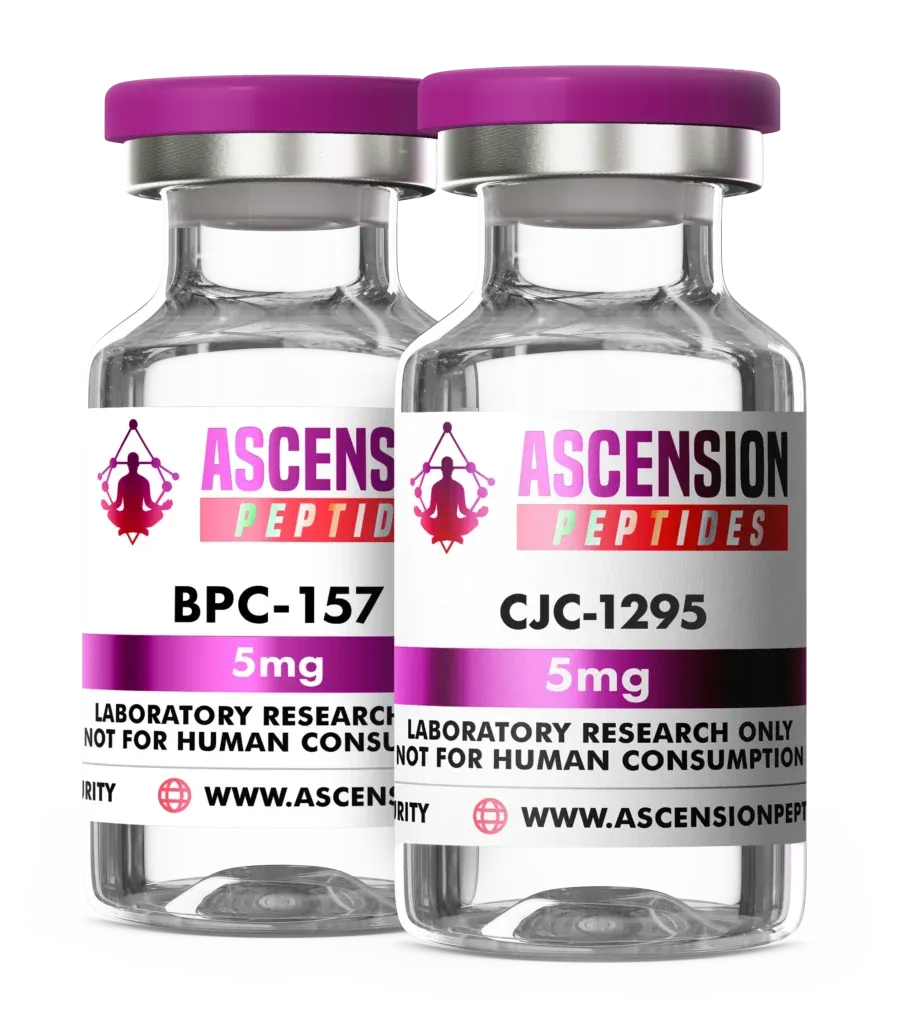
| Research-market tesamorelin is equivalent to EGRIFTA. | The evidence and label apply to regulated tesamorelin products and controlled studies. | Unapproved products can differ in identity, purity, sterility, concentration, excipients, and storage history. |
What Tesamorelin Is
Tesamorelin is a growth hormone-releasing factor analog, also described as a growth hormone-releasing hormone analog. It stimulates pituitary growth hormone secretion, which can increase downstream insulin-like growth factor 1 signaling and influence lipid metabolism. It is not a GLP-1 receptor agonist, an amylin analog, or direct recombinant growth hormone.
In the United States, FDA-approved tesamorelin products are EGRIFTA formulations. DailyMed labeling lists the indication as reduction of excess abdominal fat in HIV-infected adult patients with lipodystrophy. The same labeling gives important limitations: long-term cardiovascular safety has not been established, the product is not indicated for weight-loss management, and there are no data showing improved compliance with antiretroviral therapies.
That label context should shape every claim. Tesamorelin is not a generic "belly fat peptide." It is a prescription drug with a narrow evidence-backed use and a growth hormone axis mechanism that carries monitoring and safety questions.
What The Human Trials Actually Measured
The 2007 New England Journal of Medicine trial reported metabolic effects of a growth hormone-releasing factor in patients with HIV. Later randomized trials and pooled phase 3 analyses studied tesamorelin in HIV-infected patients with abdominal fat accumulation or excess abdominal fat. The central endpoint was not a bathroom-scale outcome. It was visceral adipose tissue, often measured with imaging.
That distinction is the main SEO trap. VAT is deep abdominal fat around internal organs. It is different from subcutaneous fat directly under the skin. A reduction in VAT can matter metabolically, but it does not guarantee visible cosmetic change, total weight loss, or the kind of before-and-after effect implied by many informal summaries.
The trial findings are still meaningful. The evidence supports tesamorelin as a serious drug topic for HIV-associated abdominal fat accumulation. A 2026 meta-analysis of randomized controlled trials also looked across body composition, hepatic fat, metabolic, and safety outcomes in HIV-associated lipodystrophy. The honest summary is specific: there is human evidence for VAT reduction in a defined population, not open-ended proof for general weight management.
Liver Fat And Metabolic Signals
Tesamorelin has also been studied beyond abdominal VAT alone. A JAMA randomized clinical trial examined visceral fat and liver fat in HIV-infected patients with abdominal fat accumulation. A later Lancet HIV randomized trial studied effects on non-alcoholic fatty liver disease in HIV. Other analyses have examined liver enzymes, fat quality, muscle fat, and metabolic profiles.
These are useful signals because they show researchers are not only measuring a cosmetic endpoint. They are asking whether growth hormone axis modulation changes ectopic fat and metabolic risk markers in people with HIV. That is a narrower and more clinically grounded question than "does tesamorelin melt belly fat?"
Readers should not convert these findings into a general fatty-liver or metabolic-health protocol. Population, baseline condition, antiretroviral therapy context, imaging endpoint, monitoring, and trial duration matter. For broader evidence-reading guardrails, use How to Read a Peptide Study.
Tesamorelin vs GLP-1 Drugs
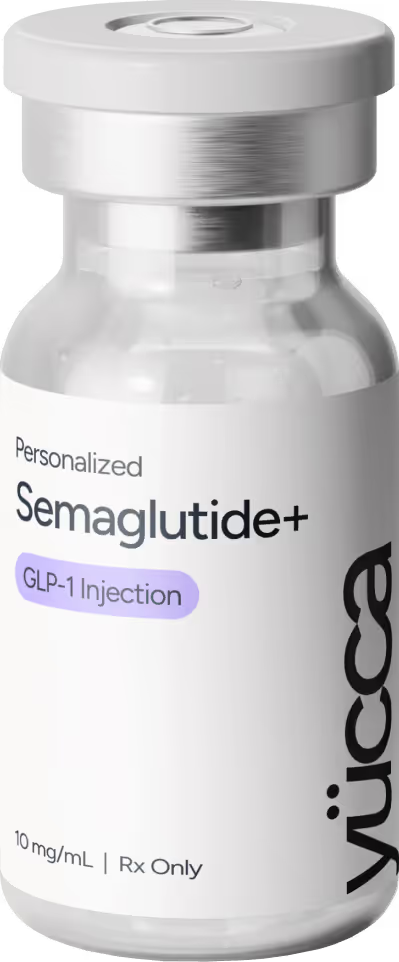
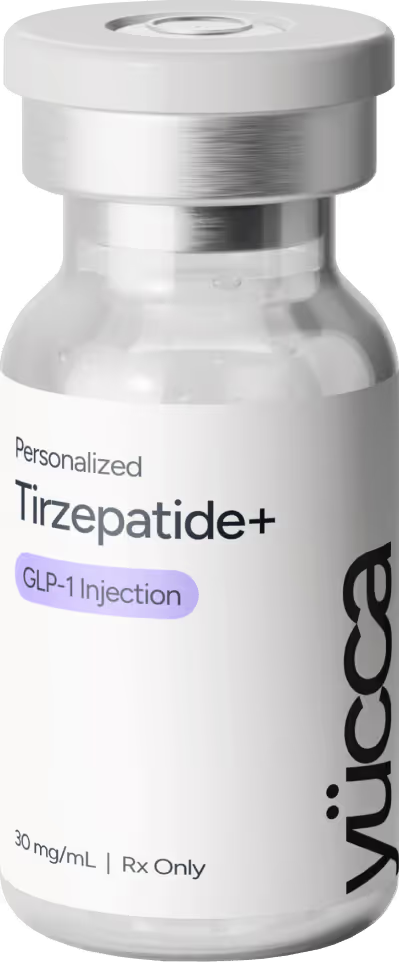
Tesamorelin and GLP-1 drugs are often compared because both can appear in discussions about abdominal fat, metabolic risk, and people living with HIV. They are not interchangeable. Semaglutide and tirzepatide act through incretin pathways tied to appetite, glucose regulation, and weight-loss outcomes in large modern trials. Tesamorelin acts through the growth hormone-releasing factor pathway and has its strongest evidence in HIV-associated VAT reduction.
A 2026 Clinical Infectious Diseases article discussed differing presentations of excess visceral abdominal fat in people living with HIV and highlighted distinct therapeutic pathways with tesamorelin and GLP-1 receptor agonists. That is a useful clinical framing. It is not evidence for a universal stack.
The cleaner comparison is structural: GLP-1 drugs and tesamorelin target different biology, are studied in different populations, and are selected for different clinical questions. For more on how GLP-1 evidence differs from thinner peptide claims, read GLP-1 Drugs vs Other Peptides and Retatrutide vs Tirzepatide vs Semaglutide.
Safety Issues That Should Not Be Skipped
Tesamorelin labeling includes contraindications and warnings because the drug works through the growth hormone axis. Contraindications include disruption of the hypothalamic-pituitary axis due to pituitary tumor, hypopituitarism, pituitary surgery, head irradiation, or head trauma; active malignancy; known hypersensitivity to tesamorelin or excipients; and pregnancy.
Label-level warnings include neoplasm-related concerns, elevated IGF-1, fluid retention, glucose intolerance or diabetes mellitus, hypersensitivity reactions, injection-site reactions, and increased mortality in patients with acute critical illness. Common adverse reactions listed for EGRIFTA WR include arthralgia, injection-site erythema, injection-site pruritus, pain in extremity, peripheral edema, and myalgia.
These warnings do not make tesamorelin unusually suspect. They mean it should be evaluated as a prescription drug, not as a casual supplement. Any claim that focuses only on VAT reduction while ignoring IGF-1, glucose handling, malignancy context, pregnancy, or formulation differences is leaving out important safety context.
Where Online Weight-Loss Claims Overreach
Search results, peptide forums, and Reddit-style discussions often compress tesamorelin into "visceral fat peptide." That shorthand creates several errors. First, VAT is not the same as all belly fat. Second, trial participants were not a generic wellness audience. Third, a drug can reduce a measured imaging endpoint without becoming a cosmetic weight-loss product.
The label itself is an important reality check. EGRIFTA products are not indicated for weight-loss management and are described as weight-neutral in labeling. That does not erase the VAT evidence. It keeps the claim where the data can support it.
A restrained claim would be: tesamorelin has been studied in adults with HIV-associated abdominal fat accumulation and has evidence for reducing VAT in that context. An overstated claim would be: tesamorelin is a general-purpose belly-fat or weight-loss peptide for anyone trying to lean out.
Product Identity, Formulation, And Reconstitution
EGRIFTA WR and EGRIFTA SV are not just names on vials. Their labels describe different strengths, preparation requirements, vial requirements, and storage instructions. The WR label states that the formulations are not substitutable. That matters because online peptide discussions often treat "tesamorelin" as one generic format.
Peptides Defined has a reconstitution calculator for measurement literacy, but arithmetic cannot validate a product, route, prescription decision, sterility, concentration, storage history, or legal status. It also cannot make a research-market vial equivalent to an FDA-approved product.
This is the same evidence boundary described in Approved vs Investigational vs Compounded vs Research Peptides and the growth-hormone comparison in CJC-1295 vs Ipamorelin vs Sermorelin vs Tesamorelin. Molecule names are not enough. Product identity, label status, study population, endpoint, and route all matter.
Reader Checklist
Before trusting a tesamorelin claim, ask:
- Is the claim about VAT, total weight, subcutaneous fat, waist size, liver fat, or appearance?
- Was the evidence from adults with HIV-associated lipodystrophy or from a different population?
- Was VAT measured by imaging, or inferred from photos, waist size, or scale weight?
- Does the source acknowledge that labeling says tesamorelin is not indicated for weight-loss management?
- Does the source discuss IGF-1, glucose intolerance, fluid retention, malignancy context, and pregnancy contraindication?
- Is the product an FDA-approved formulation, a compounded preparation, or a research-market vial?
- Does the source separate tesamorelin evidence from GLP-1 drug evidence instead of blending them together?
The bottom line is specific, not dismissive. Tesamorelin has stronger human evidence than many peptide-market topics, but that evidence is tied to defined HIV-associated fat-distribution problems and regulated prescription products. General weight-loss claims should be scaled back unless they are supported by population-specific human data.
References
- EGRIFTA WR (tesamorelin) prescribing information, FDA / DailyMed.
- EGRIFTA SV (tesamorelin) prescribing information, FDA / DailyMed.
- Metabolic effects of a growth hormone-releasing factor in patients with HIV, New England Journal of Medicine / PubMed.
- Effects of tesamorelin, a growth hormone-releasing factor, in HIV-infected patients with abdominal fat accumulation, Journal of Acquired Immune Deficiency Syndromes / PubMed.
- Effects of tesamorelin (TH9507), a growth hormone-releasing factor analog, in HIV-infected patients with excess abdominal fat, Journal of Clinical Endocrinology & Metabolism / PubMed.
- Effect of tesamorelin on visceral fat and liver fat in HIV-infected patients with abdominal fat accumulation, JAMA / PubMed.
- Effects of tesamorelin on non-alcoholic fatty liver disease in HIV, Lancet HIV / PubMed.
- Efficacy and safety of tesamorelin in people with HIV on integrase inhibitors, AIDS / PubMed.
- Tesamorelin improves fat quality independent of changes in fat quantity, AIDS / PubMed.
- Reduction in visceral adiposity is associated with an improved metabolic profile in HIV-infected patients receiving tesamorelin, Clinical Infectious Diseases / PubMed.
- Body composition, hepatic fat, metabolic, and safety outcomes of Tesamorelin, a GHRH analogue, in HIV-associated lipodystrophy, Obesity Research & Clinical Practice / PubMed.
- Differing Presentations of Excess Visceral Abdominal Fat in People Living With HIV, Clinical Infectious Diseases / PubMed.
Disclaimer
This page is educational and is not medical advice. It does not provide dosing, reconstitution, injection, compounding, sourcing, purchase, or treatment instructions for tesamorelin. Tesamorelin decisions should be made with a qualified healthcare professional using the approved product label, personal medical history, and appropriate monitoring.
Next steps
Continue with the closest guide, peptide profile, or research tool.