Buyer's guide
How to Vet a Peptide Vendor: The COA & Trust Checklist (2026)
A repeatable checklist for vetting any peptide vendor: batch COAs, named testing labs, methods, red flags, and a scorecard — with a worked example on a live store.
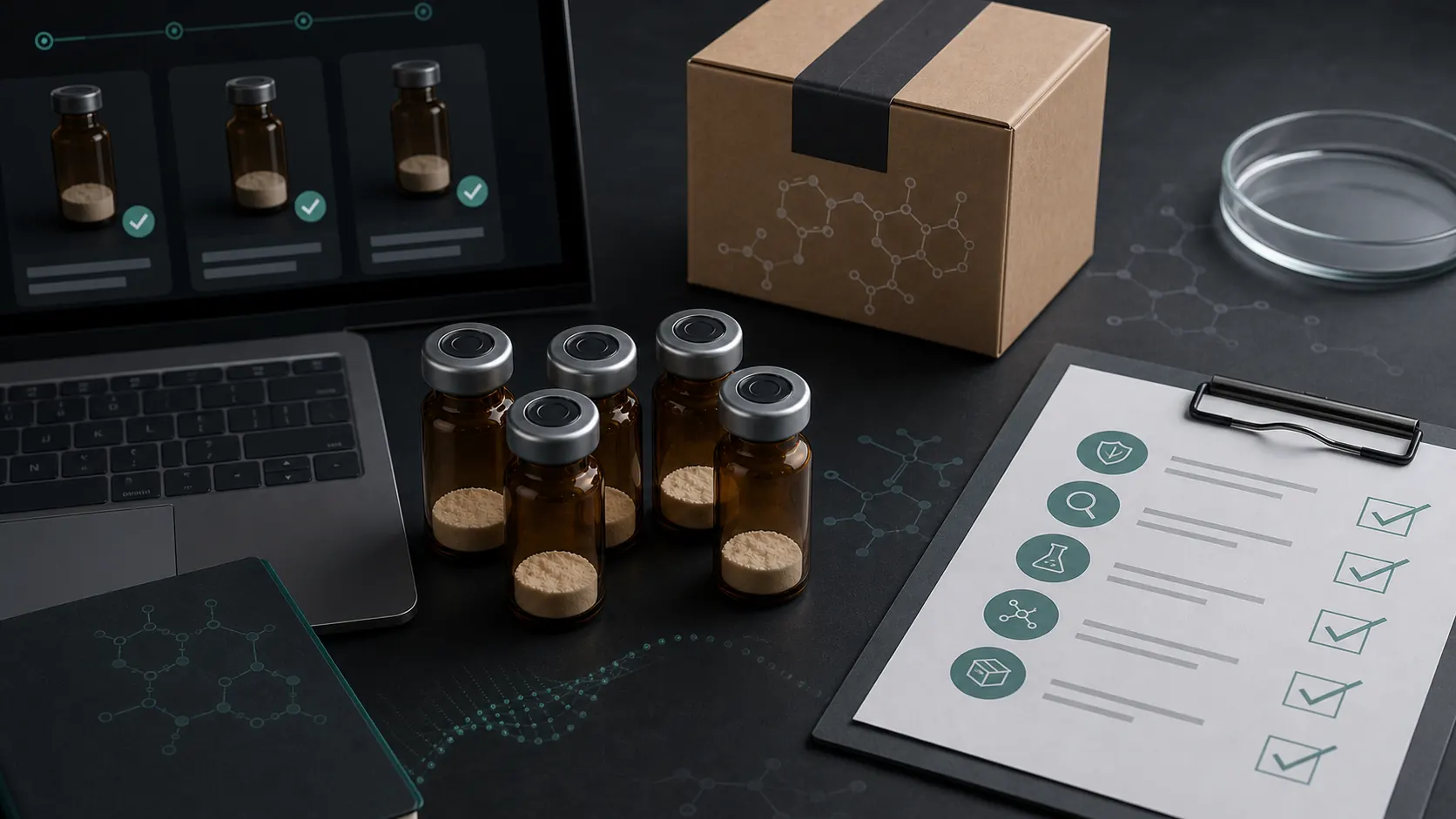
Most "best peptide vendor" lists rank stores the author has never independently tested. A more useful approach is a repeatable checklist you can run on any supplier yourself, because the thing that separates a documentable vendor from a risky one is not brand reputation — it is auditability. Can you tie a product to a batch, a batch to a lab test, and a test to a method and a date? This guide gives you the checklist, a scorecard, and the red flags, then points you to a worked example.
Why Vetting Matters More Than the Brand
Research-market peptides are not dispensed like approved medicines. The same peptide name can represent very different material depending on the seller, the batch, and the testing behind it. A vendor cannot turn a research-use product into an approved drug, and a low price cannot substitute for a certificate of analysis. Before comparing stores, be clear on what you are even buying — see Approved vs Investigational vs Compounded vs Research Peptides.
The 7-Point Vetting Checklist
| Check | What good looks like |
|---|---|
| Batch-specific COAs | A certificate that ties to the exact lot and SKU you are buying — with product name, batch/lot ID, and test date — not a generic PDF for the peptide name in general. |
| A named testing lab | The lab should be named and verifiable (ideally third-party and registered), not an anonymous "independently tested" claim. A named analyst is a stronger signal still. |
| Relevant test methods | HPLC answers purity, mass spectrometry answers identity, and sterility/endotoxin answer contamination. One purity number is not a full identity or safety picture. |
| Independent cross-checks | Community-run labs (for example Janoshik or Finnrick) and third-party review sites give corroboration the vendor cannot grade itself on. A thin footprint there is a caution. |
| Catalog focus and consistency | A focused catalog is easier to document and keep in stock than a sprawling research-chemical list. Check that listed products actually resolve in the live catalog. |
| Clear policies | Shipping cost and speed, storage guidance, returns, and support responsiveness should be stated before checkout, not discovered after a package ships. |
| Research-use language | A responsible vendor keeps research-use products separate from treatment, dosing, or disease claims. Copy that reads like a pharmacy is a warning, not a reassurance. |
How to Actually Read a COA
A certificate of analysis is only useful if it is specific enough to audit. Open the COA for the exact product and lot you intend to buy, then confirm four things: the product name and batch match the listing, the test date is recent relative to the current stock, the lab is named and plausible, and the method matches your question. Purity by HPLC tells you how much of the sample is the target peptide; mass spectrometry confirms identity; sterility and endotoxin testing address contamination. A single number does not cover all three, and a lab-looking PDF that does not tie to your lot is not evidence.
Red Flags
- No COAs, or COAs that will not tie to a specific lot and date.
- "Third-party tested" with no lab named and no document to open.
- Medical or dosing claims attached to catalog listings.
- Pressure tactics — countdown timers, "last chance" urgency, or a discount used to discourage verification.
- Products listed by reviews but missing from the live catalog, with no explanation.
- No clear shipping, storage, or return policy before checkout.
The Vendor Scorecard
Score any store on these dimensions. Strong signals on the left, cautions on the right. No single row is decisive, but a vendor that is weak across documentation, transparency, and corroboration is one to avoid regardless of price.
| Dimension | Strong | Weak |
|---|---|---|
| Public per-batch COAs | Searchable library tied to lot + SKU | None, or generic PDFs |
| Testing lab | Named, registered, third-party | Unnamed / "independently tested" |
| Methods disclosed | HPLC + mass spec (± sterility) | Single purity number only |
| Independent corroboration | Present on community labs / review sites | Thin or absent |
| Transparency | Clear ownership, location, policies | Anonymous or inconsistent |
| Track record | Multi-year, consistent reviews | Brand-new, little history |
Worked Examples
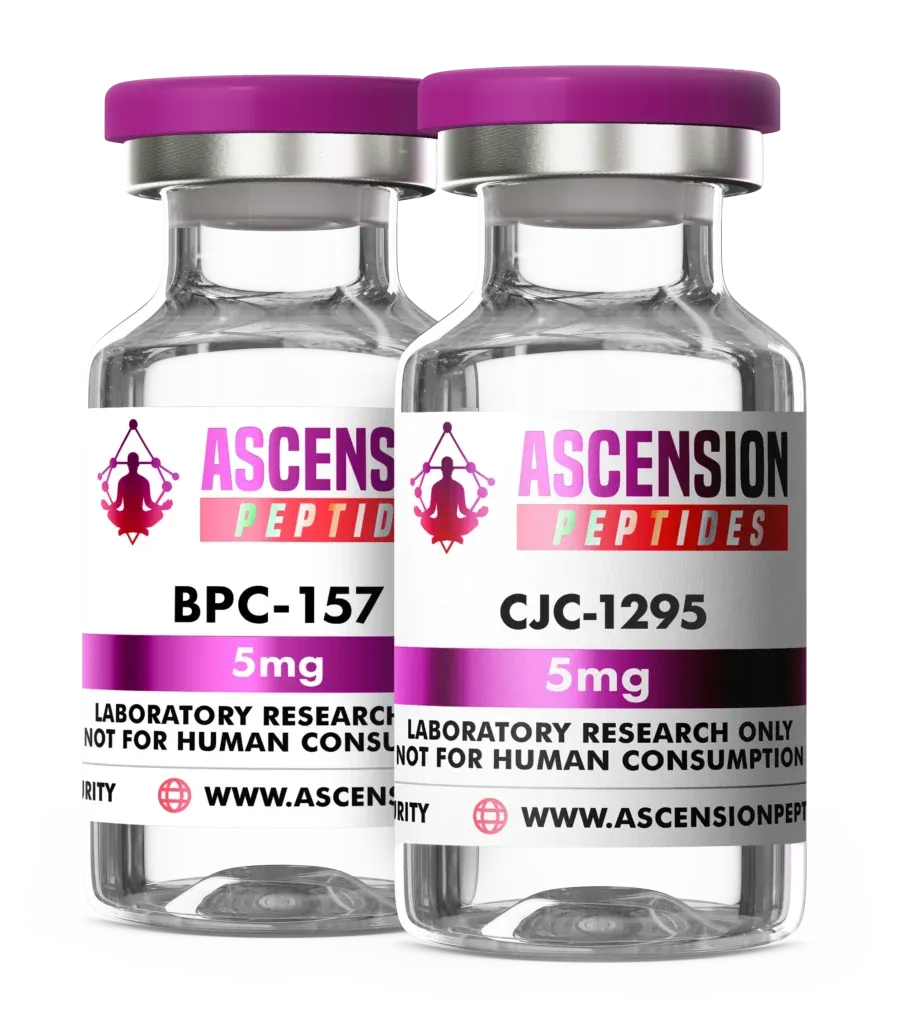
Our Ascension Peptides review (US) runs this exact checklist on a live vendor: it confirms a public per-batch COA library, names the testing lab (MZ Biolabs), pulls real prices and shipping terms, and flags the honest cautions — a short track record, a thin community-lab footprint, and shifting GLP-1 availability. For a different market, our Nova Labs review (UAE) applies the same rubric to regional logistics: public COA browser, AED pricing, and cold-chain-aware delivery tiers. Use either as a template for how to reach a verdict rather than as a reason to skip your own check.
Then anchor the compound itself in evidence before you buy. Compare a store's claims against our peptide guides — for example the BPC-157 guide or the GHK-Cu guide — and against How to Read a Peptide Study. Product availability is never the same thing as strong human evidence.
FAQ
What is the single most important thing to check?
A batch-specific certificate of analysis that you can actually open. It must tie the exact lot and SKU you are buying to a named lab, a test method, and a recent date. Everything else is secondary to that chain of evidence.
Does a high purity number mean a product is safe?
No. HPLC purity answers "how much of the peptide is the peptide," not identity, sterility, endotoxin, or suitability for any use. Treat a single purity figure as one data point, not a safety clearance.
Are newer vendors automatically untrustworthy?
No, but a short track record is a caution that raises the bar on documentation. A newer vendor with a public, named-lab COA library can be more auditable than an older one with no verifiable testing.
How do I use this checklist on a specific store?
Run the seven points and the scorecard against the live site, open a COA for a product you would actually buy, and compare the compound against an evidence-first guide before you weigh price. Our Ascension Peptides review applies exactly this method as a worked example.
References
- Ascension Peptides Review 2026 (worked example of this checklist) , Peptides Defined.
- Approved vs Investigational vs Compounded vs Research Peptides , Peptides Defined.
- How to Read a Peptide Study , Peptides Defined.
- Certain Bulk Drug Substances for Use in Compounding that May Present Significant Safety Risks , U.S. Food and Drug Administration.
Disclaimer
This page is educational content, not medical, legal, or purchasing advice. Research-use products are not approved medicines, and vendor details cited in linked reviews can change over time. Verify current documentation directly with any supplier before making a decision.
Next steps
Continue with the closest guide, peptide profile, or research tool.