GH-axis safety
CJC-1295 With DAC vs No DAC: Side Effects, FDA Status, and Evidence Limits
A research-backed review of CJC-1295 with DAC versus no-DAC claims, human GH and IGF-1 evidence, side effects, FDA compounding status, and stack-claim limits.

CJC-1295 is one of the most common growth-hormone peptide searches because it sounds more precise than the evidence usually allows. People look for "with DAC," "without DAC," side effects, IGF-1 changes, stacking with ipamorelin, and whether it is FDA-approved. Those are fair questions, but they need cleaner categories than most product pages use.
The published human evidence is real but narrow. Small controlled studies found that long-acting CJC-1295 can stimulate growth hormone and IGF-1 biomarkers in healthy adults. That does not establish broad body-composition, recovery, sleep, anti-aging, or longevity outcomes. It also does not validate every product sold online under a CJC-1295 name.
For molecule basics, start with the CJC-1295 peptide guide. This review focuses on the search-intent questions that cause the most confusion: what "with DAC" means, why no-DAC claims need caution, what side-effect evidence exists, and how FDA compounding materials change the safety discussion.
Evidence Snapshot
| Common claim | Evidence picture | Boundary |
|---|---|---|
| CJC-1295 with DAC raises GH and IGF-1. | Small controlled human studies of long-acting CJC-1295 reported sustained growth hormone and IGF-1 biomarker changes. | Biomarker response is not proof of fat loss, muscle gain, recovery, sleep, or anti-aging outcomes. |
| CJC-1295 without DAC has the same evidence. | The best-known PubMed-indexed human CJC-1295 studies describe a long-acting albumin-binding analog. | Online no-DAC naming is often used loosely and should not be treated as interchangeable with the studied compound. |
| CJC-1295 side effects are fully known. | Early healthy-adult studies were small, while FDA compounding materials identify limited clinical data and safety concerns. | A small volunteer study cannot define long-term, route-specific, or compounded-product risk. |
| CJC-1295 plus ipamorelin is evidence-backed as a stack. | CJC-1295 and ipamorelin each have separate human research contexts around GH-axis signaling. | Separate molecule evidence does not validate a combined consumer protocol or product claim. |
| Reconstitution math confirms product safety. | Math can describe concentration and unit conversions. | It cannot verify identity, sterility, endotoxin status, impurities, legality, or clinical appropriateness. |
CJC-1295 With DAC vs No DAC
DAC stands for drug affinity complex. In the CJC-1295 context, it usually refers to a long-acting design intended to bind albumin and extend exposure. The central PubMed-indexed human studies describe a long-acting CJC-1295 analog of growth hormone-releasing hormone, not a generic short GHRH fragment sold under interchangeable marketplace labels.
That distinction matters because online "CJC-1295 without DAC" is often used as a market name for modified GRF(1-29)-type products. A buyer-facing product name does not prove the molecule matches the compound studied in a clinical paper, and a study of a long-acting analog should not be pasted onto a short-acting product without route-specific and identity-specific evidence.
CJC-1295, sermorelin, and tesamorelin are all discussed around the GHRH or GHRF pathway, but they are not the same product. Tesamorelin has FDA-approved product labeling for a narrow HIV-associated lipodystrophy indication. Sermorelin has historical Geref regulatory context. CJC-1295 does not have an FDA-approved U.S. prescribing label identified in the sources used here.
The broader growth-hormone peptide comparison explains the class-level differences. This page goes deeper on the CJC-1295 naming problem because it affects almost every safety and side-effect claim.
What The Human Evidence Shows
The most cited CJC-1295 human paper reported two randomized, double-blind, placebo-controlled, ascending-dose studies in healthy adults. Researchers measured growth hormone, IGF-1, pharmacokinetics, and tolerability after controlled exposure. The main finding was sustained GH and IGF-1 stimulation, with effects lasting days and in some measurements longer than a single-day signal.
That is useful evidence for pathway activity. It is not the same as evidence that CJC-1295 improves physique, training recovery, injury healing, sleep architecture, sexual function, cognition, or lifespan. The study population was small and healthy, the endpoints were mainly hormone biomarkers, and the study did not test a modern consumer stack.
A second small human study used frequent overnight sampling and found that pulsatile GH secretion persisted during continuous stimulation by CJC-1295. It also reported higher mean GH and IGF-1. That detail is often used in marketing to imply a more "physiologic" pattern than direct growth hormone. The narrower reading is better: pulsatility was studied under controlled conditions, but clinical outcomes were not established.
Animal data add mechanistic context. A GHRH-knockout mouse study reported effects from once-daily CJC-1295 administration in a model built around absent GHRH signaling. That type of work can help explain biology. It cannot be used as proof that CJC-1295 changes human body composition or recovery in routine use.
The key evidence split is the same one described in How to Read a Peptide Study. Human biomarker response is stronger than cell-only or animal-only evidence, but it is weaker than a large patient-centered trial with predefined clinical endpoints and safety follow-up.
Side Effects And Safety Signals
The early healthy-adult CJC-1295 study reported no serious adverse reactions in that limited setting. That statement deserves both attention and restraint. It means serious events were not seen in the study's small controlled sample. It does not define long-term risk, risk in people with endocrine disease, risk in people with diabetes risk, risk in older adults, or risk from compounded and research-market products.
Growth hormone and IGF-1 biology is not neutral. GH-axis drugs can raise questions about glucose handling, fluid retention, carpal-tunnel-like symptoms, edema, blood pressure, sleep apnea, cancer biology, pituitary disease, and interactions with other endocrine conditions. Those risks are not automatically proven for every CJC-1295 exposure, but pathway activity is the reason caution is necessary.
FDA's current compounding safety-risk page is more direct for product-market claims. It states that compounded drugs containing CJC-1295 may pose immunogenicity risk for certain routes because of aggregation and peptide-related impurities, and that peptide-related impurity and active-ingredient characterization issues add complexity. FDA also identifies serious adverse events associated with CJC-1295, including increased heart rate and systemic vasodilatory reaction, while noting limited available clinical data.
That is not a statement that every vial will cause those events. It is a statement that confident "low side effect" marketing is not well supported. Small studies, limited public clinical data, peptide impurity concerns, and route uncertainty should push readers toward caution rather than certainty.
Stack claims create another safety gap. CJC-1295 plus ipamorelin is a common online pairing because one is framed as a GHRH analog and the other as a ghrelin-receptor secretagogue. The ipamorelin side-effect review shows why that logic is not enough. Separate signals do not prove the safety, tolerability, or effectiveness of a combined product or protocol.
FDA Status And Product-Quality Context
This review did not identify an FDA-approved CJC-1295 drug label for a U.S. consumer medicine. FDA discusses CJC-1295 in compounding safety-risk materials, not as an approved prescription product with regulator-reviewed dosing, contraindications, adverse-event tables, storage instructions, and manufacturing controls.
FDA's compounding guidance also matters because compounded drugs are not FDA-approved. FDA does not review compounded products for safety, effectiveness, or quality before marketing in the same way it reviews approved medicines. That distinction is not a technicality when the product is an injectable or nasal peptide and the risks include sterility, endotoxins, aggregation, impurities, concentration, and identity.
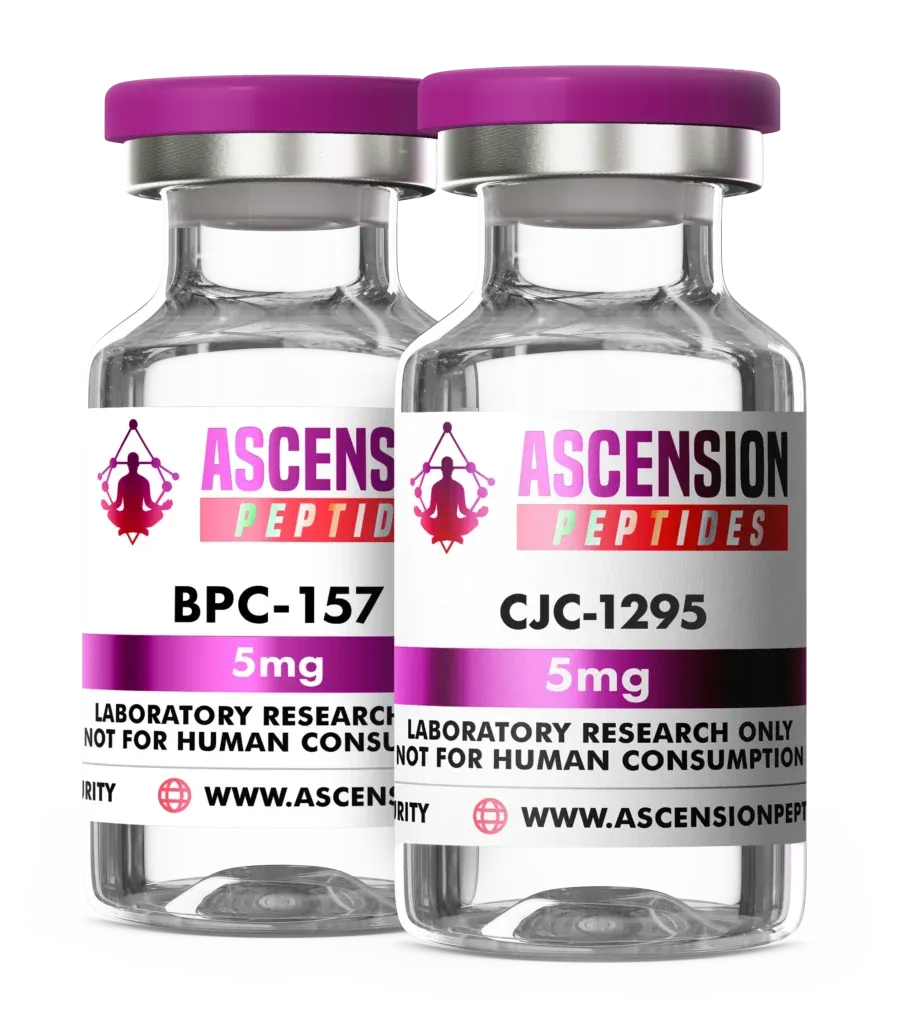
Research-use vials add another category. A seller certificate of analysis can be relevant to identity or purity claims, but it does not establish clinical benefit, route safety, sterility for injection, endotoxin suitability, legal status, or medical appropriateness. The peptide injection-site reaction guide covers why product quality and route are separate safety questions.
Product naming also affects adverse-event interpretation. If one report describes a clinical-trial compound, another describes a compounded preparation, and a third describes a research-use vial, the shared CJC-1295 label may hide important differences. Salt form, excipients, concentration, storage history, impurities, aggregation, route, and patient population can all change risk. That is why a careful source should describe the exact product category before making a side-effect statement.
Reconstitution resources are often linked in the same conversations, so the boundary is worth naming. The reconstitution calculator can help explain concentration math, and the reconstitution math guide explains unit errors. Neither tool validates a CJC-1295 product or authorizes use.
Athletes have a separate rule set. WADA's 2026 Prohibited List includes growth hormone-releasing factors and GHRH analogs such as CJC-1295 within the peptide hormones and growth factors category. A research-use label, a no-DAC name, or a seller's interpretation does not remove anti-doping responsibility.
How To Evaluate CJC-1295 Claims
First, identify which molecule the source means. "CJC-1295 with DAC," "CJC-1295 no DAC," and "Mod GRF(1-29)" are not automatically interchangeable. If the source cites a long-acting CJC-1295 paper while selling a short-acting product, the evidence has drifted from the product.
Second, identify the endpoint. GH and IGF-1 increases are biomarkers. They do not prove a clinical outcome. Any claim about muscle gain, fat loss, sleep, recovery, sexual function, cognition, or longevity needs direct human outcome evidence, not just pathway logic.
Third, check the product category. An investigational research compound, an FDA-approved drug, a compounded preparation, and an online research-use vial are different evidence objects. The approved versus investigational peptide guide is the safest starting framework.
Fourth, watch for safety shortcuts. Phrases like "natural GH pulse" or "safer than HGH" can hide the real questions: route, product identity, impurity profile, endocrine history, glucose risk, duration, monitoring, and whether the population in the cited paper resembles the intended user.
The conservative bottom line is clear. CJC-1295 with DAC has small human biomarker studies and real endocrine pharmacology. No-DAC marketplace claims need extra scrutiny. Broad wellness and body-composition outcomes are not established, and FDA compounding materials make safety, product quality, and limited clinical data central to the discussion.
References
- Prolonged stimulation of growth hormone (GH) and insulin-like growth factor I secretion by CJC-1295, a long-acting analog of GH-releasing hormone, in healthy adults, Journal of Clinical Endocrinology & Metabolism / PubMed.
- Pulsatile secretion of growth hormone (GH) persists during continuous stimulation by CJC-1295, a long-acting GH-releasing hormone analog, Journal of Clinical Endocrinology & Metabolism / PubMed.
- Once-daily administration of CJC-1295, a long-acting growth hormone-releasing hormone (GHRH) analog, normalizes growth in the GHRH knockout mouse, American Journal of Physiology-Endocrinology and Metabolism / PubMed.
- The Safety and Efficacy of Growth Hormone Secretagogues, Sexual Medicine Reviews / PubMed.
- Certain Bulk Drug Substances for Use in Compounding that May Present Significant Safety Risks, U.S. Food and Drug Administration.
- Compounding and the FDA: Questions and Answers, U.S. Food and Drug Administration.
- Bulk Drug Substances Used in Compounding, U.S. Food and Drug Administration.
- Growth Hormone Stimulation Tests in Assessing Adult Growth Hormone Deficiency, Endotext / NCBI Bookshelf.
- The 2026 Prohibited List, World Anti-Doping Agency.
Disclaimer
This page is educational and is not medical advice. It does not provide dosing, injection, reconstitution, compounding, sourcing, bodybuilding, anti-aging, recovery, sleep, or individualized treatment guidance for CJC-1295, CJC-1295 with DAC, CJC-1295 without DAC, or related products. Decisions about growth-hormone pathway drugs, peptide products, adverse symptoms, and medication changes should be made with qualified healthcare professionals using current regulator-reviewed information.
Next steps
Continue with the closest guide, peptide profile, or research tool.