Supplier review
Ascension Peptides Review 2026: Is It Legit? COAs, Pricing & Code
An evidence-first Ascension Peptides review: is it legit, MZ Biolabs third-party COAs, real pricing, the 50% code, shipping, product range, and research-use limits.
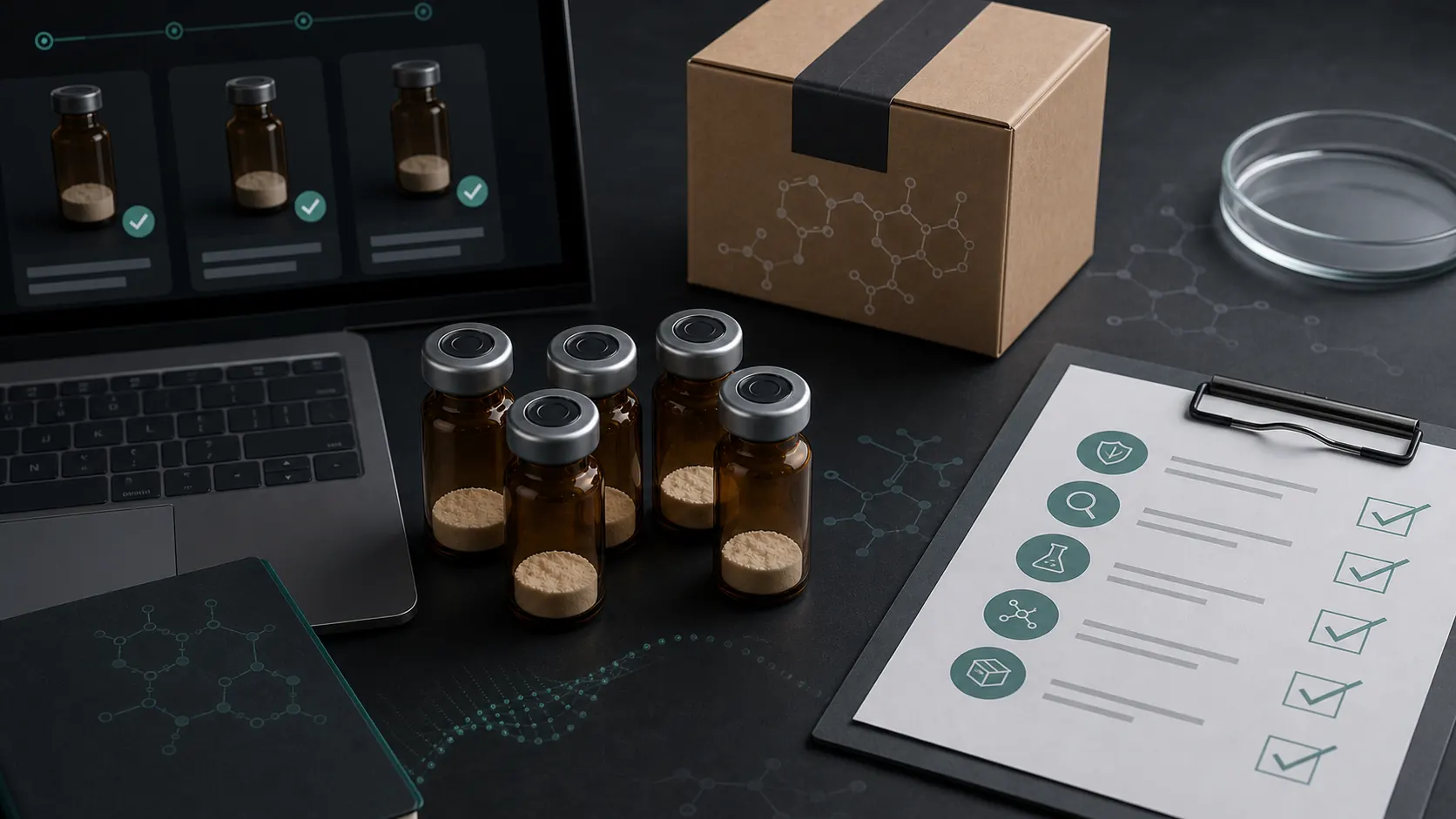
Ascension Peptides is a US-based research-peptide supplier that launched in 2024, during the market reshuffle that removed older names like Peptide Sciences and Amino Asylum. This review answers the questions buyers actually search before spending: is it legit, is it third-party tested, what does it cost, how fast does it ship, and where does it fall short. We fetched the vendor's own pages and independent rating sites to keep the numbers verifiable, and we flag anything we could not confirm firsthand.
One framing note up front. A good supplier can only be judged on auditability — can you tie a product to a batch, a batch to a lab test, and a test to a method. It cannot turn a research-use peptide into an approved medicine. If you are still learning that distinction, read Approved vs Investigational vs Compounded vs Research Peptides first, then use our peptide-vendor vetting checklist on any store, including this one.
Quick Verdict
Rating: 4 / 5 for research-use buyers who verify at the batch level. Ascension earns the score on documentation and pricing, and loses points on track record, community-lab coverage, and transparency. If you already know what you are looking for and want the direct path, open the Ascension store and use code PEPTIDESDE.
| Area | What we found |
|---|---|
| Testing | Public per-batch COAs from MZ Biolabs (HPLC + mass spec); reported purity ~99.7–99.98%. |
| Pricing | Low effective prices with our standing PEPTIDESDE discount; flat $15 US shipping. |
| Reviews | Peptide Critic 4.7/5; Trustpilot reported ~4.8/5 across 100+ reviews. |
| Main caution | Newer brand, thin community-lab footprint, research-use only — not medicines. |
Is Ascension Peptides Legit?
By the signals that matter for a research-use vendor, yes. Ascension has been operating since 2024, publishes a searchable certificate-of-analysis library, names its testing lab, and carries positive independent ratings: 4.7/5 from Peptide Critic and a reported ~4.8/5 on Trustpilot across 100+ reviews (we could confirm the Peptide Critic figure directly; the live Trustpilot count is aggregator-reported). Reviewers repeatedly single out fast, no-pushback support when a shipping issue comes up.
The honest asterisks: it is a newer company still building a multi-year record, its public ownership details are thin, and its listed location is inconsistent — business filings show Castle Rock, Colorado while a 2026 review and shipping notes point to the Kansas City area. None of that is disqualifying, but for a young vendor it is worth knowing. "Legit vendor" also is not the same as "safe medicine." Everything here is sold for research use only and is not FDA-approved for human use.
COAs & Third-Party Testing
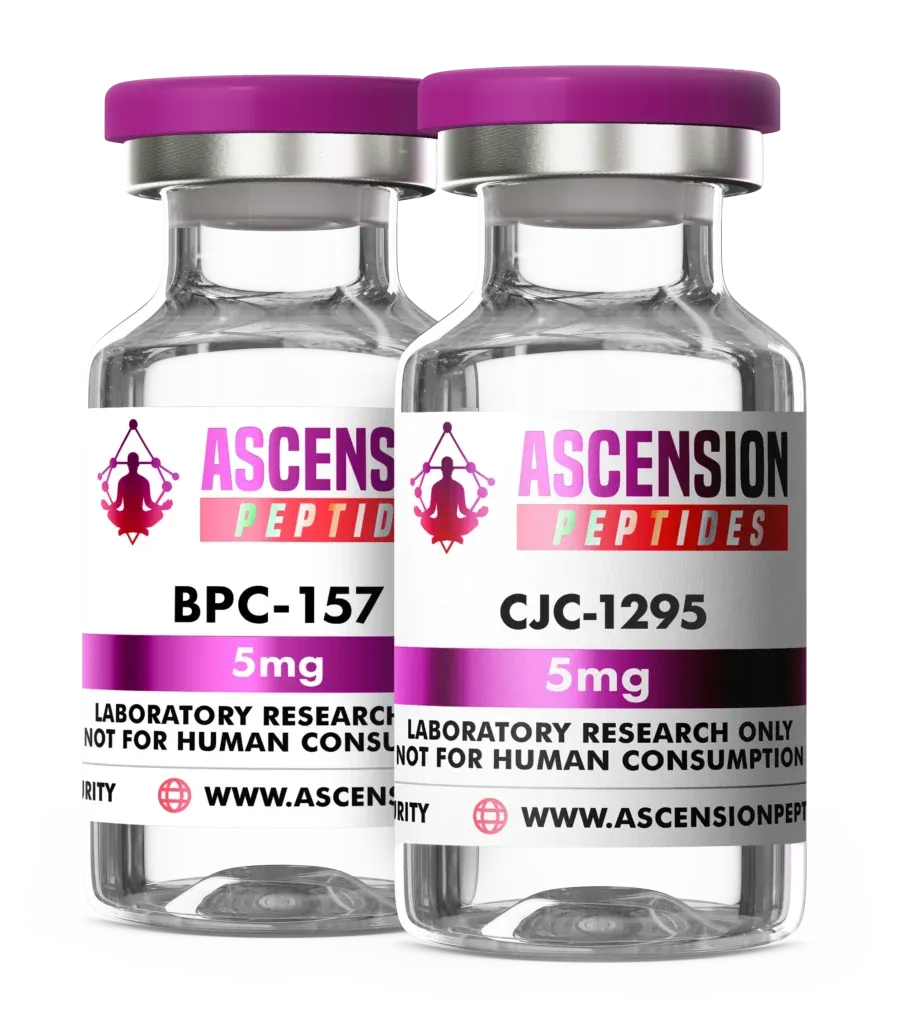
This is Ascension's strongest area and the reason we are comfortable pointing research-use buyers here first. It runs a public certificate-of-analysis library — roughly 75 downloadable records you can filter by product name, SKU, batch/lot, cap color, purity, and test date. Testing is done by MZ Biolabs (Tucson, Arizona), a DEA-registered lab that issues analyst-identified COAs, using HPLC for quantitative purity and mass spectrometry for identity. Across its main compounds, published COAs report purity in roughly the 99.7–99.98% range.
Two caveats keep this honest. First, we report the purity range as published on the vendor and aggregator side; we did not independently lab-test product. Second, Ascension's footprint on the community-default labs many buyers cross-check (Janoshik, Finnrick) is thin, so third-party corroboration is more limited than the polished COA portal suggests. Use the library the right way: open the COA for the exact lot you are about to buy, confirm the product name and batch match the listing, and check the test date is recent. A generic, lab-looking PDF that does not tie to your lot is not evidence.
Product Range
Ascension runs a focused catalog of about 42 products rather than a sprawling research-chemical list. That focus is a feature: fewer, higher-demand compounds are easier to document and keep in stock. Here is how the catalog maps to the topics we cover — each linked compound has an evidence-first guide so you can check the research context before you check the price.
Recovery & healing
- BPC-157 (10 mg)
- TB-500 (5 mg)
- GHK-Cu (100 mg)
- Wolverine & GLOW stacks
Growth-hormone secretagogues
- CJC-1295 no DAC (5 / 10 mg)
- Ipamorelin (5 mg)
- Sermorelin (10 mg)
- FIT stack (CJC-1295 / Ipamorelin)
Longevity & metabolic
- Epithalon (10 mg)
- MOTS-c
- AOD-9604 (5 mg)
- NAD+, 5-Amino-1MQ
Cognitive, sexual health & sleep
Cosmetic & other
- Melanotan I & II
- GHK-Cu (cosmetic sizes)
- HCG (5000 iu)
- KLOW, Calm + Clarity blends
One current-state flag that most competing reviews miss: Ascension has historically listed a GLP-1 category, but at our latest check the on-site search returned no results for retatrutide, tirzepatide, or semaglutide. They may have been delisted. If GLP-1 access is why you are here, verify the live catalog rather than trusting an older review, and read our retatrutide guide for why research-market GLP-1s are not equivalent to clinical-trial or prescription material.
Pricing & the PEPTIDESDE Code
Pricing is a genuine strength. Below are current listed prices we pulled from Ascension's own product pages (pre-code). The standing discount lowers the effective price further; our code is PEPTIDESDE.
| Product | Size | Listed price | Regular |
|---|---|---|---|
| BPC-157 | 10 mg | $55 | $74.99 |
| CJC-1295 (no DAC) | 5 mg | $60 | $64.99 |
| GHK-Cu | 100 mg / 3 mL | $60 | $84.99 |
| AOD-9604 | 5 mg | $60 | — |
| DSIP | 10 mg | $75 | — |
| Epithalon | 10 mg | $50 | — |
| FIT Stack (CJC-1295 / Ipamorelin) | — | $79 | — |
| Wolverine Stack (BPC-157 / TB-500) | — | $119 | — |
A caution on the "50% off" framing you will see everywhere: the code is not a guaranteed permanent sitewide sale. Treat the discounted number as the current effective price rather than a fixed one, and do not let a discount talk you out of opening the COA. If Ascension fits your checklist, open the current store.
Shipping & Fulfillment
Shipping is flat and predictable: $15 within the US, no free-shipping threshold, with orders typically arriving in 2–5 business days by UPS or USPS. Orders placed after 2 PM Central ship the next business day, and shipping protection is offered at checkout. Ascension ships to the United States only; it does not ship internationally, which it attributes to recent regulations. Cold-chain packaging and discreet packaging are claimed in some third-party writeups but are not stated on the vendor's own shipping page, so treat those as unconfirmed.
Pros & Cons
What we like
- +Public, searchable per-batch COA library (~75 records) tied to lot and SKU.
- +Third-party testing at a named, DEA-registered lab (MZ Biolabs), with HPLC + mass-spec identity and purity.
- +Focused catalog of high-interest compounds rather than a sprawling research-chemical list.
- +Low effective pricing with a standing discount code, and a flat, predictable $15 shipping fee.
- +Consistently responsive support in third-party reviews (Peptide Critic 4.7/5; Trustpilot reported ~4.8/5).
Worth knowing
- –Newer vendor (since 2024) — a shorter track record than the pre-2025 incumbents.
- –Thin footprint on community-trusted labs, so independent cross-checks are limited.
- –Limited ownership transparency and an inconsistent listed location (Castle Rock, CO vs. Kansas City).
- –GLP-1 listings (retatrutide, tirzepatide, semaglutide) returned no results on the live catalog at our last check — availability may have changed.
- –The 50% code is not a guaranteed permanent sitewide price.
How Ascension Compares
Rather than rank vendors we have not independently tested, here is the honest scorecard on the dimensions that actually separate a documentable supplier from a risky one. Use the same rows on any competitor (Paradigm Peptides, Simple Peptides, and others in this tier) — our vendor vetting checklist walks through each.
| Dimension | Ascension Peptides |
|---|---|
| Public per-batch COAs | Yes — searchable library (~75 records) filterable by lot, SKU, purity, and date. |
| Named testing lab | MZ Biolabs (Tucson, AZ), DEA-registered, analyst-identified COAs. |
| Community-lab footprint | Thin — few or no samples on community defaults (Janoshik, Finnrick). A known gap. |
| Catalog | Focused (~42 SKUs): recovery, GH secretagogues, longevity, cognitive, cosmetic. |
| Pricing | Low effective price after the standing discount code; flat $15 shipping. |
| Track record | Newer — operating since 2024; positive but still-shallow review history. |
Who It Fits (and Who It Does Not)
Ascension fits research-use buyers who are already past the discovery phase — comparing peptide names, checking trial evidence, and separating a regulated drug from a research-market product. For that reader, the clean storefront and public COAs make due diligence easier, not optional.
It is a poor fit for anyone looking for diagnosis, dosing, injection guidance, or body-transformation promises. Peptides Defined does not provide those, and no supplier discount changes the underlying evidence. Do not buy on urgency, a social-media protocol, or a claim that sounds clinical — especially for peptides tied to weight loss, recovery, sexual function, or longevity, where marketing runs hottest. Compare the product page against an evidence-aware guide first, such as GLP-1 drugs vs other peptides or How to Read a Peptide Study.
Verdict
Ascension Peptides is a sensible first stop for research-use buyers who verify at the batch level. The reasons are concrete: a public, searchable COA library; a named, DEA-registered testing lab; a focused catalog; and low effective pricing with flat shipping. The reasons for the 4-out-of-5 rather than higher are equally concrete: a short track record, a thin community-lab footprint, limited transparency, and shifting GLP-1 availability.
The right sequence never changes — evidence first, product page and COA second, checkout last. If that matches what you are doing, open the Ascension store and use code PEPTIDESDE.
FAQ
Is Ascension Peptides legit?
It is a real, operating US-based research-peptide supplier (since 2024) with a public per-batch COA library, a named DEA-registered testing lab (MZ Biolabs), and positive third-party ratings (Peptide Critic 4.7/5; Trustpilot reported ~4.8/5). "Legit vendor" is not the same as "medicine," though — its products are sold for research use only and are not FDA-approved treatments.
Is Ascension Peptides third-party tested?
Yes. It publishes per-batch certificates of analysis from a third-party lab (MZ Biolabs, Tucson, AZ) using HPLC and mass spectrometry. Its COA library is searchable by product, lot, and purity. Always open the COA for the exact lot you are buying rather than trusting the peptide name alone.
Is the Ascension Peptides discount code real?
Yes — PEPTIDESDE is the current Peptides Defined code. It is not a guaranteed permanent sitewide sale, so treat the discounted number as the current effective price, not a fixed one.
How much is shipping and how fast is it?
Shipping is a flat $15 within the United States (no free-shipping threshold), typically arriving in 2–5 business days via UPS or USPS, with shipping protection offered. Ascension ships to the US only and does not ship internationally.
Does Ascension sell GLP-1 peptides like retatrutide or tirzepatide?
It has historically listed a GLP-1 category, but at our most recent check the on-site product search returned no results for retatrutide, tirzepatide, or semaglutide, suggesting those may have been delisted. Check the live catalog before assuming availability, and read our peptide guides for the evidence context first.
Where is Ascension Peptides located?
Public records are inconsistent: business listings show Castle Rock, Colorado, while a 2026 review and shipping notes point to the Kansas City area. It is US-based and US-shipping-only. The location ambiguity is worth noting for a newer vendor.
Does the coupon change the review score?
No. The assessment is built on auditable COAs, a named lab, verifiable pricing, and research-use boundaries. A discount is never a reason to skip batch-level verification.
References
- Ascension Peptides — official store , Ascension Peptides.
- Ascension Peptides — Certificates of Analysis library , Ascension Peptides.
- Ascension Peptides — Shipping policy , Ascension Peptides.
- Ascension Peptides vendor rating (4.7/5) , Peptide Critic.
- Ascension Peptides review and lab audit (MZ Biolabs) , Peptide Grades.
- How to Vet a Peptide Vendor: COA & Trust Checklist , Peptides Defined.
- Approved vs Investigational vs Compounded vs Research Peptides , Peptides Defined.
- Certain Bulk Drug Substances for Use in Compounding that May Present Significant Safety Risks , U.S. Food and Drug Administration.
Disclaimer
This page is educational. It is not medical, legal, or prescribing advice, and it is not a recommendation to use any peptide product in humans. Research-use products are not approved medicines, third-party figures cited here can change, and product decisions should be evaluated with appropriate professional, legal, and scientific oversight.
Next steps
Continue with the closest guide, peptide profile, or research tool.