Perioperative safety
GLP-1 Before Surgery: Anesthesia, Aspiration Risk, and Current Evidence
A research-backed guide to GLP-1 drugs before surgery or endoscopy, retained gastric contents, aspiration-risk evidence, and current perioperative guidance limits.

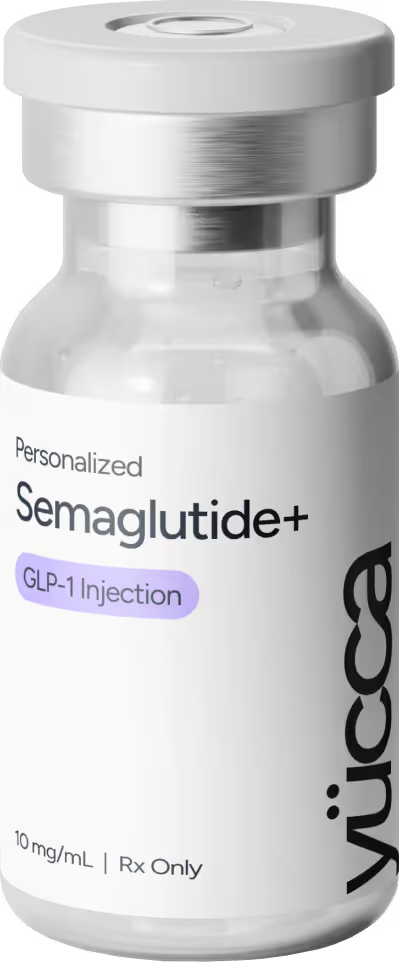
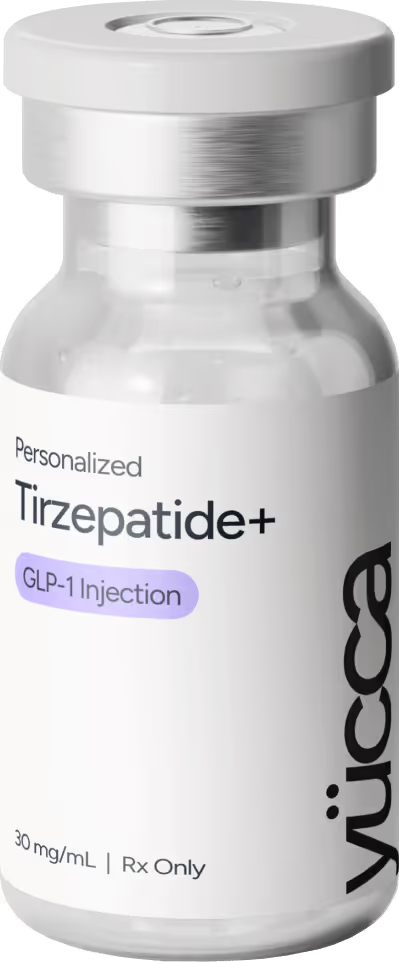
GLP-1 drugs before surgery became a high-demand safety question because semaglutide, tirzepatide, and related medicines slow gastric emptying. That effect is useful in metabolic treatment, but it creates a practical perioperative question: could a patient have retained stomach contents despite fasting before anesthesia or deep sedation?
The evidence answer is not a simple yes or no. Studies have found retained gastric contents more often in some GLP-1 users, but aspiration events are uncommon, observational studies differ, and professional guidance changed after early concerns. The current task is to separate a real risk signal from blanket rules and social-media shortcuts.
This guide is narrower than the broad GLP-1 side effects guide. It focuses on surgery, endoscopy, anesthesia, gastric ultrasound, retained gastric contents, aspiration-risk evidence, and what current guidance can and cannot prove.
Evidence Snapshot
| Common claim | Evidence picture | Boundary |
|---|---|---|
| Everyone must stop weekly GLP-1 drugs one week before surgery. | ASA issued 2023 consensus guidance with a broad hold approach, but 2024 multi-society guidance moved toward individualized risk assessment. | Local policies and patient-specific risk can differ, so the anesthesia and procedural team still controls the perioperative plan. |
| Most patients can continue, so there is no risk. | The 2024 guidance says many low-risk patients can continue, with risk mitigation for higher-risk patients. | Continuation guidance is not a claim that delayed gastric emptying, retained gastric contents, or aspiration risk is impossible. |
| Fasting rules solve the problem. | Gastric ultrasound and endoscopy studies have found retained gastric contents in some GLP-1 users despite preprocedure fasting. | Retained contents are a risk marker, not the same thing as a measured aspiration event in every patient. |
| Case reports prove a population-level aspiration rate. | Case reports describe retained solids or aspiration-context concerns, which helped raise awareness. | Case reports are signal-generating and cannot estimate the true risk for all GLP-1 users. |
| A reconstitution or dose calculator can decide surgical timing. | Procedure decisions involve medication timing, symptoms, escalation phase, indication, diabetes status, anesthesia plan, and local protocol. | Unit math cannot replace perioperative medical assessment. |
Why GLP-1 Drugs Matter Before Procedures
GLP-1 receptor agonists can delay gastric emptying. Approved labels also warn about severe gastrointestinal adverse reactions, and the current Wegovy label states that Wegovy is not recommended in patients with severe gastroparesis. Those facts do not mean every patient has a full stomach before surgery, but they explain why anesthesiologists and endoscopists pay attention to these medicines.
Aspiration risk under anesthesia is different from ordinary nausea. The concern is that stomach contents could enter the airway during anesthesia, deep sedation, or a procedure where protective airway reflexes are reduced. The chain of reasoning is gastric emptying effect, possible retained gastric contents, possible regurgitation, possible aspiration. Evidence is stronger for some parts of that chain than for others.
Retained gastric contents are not rare enough to ignore in procedure planning, but they are not the same as proven aspiration in every patient. Many studies measure ultrasound findings or endoscopic food retention. Those are useful markers. The harder endpoint, clinically observed aspiration, is much less common and harder to study with precision.
This is why search results that say "stop for one week" or "do not stop at all" both miss the current nuance. Procedure teams need to account for medication type, timing, dose escalation, active gastrointestinal symptoms, diabetes status, type of procedure, anesthesia plan, and local protocol.
How Guidance Changed
In June 2023, the American Society of Anesthesiologists issued consensus-based guidance that took a cautious broad-hold approach. The practical shorthand was to hold daily GLP-1 drugs on the day of an elective procedure and weekly GLP-1 drugs for one week before an elective procedure, with additional caution for urgent or emergent procedures.
That guidance reflected limited evidence and a growing set of case reports and procedural concerns. It also created real-world friction: postponed procedures, inconsistent local policies, and diabetes-management questions when treatment interruption could worsen glycemic control.
In October 2024, a multi-society clinical practice guidance involving anesthesiology, gastroenterology, bariatric surgery, obesity-focused perioperative care, and endoscopic surgery groups moved away from a one-rule approach. Public summaries of that guidance state that most patients can continue GLP-1 drugs before elective surgery or gastrointestinal endoscopy, while patients at highest risk for significant gastrointestinal side effects should follow additional risk-reduction measures such as a liquid-only diet for 24 hours before the procedure when directed by the care team.
The updated guidance also emphasizes shared decision-making across the prescribing, procedural, and anesthesia teams. That matters because stopping a GLP-1 drug can have tradeoffs, especially in people taking it for type 2 diabetes. Continuing can also have tradeoffs in people with active nausea, vomiting, severe constipation, dose escalation, suspected gastroparesis, or other delayed-emptying risks.
Current guidance should therefore be read as risk stratification, not casual permission. A patient should not override instructions from a surgeon, anesthesiologist, gastroenterologist, diabetes clinician, or facility protocol based on a general article.
The practical change is communication timing. A procedure team can only weigh GLP-1-related risk if it knows the drug name, indication, usual schedule, recent dose changes, active symptoms, and whether the patient is using an FDA-approved medicine, a compounded product, or a research-market product. Last-minute disclosure limits options and can make a team choose between delay, full-stomach precautions, altered anesthesia planning, or proceeding with incomplete information.
What The Evidence Shows
A JAMA Surgery cross-sectional study used gastric ultrasonography in fasting patients before elective procedures under anesthesia. It found a higher prevalence of increased residual gastric content among once-weekly GLP-1 receptor agonist users than among patients who were not taking a GLP-1 receptor agonist. The authors concluded that fasting duration suggested by then-current guidelines might be inadequate in that group.
Endoscopy studies add a second view. A systematic review and meta-analysis of endoscopy outcomes reported higher odds of retained gastric contents and aborted procedures among GLP-1 receptor agonist users compared with controls. That result supports the signal that retained contents can be more common, especially in upper endoscopy contexts.
At the same time, not every endoscopy study shows the same level of risk. A multicenter cross-sectional analysis reported low retained gastric-content rates among patients using GLP-1 receptor agonists, with many retained-content cases in patients with type 2 diabetes, and no aspiration events in that dataset. Another retrospective endoscopy study found higher retained-content rates among GLP-1 users. These differences are exactly why guidance has shifted toward risk assessment rather than one universal rule.
Scoping-review evidence also cautions against overconfidence. Reviews have found signals for increased residual gastric contents, but aspiration and regurgitation outcomes remain less certain because the evidence base includes heterogeneous observational studies, case reports, and procedure-specific contexts. A risk marker is not the same as a precise population-level aspiration rate.
Case reports are still useful. Reports of retained solids after adequate fasting helped clinicians notice the problem early. But case reports are not denominators. They cannot tell a reader whether the risk is 1 in 100, 1 in 10,000, or concentrated in a much smaller high-risk subgroup.
Who May Need More Caution
The highest-risk features in guidance and clinical discussion generally relate to delayed gastric emptying or active gastrointestinal symptoms. Examples include being early in dose escalation, having current nausea or vomiting, having significant abdominal bloating or pain, having severe constipation, using higher doses, having known or suspected gastroparesis, or having other conditions or drugs that slow gastric emptying.
Diabetes status can matter for two reasons. First, diabetes itself can be associated with delayed gastric emptying in some patients. Second, holding a GLP-1 drug in a person using it for glucose management may require a diabetes plan, not a casual skipped dose. A patient using GLP-1 therapy for obesity alone and a patient using it for type 2 diabetes may face different tradeoffs.
Procedure type also matters. Upper endoscopy directly visualizes gastric contents. Colonoscopy prep can change gastric and bowel conditions. General anesthesia, deep sedation, airway management, emergency surgery, and elective outpatient procedures create different risk decisions. A general education page cannot replace facility-specific instructions.
Newer products and higher doses raise additional practical questions. For example, Wegovy HD 7.2 mg adds a higher semaglutide exposure option for adult weight reduction, and the current label reports dose-related dysesthesia and gastrointestinal warnings. Perioperative teams may treat dose escalation and tolerability history as relevant context.
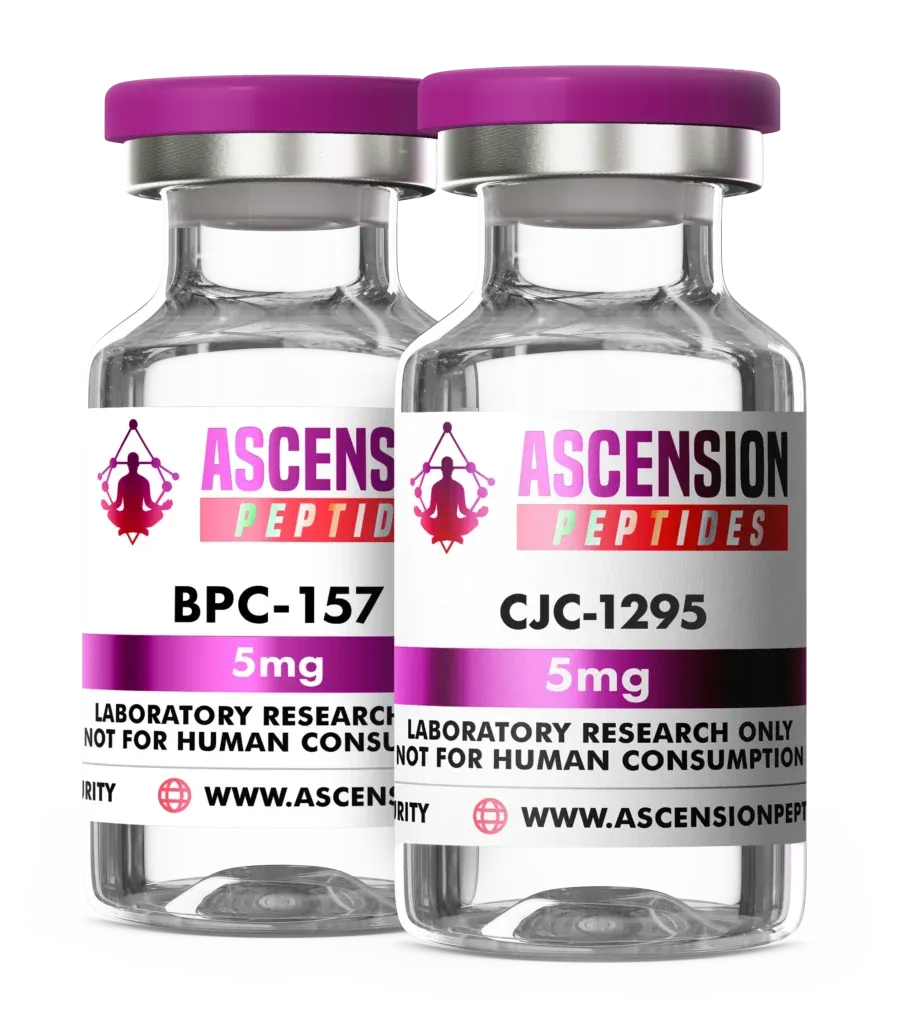
The same principle applies to research-market products. An unlabeled vial sold as semaglutide, tirzepatide, or another peptide does not provide the dosing certainty, manufacturing controls, device context, or label information of an approved product. The approved vs investigational vs compounded vs research peptides guide explains why product category affects evidence quality.
How To Handle GLP-1 Surgery Claims
First, identify the source. A PubMed-indexed study, multi-society guidance, FDA label, hospital policy, surgeon instruction, forum post, and supplier page do not carry the same weight. Reddit and forums are useful for discovering what patients are confused about, but they should not be treated as proof.
Second, identify the endpoint. Gastric-emptying physiology, retained gastric contents, endoscopy visibility, aborted procedure, regurgitation, aspiration, pneumonia, glycemic control, and weight regain after interruption are different outcomes. A study measuring one endpoint does not automatically answer another.
Third, separate medicine management from math. The reconstitution calculator can help with concentration arithmetic. It cannot decide whether to hold a drug, continue a drug, use a liquid diet, delay a procedure, perform gastric ultrasound, change an anesthesia plan, or manage diabetes medications.
Fourth, do not use compounding or research-product claims to bypass perioperative disclosure. If a person is using a GLP-1, GIP/GLP-1, investigational incretin, or research-market peptide, the procedure team needs accurate medication information. The GLP-1 compounding rules guide explains why non-FDA-approved products carry extra uncertainty.
The cautious summary is that GLP-1 drugs can be relevant before anesthesia and endoscopy because retained gastric contents have been observed in some users. Current multi-society guidance supports continuation for many low-risk patients, with additional precautions or individualized decisions for higher-risk patients. That is a clinical planning issue, not a one-line internet rule.
References
- Multisociety clinical practice guidance for the safe use of glucagon-like peptide-1 receptor agonists in the perioperative period, Clinical Gastroenterology and Hepatology / PubMed.
- Drugs for Diabetes or Weight Loss: What To Know Before Surgery, American Society of Anesthesiologists.
- American Society of Anesthesiologists consensus-based guidance on preoperative management of patients on GLP-1 receptor agonists, American Society of Anesthesiologists.
- Glucagon-like peptide-1 receptor agonist use and residual gastric content before anesthesia, JAMA Surgery / PubMed.
- Effects of glucagon-like peptide-1 receptor agonists on endoscopy outcomes, Gastrointestinal Endoscopy / PubMed.
- A scoping review of GLP-1 receptor agonists, gastric contents, regurgitation, and aspiration events, Journal of Clinical Medicine / PubMed.
- Perioperative GLP-1 receptor agonist use and retained gastric contents, Journal of Clinical Anesthesia / PubMed.
- GLP-1 receptor agonists use before endoscopy is associated with low retained gastric contents, American Journal of Gastroenterology / PubMed.
- Retained gastric contents after adequate fasting associated with GLP-1 receptor agonist use, JBJS Case Connector / PubMed.
- Comparison of societal guidance on perioperative management of GLP-1 receptor agonists, British Journal of Anaesthesia / PubMed.
- Wegovy prescribing information, 2026 label, U.S. Food and Drug Administration.
Disclaimer
This page is educational and is not medical advice. It does not provide instructions to stop, continue, dose, inject, compound, reconstitute, source, or restart GLP-1 drugs before surgery, anesthesia, endoscopy, dental procedures, imaging, or any other procedure. Perioperative medication decisions should be made with the surgeon, anesthesiologist, proceduralist, prescribing clinician, and facility protocol using current official guidance and individual medical context.
Next steps
Continue with the closest guide, peptide profile, or research tool.