Comparison and buyer guide
Best Peptides for Weight Loss in 2026: Evidence Ranking and Buyer Guide
A buyer-focused ranking of peptides for weight loss, separating FDA-approved medicines from investigational and research-only compounds, with evidence, access, price, and COA checks.

Quick Answer: Which Weight-Loss Peptides Have the Best Evidence?
For medical weight management, tirzepatide and semaglutide lead this list because they combine large randomized obesity trials with FDA-reviewed products and regulated pharmacy access. Tirzepatide produced a 20.9% mean body-weight change at 72 weeks in the highest-dose SURMOUNT-1 arm, compared with 3.1% for placebo. Semaglutide produced a 14.9% mean change at 68 weeks in STEP 1, compared with 2.4% for placebo. Those results came from specific trial populations and should not be treated as personal forecasts.
Retatrutide and cagrilintide are important research candidates, not approved alternatives. Retatrutide reached a 24.2% mean change in the highest-dose phase 2 arm at 48 weeks, but it is still investigational. Cagrilintide has meaningful phase 3 evidence in combination with semaglutide, yet FDA states that both retatrutide and cagrilintide remain unapproved and cannot be used in compounding under federal law.
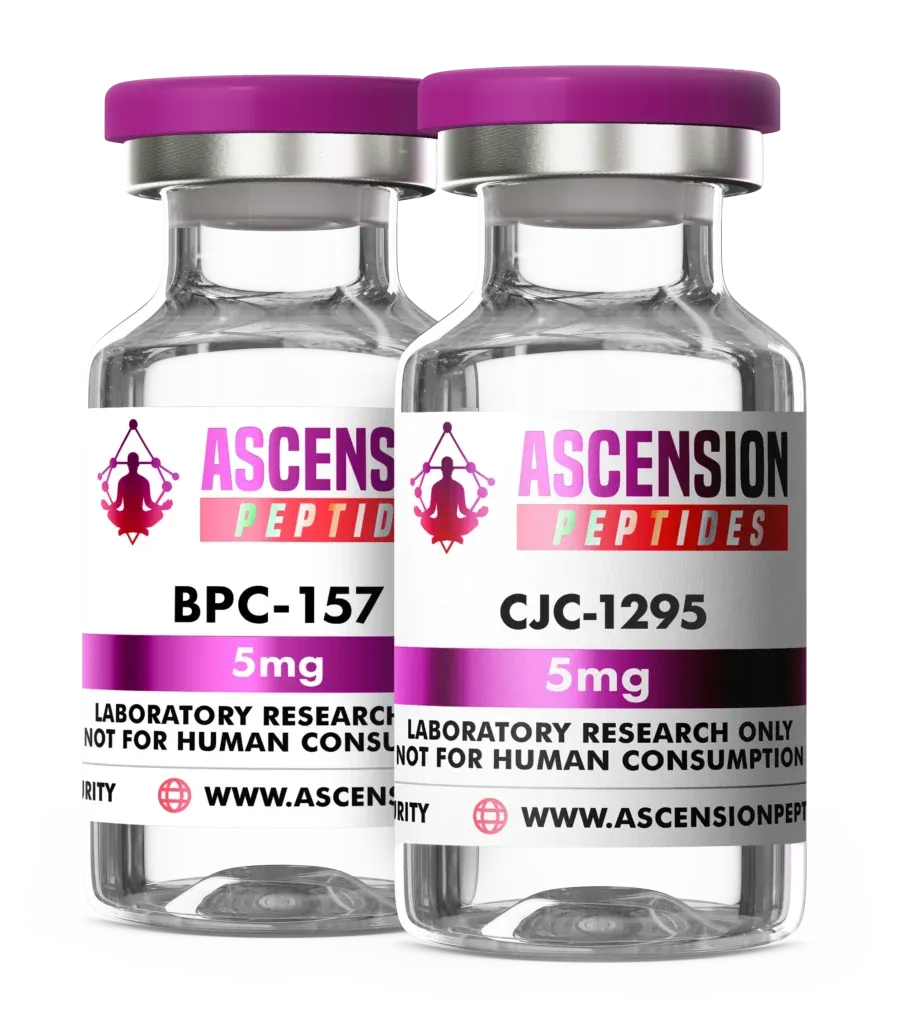
For qualified laboratory procurement, Ascension Peptides lists coded metabolic research materials with product-level batch records. Its S-5, T-10, R-30, C-10, AOD-9604, and MOTS-C pages are research listings, not prescription access. Code PEPTIDESDE is currently advertised as 50% off. Verify the live cart, exact lot, and current certificate before ordering.
Qualified research procurement
Ascension metabolic research catalog
Batch records, coded product pages, and code PEPTIDESDE
Peptides for Weight Loss Ranked by Evidence and Access
A useful ranking cannot use trial percentages alone. Regulatory review, study size, route, comparator, follow-up, finished-product quality, and legal access all matter. An investigational peptide can post a large result without becoming the best current treatment choice. A compound with animal obesity data cannot be ranked beside an approved medicine as if the evidence were interchangeable.
| Rank | Peptide | Human evidence | Current status | Bottom line |
|---|---|---|---|---|
| 1 | Tirzepatide | Large phase 3 obesity program; 20.9% mean change at 72 weeks in the highest-dose SURMOUNT-1 arm | FDA approved as Zepbound for defined obesity and overweight indications | Strongest established approved option in this comparison |
| 2 | Semaglutide | Large phase 3 program; 14.9% mean change at 68 weeks in STEP 1 at 2.4 mg | FDA approved as Wegovy, including newer formulations and strengths under current labeling | Extensive human evidence and regulated access |
| 3 | Retatrutide | Phase 2 trial reached 24.2% mean change at 48 weeks in the 12 mg arm; later pivotal work remains sponsor-controlled | Investigational; not FDA approved and cannot be compounded under federal law | High efficacy signal, but not a legal prescription product |
| 4 | Cagrilintide / CagriSema | Phase 3 combination evidence with semaglutide; results cannot be assigned to cagrilintide alone | Investigational; cagrilintide is not FDA approved and cannot be compounded | Promising amylin pathway, not an approved standalone option |
| 5 | Tesamorelin | Human trials show reduced visceral abdominal fat in people with HIV-associated lipodystrophy | Approved for a narrow HIV-related indication, not general obesity or routine weight loss | Do not generalize a specific visceral-fat indication |
| 6 | AOD-9604 | Mechanistic and early human work exists, but no convincing clinical weight-loss program established efficacy | No FDA-approved weight-loss drug | Marketing is stronger than the human outcome evidence |
| 7 | MOTS-c | Obesity findings are mainly animal and mechanistic; human studies are observational or exercise-focused | No FDA-approved drug and no established human weight-loss indication | Preclinical metabolic research, not a clinical fat-loss option |
The percentages in separate trials are not head-to-head scores. STEP 1, SURMOUNT-1, and the retatrutide phase 2 trial enrolled different populations and used different durations, estimands, dose-escalation plans, and discontinuation handling. Our ranking therefore puts approved evidence above an investigational efficacy signal even when the investigational number is larger.
Tirzepatide and Semaglutide: The Regulated Treatment Lane
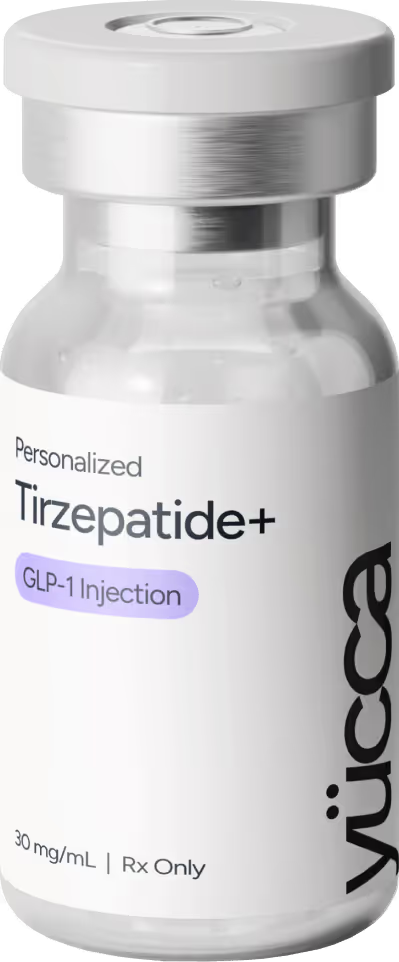
Tirzepatide activates GIP and GLP-1 receptors. Zepbound's current FDA label covers long-term weight reduction in adults with obesity, or overweight with at least one weight-related condition, alongside reduced-calorie intake and physical activity. The label also includes moderate-to-severe obstructive sleep apnea in adults with obesity. It carries a boxed warning based on thyroid C-cell tumors in rats, and important warnings cover severe gastrointestinal reactions, kidney injury from volume depletion, gallbladder disease, pancreatitis, hypoglycemia in relevant combinations, and pulmonary aspiration around anesthesia or deep sedation.
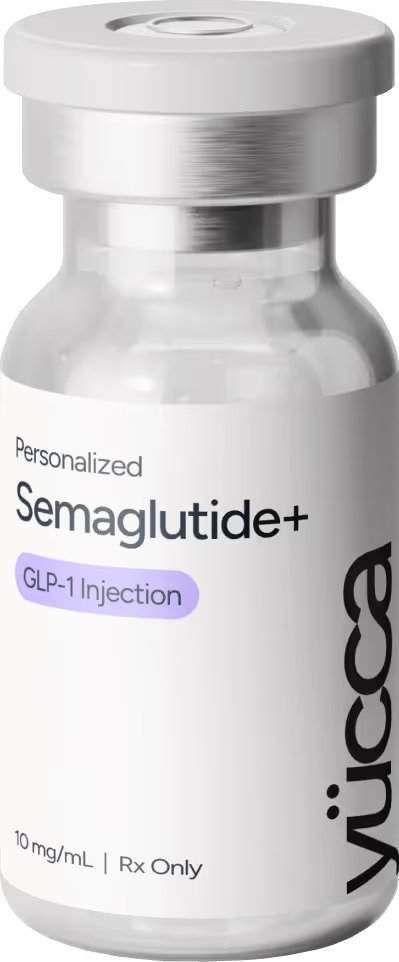
Semaglutide is a GLP-1 receptor agonist. Wegovy's June 2026 labeling covers long-term weight reduction for defined adult and adolescent populations, cardiovascular-risk reduction in certain adults, and other formulation-specific indications. The current label includes injection and tablet formulations, plus a higher-dose injection pathway. That does not make every product containing semaglutide a Wegovy product. FDA approval applies to the reviewed finished drug, manufacturing controls, labeling, device or dosage form, and indication.
People seeking treatment should start with a licensed clinician and fill a valid prescription at a state-licensed pharmacy. FDA specifically warns that unapproved GLP-1 versions do not receive premarket review for safety, effectiveness, or quality. A low online price does not replace medical screening for contraindications, interacting medicines, pregnancy, severe gastrointestinal disease, gallbladder or pancreatic history, kidney risk, or a planned procedure.
Retatrutide and Cagrilintide: Strong Interest, No Approved Product
Retatrutide activates GLP-1, GIP, and glucagon receptors. Its phase 2 obesity trial enrolled 338 adults and showed dose-dependent weight reduction through 48 weeks, reaching 24.2% in the 12 mg arm compared with 2.1% for placebo. Gastrointestinal events were the most common, and heart rate increased in a dose-dependent pattern before declining later in follow-up. The result supports continued development; it does not establish an approved dose, retail product, or equivalence between a research vial and sponsor-manufactured trial material.
Cagrilintide is a long-acting amylin analogue. The strongest recent obesity results involve coadministration with semaglutide, commonly called CagriSema. That combination evidence should not be rewritten as proof that a standalone C-10 vial will reproduce the trial. Formulation, dose, exposure, titration, and the semaglutide component all matter. See our CagriSema vs tirzepatide review for the REDEFINE trial context.
FDA's February 2026 notice is direct: retatrutide and cagrilintide are not components of approved drugs, have not been found safe and effective for any condition, and cannot be used in compounding under federal law. For medical access, a legitimate clinical trial is different from an online research purchase. Our retatrutide status guide tracks the development program, while the retatrutide buyer guide covers laboratory procurement boundaries.
Tesamorelin, AOD-9604, and MOTS-c: Claims Need Narrower Language
Tesamorelin is often described online as a visceral-fat peptide. That phrase omits the indication. FDA-approved Egrifta products are used to reduce excess abdominal fat in adults with HIV and lipodystrophy. Randomized trials support visceral-fat reduction in that population. The label states that tesamorelin is not indicated for weight-loss management and has a weight-neutral effect. General obesity, cosmetic abdominal fat, and HIV-associated lipodystrophy are not interchangeable use cases. Read the tesamorelin visceral-fat guide before treating a niche approval as broad fat-loss proof.
AOD-9604 was designed from a lipolytic region of growth hormone. Early mechanistic work examined lipid metabolism, and preclinical studies supported continued interest. The commercial claim usually jumps past the weak point: no regulator-reviewed obesity program established it as an effective human weight-loss drug. Our AOD-9604 evidence review separates the molecular rationale from clinical outcomes.
MOTS-c is a mitochondrial-derived peptide with interesting metabolic biology. The widely cited obesity paper demonstrated effects in mice. Human publications have examined circulating levels, insulin sensitivity associations, exercise responses, and age-related physiology. That is not the same as a randomized human treatment trial showing weight loss. The MOTS-c weight-loss review explains why an animal obesity result should not become a consumer protocol.
Where to Buy Depends on What You Are Buying
Search intent compresses four different markets into one phrase. Separating them prevents the most consequential buyer error: treating an inexpensive research vial as a substitute for a regulated obesity medicine. The correct route depends on whether the goal is treatment, trial participation, or documented laboratory procurement.
| Goal | Appropriate route | Examples |
|---|---|---|
| Treatment for obesity or overweight | Licensed clinician plus a state-licensed pharmacy | FDA-approved Wegovy or Zepbound when clinically appropriate |
| Access to an investigational drug | Sponsor-controlled clinical trial with eligibility screening | Retatrutide or cagrilintide-containing development programs |
| Qualified laboratory procurement | Research supplier with batch documentation and research-use labeling | Ascension coded materials such as S-5, T-10, R-30, and C-10 |
| A cheap online substitute for a prescription | No legitimate research-vendor shortcut | A research vial is not Wegovy, Zepbound, a compounded prescription, or trial material |
FDA warns about online products falsely labeled for research purposes or not for human consumption when the seller is actually marketing them directly for self-use. Ascension's own pages state that its materials are for qualified research use and that the company does not provide dosage or reconstitution instructions. Buyers should preserve that boundary rather than use coded names as a way to imply prescription equivalence.
Current Ascension Metabolic Research Listings
Ascension's current catalog provides a practical comparison for qualified researchers because the pages expose vial amount, current price, and batch-specific reports. We checked these listings on July 13, 2026. S-5 and T-10 had June 2026 Kovera records plus additional MZ Biolabs records. R-30, AOD-9604, and MOTS-C also displayed named laboratory documentation. Inventory and sale prices can change, so treat the table as a checked snapshot.
| Listing | Research description | Amount | Checked price | Product page |
|---|---|---|---|---|
| S-5 | Semaglutide-coded research material | 5 mg | $40 | Check listing |
| T-10 | Tirzepatide-coded research material | 10 mg | $50 | Check listing |
| R-30 | Retatrutide-coded research material | 30 mg | $175 | Check listing |
| C-10 | Cagrilintide-coded research material | 10 mg | Verify live cart | Check listing |
| AOD-9604 | Growth hormone fragment research material | 5 mg | $55 | Check listing |
| MOTS-C | Mitochondrial peptide research material | 10 mg | $49 | Check listing |
The advertised partner code is PEPTIDESDE. Confirm that it applies before payment and compare the final delivered total, not only the list price. C-10 pricing differed between recent category and product-page snapshots, which is why the table sends that item back to the live cart. A current price discrepancy is a reason to verify, not a reason to choose the more favorable cached number.
Weight-Loss Peptide Buyer Checklist
Identify the access lane first
Treatment, clinical-trial access, and laboratory procurement follow different rules. Do not use a research listing to bypass prescription or trial controls.
Match the exact product and lot
Confirm the coded product name, vial amount, batch number, test date, and named laboratory. A report for T-10 does not document R-30 or C-10.
Read methods, not purity badges
Identity and HPLC purity are useful but do not automatically establish sterility, endotoxin control, fill accuracy, stability, or route suitability.
Verify the final price
Enter PEPTIDESDE, then compare the live subtotal after shipping, tax, and any insurance. Product pages and category pages can update at different times.
Reject copied prescription claims
A coded research vial is not equivalent to an FDA-approved pen, a pharmacy-dispensed medicine, or sponsor-manufactured clinical-trial material.
Keep a sample history
Save the product page, order confirmation, delivered lot, matching COA, and shipping condition together for traceability.
Our peptide vendor checklist explains how to connect a report to the delivered lot. The COA red-flags guide covers the limits of HPLC, mass spectrometry, sterility, and endotoxin claims. For concentration arithmetic in a defined laboratory plan, the reconstitution calculator performs math only and does not recommend a dose, route, diluent, or human protocol.
Safety, Lean Mass, and Marketing Red Flags
Large average weight changes do not mean every kilogram lost is fat or that every participant responds similarly. Incretin-based treatment can reduce both fat mass and lean mass, and gastrointestinal effects can affect nutrition and hydration. Resistance training, protein intake, underlying disease, age, treatment duration, and the speed of loss all influence body composition. See our GLP-1 lean-mass review for the trial data and measurement limits.
Reject pages that call retatrutide approved, describe cagrilintide as legally compoundable, or present AOD-9604 and MOTS-c as clinically proven fat burners. Also reject claims that a COA makes a research vial equivalent to an approved drug. Analytical identity and purity answer narrower questions than clinical effectiveness, sterile manufacturing, dose accuracy, pharmacovigilance, and suitability for a person.
FDA had received 990 adverse-event reports associated with compounded semaglutide and more than 730 associated with compounded tirzepatide through May 31, 2026. Reports do not prove causation, but they reinforce why source, labeling, storage, measurement, and clinician oversight matter. The agency recommends prescriptions from licensed clinicians and dispensing through state-licensed pharmacies for patients seeking GLP-1 treatment.
FAQ
What is the best peptide for weight loss in 2026?
For regulated medical treatment, tirzepatide and semaglutide have the strongest combination of large human trials, FDA-reviewed labeling, and pharmacy access. Tirzepatide produced greater mean weight reduction than semaglutide in their landmark separate trials, but the right prescription depends on indication, medical history, contraindications, tolerability, coverage, and clinician judgment.
Is retatrutide better than tirzepatide for weight loss?
Retatrutide has produced a larger high-dose mean weight-loss signal in its phase 2 obesity trial than tirzepatide did in SURMOUNT-1, but that is not a direct randomized comparison. Retatrutide remains investigational and is not an FDA-approved prescription option. Trial magnitude alone does not erase differences in study design, follow-up, safety data, manufacturing, or legal access.
Where can I buy weight-loss peptides legally?
For treatment, obtain an approved prescription from a licensed clinician and fill it through a state-licensed pharmacy. For qualified laboratory research, Ascension lists coded research materials with batch records; use code PEPTIDESDE and verify the current lot. Research products are not for human or veterinary use and are not substitutes for approved drugs.
Does Ascension sell Wegovy or Zepbound?
No. Ascension sells research-use materials with names such as S-5 and T-10. Those listings are not branded Wegovy or Zepbound, are not pharmacy-dispensed prescriptions, and have not undergone FDA review as finished drug products. The distinction should remain visible at every purchase decision.
Do AOD-9604 or MOTS-c have proven human weight-loss results?
No established human weight-loss efficacy has been demonstrated for either compound. AOD-9604 has mechanistic and limited human work but lacks a convincing approved obesity program. MOTS-c obesity evidence is primarily preclinical, while human studies have focused on circulating levels, exercise, and metabolic associations rather than treatment-driven weight loss.
Compare Ascension's research catalog
For qualified laboratory procurement, review the exact product amount and batch record, then apply code PEPTIDESDE. These listings are not prescription weight-loss products.
View Ascension research peptidesReferences
- Metabolic research product catalog, Ascension Peptides.
- Certificates of Analysis library, Ascension Peptides.
- Shipping Policies, Ascension Peptides.
- Wegovy prescribing information, revised June 2026, U.S. Food and Drug Administration.
- Zepbound prescribing information, revised February 2026, U.S. Food and Drug Administration.
- FDA Concerns with Unapproved GLP-1 Drugs Used for Weight Loss, U.S. Food and Drug Administration.
- Once-Weekly Semaglutide in Adults with Overweight or Obesity, New England Journal of Medicine / PubMed.
- Tirzepatide Once Weekly for the Treatment of Obesity, New England Journal of Medicine / PubMed.
- Triple-Hormone-Receptor Agonist Retatrutide for Obesity: A Phase 2 Trial, New England Journal of Medicine / PubMed.
- Coadministered Cagrilintide and Semaglutide in Adults with Overweight or Obesity, New England Journal of Medicine / PubMed.
- Effects of Tesamorelin in HIV-Infected Patients with Abdominal Fat Accumulation, Journal of Acquired Immune Deficiency Syndromes / PubMed.
- Metabolic Studies of a Synthetic Lipolytic Domain (AOD9604) of Human Growth Hormone, Hormone Research / PubMed.
- The Mitochondrial-Derived Peptide MOTS-c Promotes Metabolic Homeostasis and Reduces Obesity and Insulin Resistance, Cell Metabolism / PubMed.
- EGRIFTA WR prescribing information, FDA / DailyMed.
Disclaimer
This page is educational. It is not medical advice, a treatment recommendation, or purchasing advice for human use. Approved prescription drugs require individualized evaluation by a licensed clinician and dispensing through a lawful pharmacy. Ascension products discussed here are labeled for research use only and are not approved for human or veterinary use. This page does not provide dosing, injection, stacking, treatment, or reconstitution instructions.
Next steps
Continue with the closest guide, peptide profile, or research tool.