Body-composition evidence
GLP-1 Muscle Loss: Lean Mass Evidence With Semaglutide and Tirzepatide
A source-backed guide to GLP-1 muscle-loss claims, DEXA body-composition evidence, lean mass versus muscle, semaglutide and tirzepatide trial data, and claim limits.

Searches for "GLP-1 muscle loss" have grown because semaglutide and tirzepatide can produce large average weight reductions in obesity trials. Once weight loss becomes large enough, readers naturally ask what part of the weight came from fat, lean mass, water, or muscle tissue.
A stronger answer is more specific than the common slogan. Human evidence indicates that GLP-1 and incretin-based weight-loss treatments reduce fat mass substantially, while some lean mass can also decrease. That does not prove that these drugs directly damage muscle, and it does not make the issue irrelevant. It means body-composition claims need method details, population details, and careful wording.
This guide focuses on semaglutide, tirzepatide, and adjacent incretin research because those are the molecules most often connected to the question. For broader class context, see the GLP-1, GIP, glucagon, and amylin comparison.
The search intent is also different from ordinary GLP-1 side effects. Nausea, constipation, pancreatitis warnings, gallbladder disease, and product-quality risks are safety topics. Lean mass is a body-composition topic. It sits between obesity medicine, exercise physiology, geriatrics, diabetes care, and consumer marketing claims. That mixed context is why broad answers often miss the useful details.
Evidence Snapshot
| Common claim | Evidence picture | Boundary |
|---|---|---|
| GLP-1 drugs burn muscle directly. | Body-composition studies generally show large fat-mass reduction with smaller lean-mass reduction during substantial weight loss. | Lean mass is not identical to skeletal muscle, and most trials are not designed to prove a direct muscle-toxic effect. |
| Lean mass loss means the treatment failed. | Some lean-mass reduction can occur during weight loss from medication, diet, surgery, or lifestyle intervention. | The key interpretation depends on method, baseline body size, fat loss, function, strength, protein intake, and resistance training context. |
| Tirzepatide and semaglutide have the same body-composition evidence. | Semaglutide and tirzepatide both have obesity-trial evidence, but detailed body-composition data come from different studies and populations. | A DEXA substudy, a diabetes study, and a meta-analysis answer different questions. |
| Retatrutide or CagriSema proves better muscle preservation. | Retatrutide and cagrilintide are active research topics, but body-composition claims require molecule-specific data. | Receptor count, weight-loss percentage, or product-market hype cannot substitute for measured lean-mass outcomes. |
| A peptide vial can recreate trial body-composition results. | Published trials studied defined products, protocols, eligibility criteria, monitoring, and endpoints. | A research-market vial, compounded product, or informal stack is not the same evidence object as an FDA-reviewed or trial product. |
Lean Mass Is Not A Perfect Synonym For Muscle
Many body-composition discussions use "lean mass" and "muscle" as if they are the same measurement. They are related, but not identical. Depending on the method, lean mass can include skeletal muscle, organ tissue, connective tissue, body water, and other non-fat compartments. DEXA scans estimate fat mass, lean soft tissue, and bone mineral content, but they do not directly biopsy muscle quality or strength.
That distinction matters for GLP-1 claims. If a trial reports loss of lean mass, the result may include water and other non-fat compartments. It may also reflect expected changes that accompany large weight loss. A more complete interpretation would ask about fat-mass percentage, waist circumference, physical function, strength, age, sex, baseline sarcopenia risk, diabetes status, activity, nutrition, and medication duration.
The opposite mistake is also common: dismissing all lean-mass loss as a harmless accounting issue. Older adults, people with frailty, people with low baseline muscle, and people losing weight rapidly may have different risk profiles than younger trial averages. The evidence supports nuance, not reassurance by slogan.
A useful comparison is the ratio between fat-mass loss and lean-mass loss, but even that ratio can mislead. A person with a larger body size may lose more absolute lean mass while still improving the percentage of body weight carried as fat. Another person may lose less total weight but have a more concerning functional picture if strength, balance, or daily activity declines. Body composition is not only a math problem.
The method used to measure body composition also changes interpretation. DEXA is common in obesity research because it is practical and validated for many use cases, but hydration, body size, machine model, analysis software, and timing can still affect results. CT and MRI can provide more direct regional muscle information, but they are less common in large obesity-drug trials. Bioelectrical impedance is easier to deploy but can be more sensitive to hydration and protocol differences.
What Semaglutide And Tirzepatide Evidence Shows
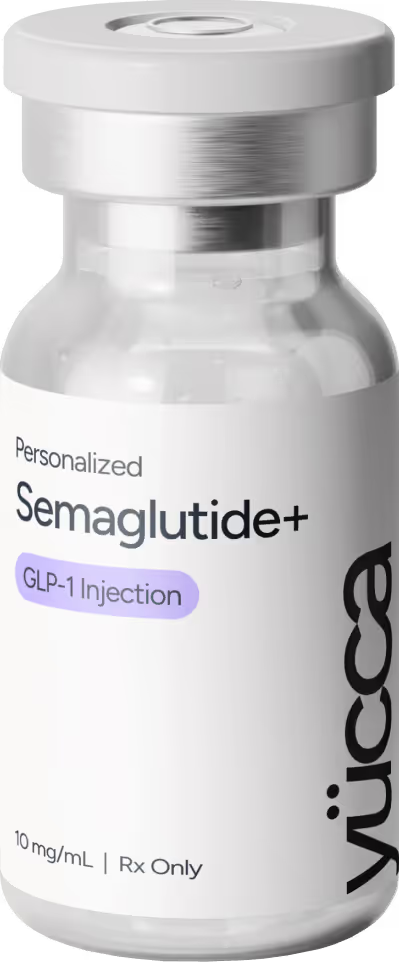
Semaglutide 2.4 mg has large randomized trial evidence for weight management, including the STEP program. Those trials establish the weight-loss and cardiometabolic context behind many semaglutide body-composition questions. Detailed body-composition evidence is more limited than body-weight evidence, and readers should not assume every STEP result automatically includes DEXA-level tissue detail.
A semaglutide versus canagliflozin study in type 2 diabetes used body-composition measures and reported reductions in body weight and fat mass. It is useful because it shows semaglutide can be studied beyond scale weight, but it is not the same as a chronic weight-management trial in adults without diabetes. Population and comparator still matter.
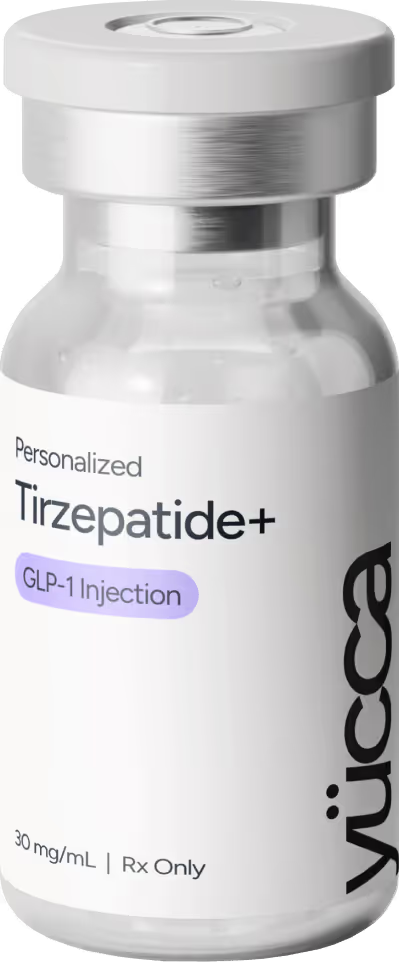
Tirzepatide has a more direct obesity-trial body-composition source through the SURMOUNT-1 DEXA substudy. That analysis reported substantial body-weight reduction with fat-mass and lean-mass decreases. The general pattern was that fat mass made up most of the weight lost, while lean mass made up a smaller share. That supports a careful reading: lean mass can decline during tirzepatide-associated weight loss, but the overall loss is not simply "muscle melting."
Systematic reviews and meta-analyses help because they place individual studies beside nonpharmacologic and surgical weight-loss interventions. Recent PubMed-indexed reviews generally find that lean-mass reduction can occur with incretin-based treatment, but estimates differ by drug, comparator, population, baseline body composition, method, and duration. Some reviews also emphasize that physical-function outcomes are not consistently measured, which limits conclusions about actual strength or performance.
That limitation is important because a scale and a DEXA scan cannot answer every question readers care about. If the public concern is "will I get weaker," then outcomes such as grip strength, chair-stand performance, walking speed, fatigue, falls, training capacity, and quality of life become relevant. Many obesity-drug trials were designed primarily around body weight, glycemic measures, cardiometabolic markers, adverse events, and treatment adherence, not detailed muscle-function endpoints.
Another limitation is trial selection. People enrolled in large trials usually meet inclusion and exclusion criteria, receive protocolized follow-up, and have adverse events collected in a structured way. That makes the evidence stronger than anecdotes, but it also means trial averages should not be treated as individualized predictions. A person with sarcopenic obesity, chronic kidney disease, eating disorder history, cancer treatment history, or major mobility limits may not map cleanly onto an average participant.
The same caution applies to retatrutide and cagrilintide. Both are important metabolic peptide topics, but a receptor-target diagram is not a body-composition trial. For head-to-head context on metabolic candidates, see retatrutide vs tirzepatide vs semaglutide and the cagrilintide and CagriSema evidence guide.
Where Online Muscle-Loss Claims Go Wrong
The weakest claims usually make one of three errors. First, they quote total weight loss as if it were all fat loss. Second, they quote lean-mass reduction as if it were all skeletal muscle damage. Third, they apply data from an FDA-reviewed product or clinical trial to a compounded, counterfeit, or research-market product that was not studied.
Product specificity is part of the evidence. Wegovy and Zepbound have FDA-reviewed labels, approved indications, warnings, dose-escalation schedules, and manufacturing controls. A vial marketed online under an ingredient name does not inherit those properties. The compounded semaglutide and tirzepatide rules guide explains why ingredient-name familiarity is not the same as product equivalence.
Measurement claims also need context. DEXA, bioelectrical impedance, CT, MRI, and scale-derived estimates are not interchangeable. A social-media graphic that lists a single "muscle loss" percentage without method, trial, comparator, or duration is not enough to interpret risk. Neither is a product page that promises muscle preservation without presenting measured human outcomes.
Claims about "muscle-preserving peptides" need the same discipline. It is not enough to say a compound increases growth-hormone signaling, changes appetite, or has a different receptor profile. A preservation claim should show human body-composition outcomes, ideally with functional measures and a defined comparator. Without that, the claim is mechanism speculation or marketing language.
Timing is another place where claims drift. Short-term water shifts, glycogen changes, reduced food volume, and gastrointestinal effects can move early body weight before longer-term tissue changes become clearer. A four-week update, a 16-week scan, a 68-week trial, and a two-year extension should not be interpreted as if they measure the same phase of weight change.
Reconstitution math is another boundary. The reconstitution calculator can help readers understand concentration arithmetic. It cannot confirm identity, sterility, dose appropriateness, compatibility, medical supervision, or whether a product matches any clinical-trial formulation.
A Better Reader Checklist
When a GLP-1 muscle-loss claim appears, start with the exact endpoint. Is the source discussing body weight, fat mass, lean mass, appendicular lean mass, skeletal muscle area, grip strength, gait speed, or patient-reported function? Those are different outcomes.
Next, ask which treatment and which population were studied. A semaglutide trial in adults with obesity, a tirzepatide DEXA substudy, a type 2 diabetes body-composition study, a bariatric surgery comparison, and a resistance-training study can all be useful, but they cannot be collapsed into one conclusion.
Then check the direction of the comparison. Is the claim comparing GLP-1 therapy with placebo, lifestyle intervention, bariatric surgery, a different anti-obesity medication, or a baseline measurement from the same participants? Placebo-controlled evidence answers whether the drug differs from placebo under trial conditions. Cross-intervention comparisons ask whether lean-mass changes are larger, smaller, or similar to other ways of losing weight. Those are related questions, not the same question.
Also check whether the source reports absolute and relative numbers. Losing five pounds of lean mass during a small amount of total weight loss is not the same interpretation as losing five pounds of lean mass during a much larger fat-mass reduction. Percentages, kilograms, baseline body size, and measurement method all matter.
Finally, separate evidence from guidance. Published trials and meta-analyses can help readers understand what has been measured. They do not provide individualized nutrition, exercise, dosing, medication-selection, or stopping advice. For broader safety framing, pair body-composition reading with the GLP-1 side effects guide and the GLP-1 stopping and weight-regain guide.
The restrained conclusion is this: GLP-1 and incretin-based obesity treatments can be associated with lean-mass reduction during weight loss, while fat mass usually accounts for most of the loss in available body-composition evidence. Calling that "muscle loss" may be directionally understandable in casual search language, but it is scientifically incomplete unless the measurement, population, and functional context are specified.
References
- Effect of Incretin-Based and Nonpharmacologic Weight Loss on Body Composition: A Systematic Review and Meta-Analysis, PubMed.
- Effect of Glucagon-Like Peptide-1 Receptor Agonists and Co-Agonists on Body Composition, PubMed.
- GLP-1 Agonists and Changes in Body Mass and Composition in Obesity and Diabetes, PubMed.
- Lean Mass Changes With Incretin Therapy Versus Lifestyle Intervention and Surgical Weight Loss, PubMed.
- Body composition changes during weight reduction with tirzepatide in the SURMOUNT-1 study, PubMed.
- Effects of once-weekly semaglutide versus canagliflozin on body composition in type 2 diabetes, PubMed.
- Once-Weekly Semaglutide in Adults with Overweight or Obesity, PubMed.
- Tirzepatide Once Weekly for the Treatment of Obesity, PubMed.
- Efficacy and safety of once-weekly semaglutide 2.4 mg versus placebo in the STEP trials, PubMed.
- Wegovy prescribing information, U.S. Food and Drug Administration.
- Zepbound prescribing information, U.S. Food and Drug Administration.
Disclaimer
This page is educational and is not medical advice. It does not provide dosing, prescribing, exercise programming, nutrition planning, diagnosis, reconstitution, compounding, sourcing, or individualized guidance for semaglutide, tirzepatide, retatrutide, cagrilintide, or related products. Body-composition and medication decisions should be made with qualified healthcare professionals using current labels, clinical context, and appropriate monitoring.
Next steps
Continue with the closest guide, peptide profile, or research tool.