GLP-1 reward evidence
Ozempic and Alcohol Cravings: GLP-1 Evidence, Human Trials, and Claim Limits
A source-backed guide to Ozempic alcohol craving claims, semaglutide AUD trial evidence, tirzepatide observations, GLP-1 reward biology, and label limits.

Searches for Ozempic and alcohol cravings increased because many people report that drinking feels less rewarding after starting GLP-1 medicines. Some describe less interest in alcohol, fewer cravings, or feeling full before a usual amount. Those reports are worth taking seriously as signals, but they are not enough to turn semaglutide into an alcohol-use treatment claim.
The evidence is now stronger than forum anecdotes alone. A small randomized clinical trial tested once-weekly semaglutide in adults with alcohol use disorder, and several observational studies have examined GLP-1 receptor agonists and alcohol-related outcomes. The restrained reading is that GLP-1 reward-pathway effects are plausible and increasingly studied, while labels and clinical evidence still set firm limits.
This guide separates the search claim from the evidence. It covers semaglutide human data, adjacent tirzepatide observations, older exenatide research, product-label limits, and why unapproved GLP-1 products should not borrow Ozempic or Wegovy evidence. For broad class safety, start with the GLP-1 side effects guide.
Evidence Snapshot
| Common claim | Evidence picture | Boundary |
|---|---|---|
| Ozempic treats alcohol use disorder. | A small randomized semaglutide trial in adults with AUD reported lower alcohol craving and some drinking outcomes versus placebo. | Ozempic, Wegovy, and semaglutide products do not have an FDA-approved alcohol-use indication. |
| Alcohol cravings disappearing online proves causation. | Real-world and prospective observational studies have reported lower alcohol-related outcomes among some GLP-1 receptor agonist users. | Observational studies can be affected by medication selection, weight change, diabetes status, care access, and recording bias. |
| Tirzepatide has the same AUD evidence as semaglutide. | A survey-based study reported reduced alcohol consumption among people using semaglutide or tirzepatide for obesity. | That is not the same as a tirzepatide randomized AUD trial or a Zepbound label claim. |
| Animal reward-circuit data prove human treatment effects. | GLP-1 signaling has been studied in reward, craving, and addiction models, and older exenatide AUD work adds human context. | Preclinical and mechanistic findings should not be rewritten as human efficacy claims. |
| Research-market GLP-1 products inherit clinical evidence. | Published trials and approved labels involve defined products, dosing protocols, monitoring, and manufacturing controls. | Unapproved products create separate identity, sterility, concentration, dosing-error, and adverse-event questions. |
What The Labels Say
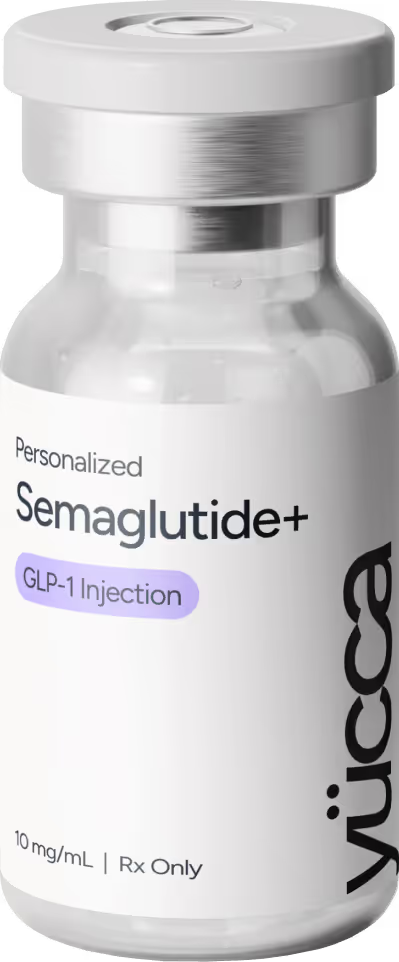
Ozempic is an FDA-approved semaglutide product for type 2 diabetes contexts. Wegovy is a semaglutide product for weight reduction and other labeled uses. Neither label turns alcohol craving, alcohol use disorder, binge drinking, or addiction into an approved use. That point should appear early in any serious discussion of this topic.
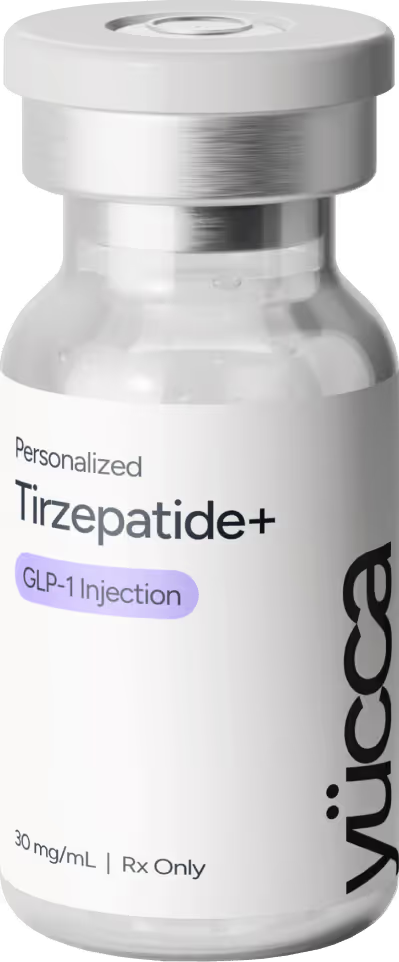
Zepbound is a tirzepatide product with its own label. Tirzepatide is often pulled into alcohol-craving discussions because survey and observational signals include both semaglutide and tirzepatide users. That does not make Zepbound an AUD medicine, and it does not make tirzepatide evidence interchangeable with a semaglutide randomized trial.
Labels also matter because GLP-1 products have warnings and use instructions that are unrelated to alcohol-craving headlines. Semaglutide and tirzepatide labels include gastrointestinal adverse reactions and warnings involving pancreatitis, gallbladder disease, kidney injury related to volume depletion, hypoglycemia risk with insulin or insulin secretagogues, thyroid C-cell tumor warning language, and other product-specific cautions.
Alcohol can add practical clinical complexity. Heavy alcohol use can affect nutrition, dehydration risk, glucose patterns, liver disease, pancreatitis risk, mental health, and medication adherence. A report that cravings changed after starting a GLP-1 medicine does not answer those clinical questions.
What Human Evidence Shows
The most direct semaglutide evidence is a randomized clinical trial in adults with alcohol use disorder. The trial was small, but it matters because it tested semaglutide rather than relying only on retrospective records or self-selected social-media reports. It reported reductions in alcohol craving and some alcohol-use outcomes compared with placebo, while also showing that the evidence is still early and not a basis for self-treatment.
Real-world data add scale. A Nature Communications study found associations between semaglutide use and lower incidence and recurrence of alcohol use disorder in electronic-health-record populations. That kind of study can examine large datasets, but it cannot fully remove confounding. People who receive semaglutide may differ from comparison groups in obesity severity, diabetes status, healthcare access, motivation, comorbidities, and follow-up.
Survey and prospective observational work points in a similar direction. One Scientific Reports study found that people with obesity using semaglutide or tirzepatide reported reduced alcohol consumption. A Journal of Addiction Medicine prospective observational study reported associations between GLP-1 receptor agonist medication use and reduced hazardous alcohol drinking in patients with overweight or obesity.
Older exenatide evidence keeps the field grounded. Exenatide once weekly was investigated in a randomized, placebo-controlled clinical trial for alcohol use disorder. Its overall results were mixed, with signals that depended on subgroups and brain imaging findings. That matters because GLP-1 reward biology can be plausible while clinical outcomes remain inconsistent across molecules, populations, and endpoints.
A 2025 systematic review and meta-analysis of GLP-1 receptor agonists and alcohol-related outcomes found an emerging evidence base but did not establish routine clinical use for AUD. The strongest summary is cautious: semaglutide has early randomized human evidence, observational signals are consistent enough to justify more trials, and current labels do not support alcohol-use treatment claims.
Endpoint choice matters. Craving scores, drinks per drinking day, heavy-drinking days, alcohol-use-disorder diagnosis codes, treatment retention, liver markers, and emergency visits do not answer the same question. A study can show movement in one endpoint without proving remission, long-term abstinence, withdrawal protection, or reduced alcohol-related harm. Readers should look for the exact endpoint before accepting a headline.
Reward Biology Is Not A Treatment Claim
GLP-1 receptors are not limited to blood sugar and appetite pathways. The system has been studied in brain regions linked to reward, reinforcement, food intake, alcohol intake, and drug seeking. Reviews describe plausible links between GLP-1 signaling and addictive disorders, including effects on dopamine-related pathways and reward-driven behavior in preclinical models.
Mechanism still has a strict boundary. A pathway can explain why researchers are interested in semaglutide for AUD without proving that a product treats AUD in the real world. Animal studies, imaging findings, craving scores, and electronic-health-record associations answer different questions. They should not be merged into one oversized claim.
Weight loss can also complicate interpretation. Some people may drink less because appetite changes, nausea, fullness, reflux, social behavior, sleep, glucose swings, or health goals changed. Others may not change alcohol intake at all. A careful article should separate direct reward effects from indirect behavior changes that can occur during weight-management treatment.
This distinction is similar to other GLP-1 search topics. The psychiatric safety guide covers why brain-related signals require careful source weighting. The alcohol-craving discussion needs the same discipline: human trial evidence first, observational evidence second, mechanism third, anecdotes last.
How Alcohol-Craving Claims Can Mislead
The first overclaim is product substitution. A study of semaglutide does not automatically apply to every semaglutide product, dose, route, or source. It also does not automatically apply to tirzepatide, retatrutide, cagrilintide, or a research-market vial. Peptides Defined covers product categories separately in the approved vs investigational vs compounded vs research peptides guide.
The second overclaim is indication language. "Has been studied in AUD" is defensible for semaglutide. "Ozempic treats alcoholism" is not an evidence-aware statement. "Some users report less drinking" is different from "a medicine is indicated for alcohol use disorder." Search content should not collapse those phrases.
The third overclaim is ignoring current AUD care. Alcohol use disorder has established screening, behavioral treatments, support systems, and FDA-approved medicines outside the GLP-1 class. A person with withdrawal risk, liver disease, pancreatitis history, severe depression, suicidal thoughts, pregnancy, diabetes, or heavy daily drinking needs medical evaluation rather than a peptide-market shortcut.
The fourth overclaim is turning measurement tools into treatment tools. The reconstitution calculator can help readers understand concentration math. It cannot verify semaglutide identity, make a product equivalent to Ozempic or Wegovy, set a dose, manage alcohol withdrawal, or decide whether a craving change is clinically meaningful.
A stronger claim names the uncertainty. It says semaglutide has been tested in a small AUD trial, that larger trials are needed, and that the current use case remains investigational for alcohol outcomes. It also avoids implying that nausea, reduced appetite, or aversion to alcohol automatically equals treatment of addiction. Those can be related experiences, but they are not the same clinical endpoint.
Safety And Product Boundaries
The safety picture should not be simplified to whether alcohol cravings go down. GLP-1 medicines can cause nausea, vomiting, diarrhea, constipation, abdominal pain, reflux, dehydration, gallbladder events, and other adverse events. Alcohol use can add dehydration, glucose, liver, mood, and pancreatitis concerns. The overlap is a reason for more clinical context, not less.
FDA has also warned about unapproved GLP-1 drugs used for weight loss, including dosing errors, salt forms, fraudulent products, and products marketed for research use. Those warnings are relevant here because alcohol-craving headlines can drive demand for products that are not Ozempic, Wegovy, Zepbound, or Mounjaro.
The compounded semaglutide and tirzepatide rules guide explains why ingredient-name familiarity is not enough. Identity, concentration, sterility, storage, labeling, adverse-event reporting, and legal status all matter. A research listing that cites PubMed does not become a regulated medicine because it borrows a familiar molecule name.
The restrained takeaway is that GLP-1 alcohol-craving claims now have a real scientific basis, especially for semaglutide, but the evidence remains early and bounded. Human evidence indicates possible reductions in craving or alcohol-related outcomes in studied settings. It does not establish Ozempic, Wegovy, or Zepbound as AUD treatments, and it does not validate unapproved GLP-1 products for human use.
References
- Ozempic (semaglutide) prescribing information, Novo Nordisk.
- Wegovy (semaglutide) label, DailyMed.
- Zepbound (tirzepatide) label, DailyMed.
- Once-Weekly Semaglutide in Adults With Alcohol Use Disorder: A Randomized Clinical Trial, JAMA Psychiatry / PubMed.
- Associations of semaglutide with incidence and recurrence of alcohol use disorder in real-world population, Nature Communications / PubMed.
- Semaglutide and Tirzepatide reduce alcohol consumption in individuals with obesity, Scientific Reports / PubMed.
- GLP-1 RA Medication Associations With Hazardous Alcohol Drinking Reductions in Patients With Overweight or Obesity, Journal of Addiction Medicine / PubMed.
- Exenatide once weekly for alcohol use disorder investigated in a randomized, placebo-controlled clinical trial, JCI Insight / PubMed.
- The effects of glucagon-like peptide-1 receptor agonists on alcohol-related outcomes: a systematic review and meta-analysis, Addiction Science and Clinical Practice / PubMed.
- The role of glucagon-like peptide 1 (GLP-1) in addictive disorders, British Journal of Pharmacology / PubMed.
- FDA Concerns with Unapproved GLP-1 Drugs Used for Weight Loss, U.S. Food and Drug Administration.
Disclaimer
This page is educational and is not medical, addiction-treatment, psychiatric, prescribing, dosing, compounding, reconstitution, sourcing, or withdrawal-management advice. It does not recommend starting, stopping, changing, or using Ozempic, Wegovy, Zepbound, semaglutide, tirzepatide, compounded products, or research products for alcohol cravings or alcohol use disorder. Alcohol withdrawal, heavy alcohol use, cravings, relapse risk, mood changes, and medication decisions should be handled with qualified healthcare professionals using current labels and clinical evaluation.
Next steps
Continue with the closest guide, peptide profile, or research tool.