Buyer guide
Where to Buy BPC-157 in 2026: Vendor Checks, Price, and COA Guide
A buyer-focused BPC-157 sourcing guide covering the current Ascension Peptides listing, coupon code PEPTIDESDE, batch COAs, price checks, vendor red flags, and research-use limits.
Quick Answer: Where to Buy BPC-157
Our current pick for a research-use BPC-157 purchase is Ascension Peptides. Its live listing shows a 10 mg vial at $49 before discounts, two batch-specific third-party testing records, and an in-stock status when checked on July 12, 2026. Use code PEPTIDESDE, currently advertised as 50% off, and confirm the live checkout total because prices and promotions can change.
That recommendation is about procurement transparency, not medical efficacy. BPC-157 is not an FDA-approved drug, the public human evidence remains very small, and a research vial is not equivalent to a prescription product. Read our BPC-157 safety and FDA-status review before treating a seller's product description as clinical evidence.
Current product pick
Ascension BPC-157, 10 mg
$49 listed price before code, shipping, and tax
Current Ascension BPC-157 Listing
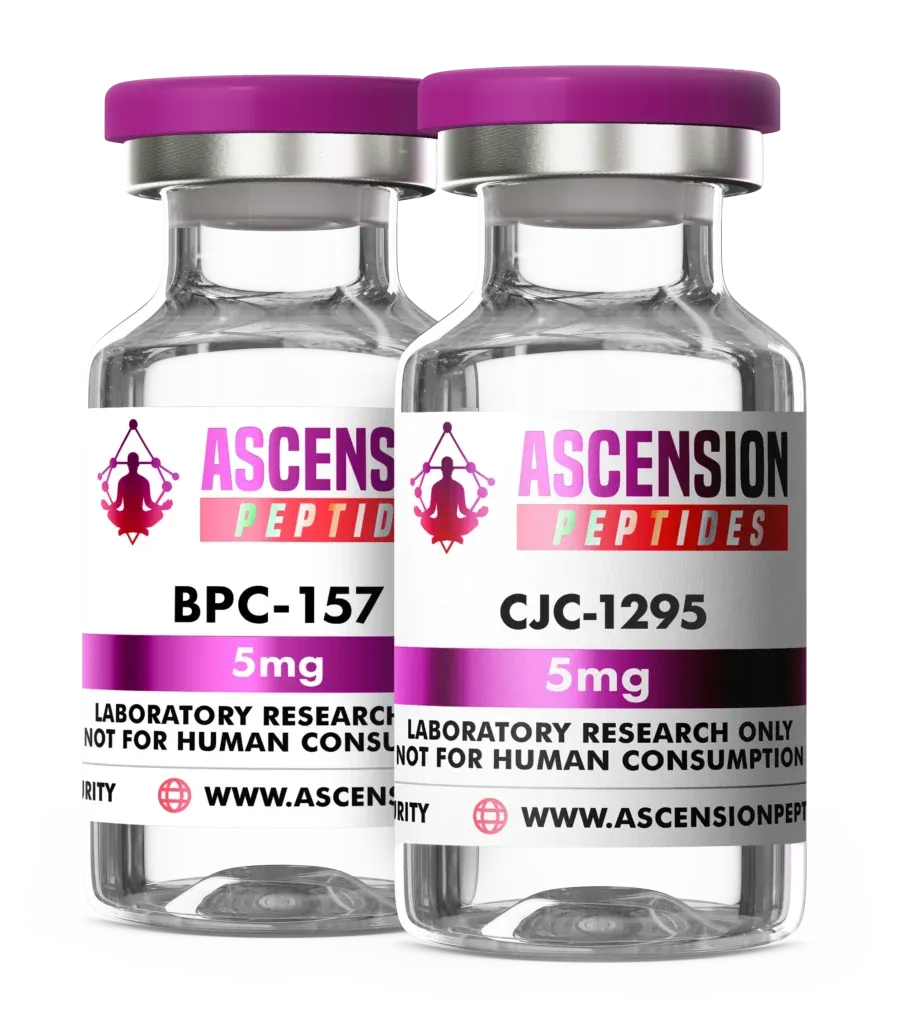
A useful buyer page should tell you what was actually checked. Ascension's product page identified a 10 mg BPC-157 single vial, showed a current $49 list price, marked the item in stock, and displayed batch records from Kovera Labs and MZ Biolabs. The latest record shown on the page listed a July 1, 2026 test date. The page also labels the product for research use only and states that it is not approved for human or veterinary use.
| Check | What we verified |
|---|---|
| Product | BPC-157, 10 mg, single research vial |
| Current listed price | $49 before coupon, shipping, and tax |
| Coupon | PEPTIDESDE, advertised as 50% off; verify the cart total |
| Displayed testing | Batch-specific Kovera Labs and MZ Biolabs records on the product page |
| Availability checked | Listed in stock on July 12, 2026 |
| Use category | Research use only; not approved for human or veterinary use |
Inventory pages are snapshots. Recheck the product amount, price, lot, and shipping terms at purchase time. A cached article cannot tell you whether the vial now in the warehouse matches the batch displayed last month.
Why We Point Buyers to Ascension First
Ascension earns the first click because the product page does more than display a vial and a purity claim. It connects the listing to named third-party laboratories, exposes batch identifiers and test dates, and maintains a searchable COA library. That is a better starting point than stores that ask buyers to email for a generic certificate after checkout.
The price is also competitive after the partner code. At the currently advertised 50% rate, a $49 vial subtotal becomes $24.50 before shipping and tax. The right comparison is still the final delivered price, not a discount badge. Coupon rules, free-shipping thresholds, and bulk pricing can change. We recommend opening the cart and checking the arithmetic before placing an order.
There are limits. Ascension is a research supplier, not a pharmacy, and its own listing says the product is not for human use. Vendor-provided access to a third-party report is useful evidence, but Peptides Defined did not independently sample or lab-test the vial. Our longer Ascension Peptides review covers the company's track record and transparency, while the vendor-vetting checklist gives you a reusable scoring method.
How to Check a BPC-157 COA Before Buying
Start with identity. The product name, amount, and batch number on the certificate should correspond to the listing and, once delivered, the vial or package. Mass spectrometry can support whether the expected molecule is present. Next, look at purity. HPLC separates detectable components and estimates the proportion assigned to the main peak. The report should name the lab, show a test date, and provide enough detail to connect the result to a sample.
Do not turn one purity percentage into a safety certificate. HPLC does not by itself establish sterility, endotoxin status, residual-solvent limits, fill quantity, or stability after handling. A product can have a high main-peak percentage and still leave unanswered route-specific or contamination questions. FDA's BPC-157 materials emphasize characterization and peptide-related impurity concerns, which is why the analytical method matters more than a large number in a product card.
If the lot delivered does not have a matching report, ask the vendor for the exact document before treating the listing as verified. For a line-by-line explanation, use our COA and trust checklist.
What Is a Fair BPC-157 Price?
Price comparisons only work when the vial amount is the same. A 5 mg vial and a 10 mg vial are not equivalent, and a blend should not be compared with single-compound BPC-157. For Ascension's current 10 mg listing, the simple figures are $49 before code and a potential $24.50 subtotal if the advertised 50% code applies. That equals $4.90 per listed milligram before the code or $2.45 after it, excluding shipping and tax.
Cost per listed milligram is a shopping metric, not proof of fill accuracy or quality. The lowest number can be the worst value if the lot is not documented. Check whether the product has a current batch record, whether the report addresses identity as well as purity, and whether the delivered lot matches. Bulk discounts also create waste when buyers order more than a defined research plan can use, so a larger cart is not automatically a better deal.
Buyers sometimes add bacteriostatic water without checking whether the research design or supplier documentation calls for it. Our reconstitution calculator performs concentration math only; it does not recommend a route, diluent, dose, or human-use protocol.
Shipping, Delivery, and Storage Checks
The product price is only one part of a successful order. Ascension's current product page advertises free shipping above $250 and offers shipping insurance. A single discounted vial is unlikely to reach that threshold, so calculate the delivered total before deciding that a larger order saves money. Adding products solely to cross a free-shipping line can cost more than paying for delivery, especially when each additional vial creates another lot and storage record to manage.
Before checkout, confirm where the seller ships, which carrier options are available, whether insurance is optional, and what the policy says about loss, delay, heat exposure, or damaged packaging. A replacement policy should be readable before the package is in transit. Take a screenshot or save the policy with the order confirmation because terms can change between purchase and delivery.
When the package arrives, compare four records: the order, the packing slip, the vial label, and the COA. The compound name, vial amount, and lot should agree. Photograph the unopened package if it is crushed, wet, unsealed, or materially warmer than expected, and contact the vendor promptly. Do not discard the shipping carton or label while a support claim is open.
Storage language also deserves scrutiny. A seller should provide stable, product-specific instructions without turning the listing into a consumer dosing guide. Record the arrival date and storage conditions as part of the sample history. If the seller's page, delivered label, and COA disagree about the product form or storage requirement, resolve that conflict before using the sample in laboratory work.
Common BPC-157 Buying Traps
The most common trap is buying the claim instead of the sample. “Healing peptide,” “pharma grade,” “doctor formulated,” and “99% pure” can sound reassuring while leaving the lot, lab, method, and fill amount unclear. “Pharma grade” is especially weak when the product is simultaneously labeled research use only and has no FDA-approved BPC-157 reference drug.
Another trap is assuming that a blend offers better value because it contains more named compounds. A BPC-157 and TB-500 blend prevents each component from being evaluated independently and requires combination-specific identity, amount, and stability evidence. If your research question is about BPC-157 alone, a single-compound vial is easier to document and interpret.
BPC-157 Buyer Checklist
Open the exact batch COA
Match the compound, vial amount, lot number, test date, and named laboratory to the product you are ordering. A generic BPC-157 PDF is not enough.
Separate identity from purity
Mass spectrometry can support identity and HPLC can estimate purity. Neither result alone establishes sterility, endotoxin control, fill accuracy, or suitability for a route.
Check the final cart
Enter PEPTIDESDE, confirm the discount actually applies, then compare the final total after shipping and tax rather than the headline vial price.
Save the product record
Keep the order confirmation, product page, lot identifier, and COA together. That record matters if the vendor updates the listing or a package arrives with a different lot.
Reject medical promises
A research vendor should not promise tendon repair, gut healing, injury recovery, or a safe protocol. Those claims exceed the current human evidence.
Inspect packaging on arrival
Confirm the vial is sealed, undamaged, clearly identified, and consistent with the order. Contact the vendor before using a research sample if the lot or packaging does not match.
The same checklist applies to adjacent recovery-market products. If you are comparing BPC-157 with TB-500 or copper peptides, read BPC-157 vs TB-500 vs GHK-Cu and use the canonical BPC-157 peptide guide for the evidence overview. Similar marketing language does not mean the compounds have equivalent evidence or quality requirements.
The Evidence Boundary Buyers Should Know
BPC-157 demand is driven by injury-recovery, tendon, ligament, and gut claims. Most supporting work remains preclinical. A 2025 musculoskeletal review found only three small human pilot studies, and the available studies do not create a regulator-reviewed dose, route, duration, interaction profile, or adverse-event table. One intravenous safety pilot included only two participants. Another pilot evaluated intravesical use in a narrow interstitial-cystitis setting. Neither establishes that an online research vial is effective or safe for common consumer claims.
FDA's July 2026 advisory briefing states that neither BPC-157 form is a component of an FDA-approved drug and that the agency believes the criteria weigh against placing the evaluated forms on the 503A bulks list. The advisory process was still pending when this page was published. That official record is materially different from blog claims that compounding access has already been broadly restored.
The practical conclusion is narrow. Buyers can evaluate whether a research supplier exposes useful documentation and a fair price. They cannot infer medical approval, human efficacy, or route safety from the fact that a product is sold online. Our recommendation of Ascension is a procurement judgment within that boundary.
FAQ
Where can I buy BPC-157 online in 2026?
For a research-use purchase, our current first stop is Ascension Peptides because its BPC-157 listing shows a 10 mg vial, batch-specific third-party records, and a direct product page. Use our tracked link and code PEPTIDESDE, then verify the exact lot and final cart total before ordering. This recommendation does not convert the product into an approved medicine.
What is the Peptides Defined Ascension coupon code?
The code is PEPTIDESDE. Ascension currently advertises the discount as 50% off. Promotions can change, so the checkout total is the controlling price.
How much does BPC-157 cost?
Ascension listed its 10 mg BPC-157 research vial at $49 before coupon, shipping, and tax when this page was checked on July 12, 2026. At an advertised 50% discount, the vial subtotal would be $24.50, but buyers should verify the live product page and checkout rather than rely on a saved price.
Does a BPC-157 COA prove the vial is safe?
No. A useful COA can support identity and purity for a particular batch. It does not automatically prove sterility, endotoxin status, concentration after reconstitution, clinical effectiveness, or safety for human use. Read the methods and results, not just the headline percentage.
Is research-use BPC-157 FDA approved?
No. BPC-157 is not a component of an FDA-approved drug. FDA materials continue to discuss characterization, impurity, immunogenicity, and limited human-safety information, while a July 2026 advisory briefing states that the agency believes the criteria weigh against adding BPC-157 forms to the 503A bulks list.
Check the current BPC-157 listing
Open the live Ascension product page, match the batch record, and apply code PEPTIDESDE at checkout.
Shop BPC-157 at AscensionReferences
- BPC-157 (10 mg) product listing, Ascension Peptides.
- Certificates of Analysis library, Ascension Peptides.
- Shipping Policies, Ascension Peptides.
- Certain Bulk Drug Substances for Use in Compounding that May Present Significant Safety Risks, U.S. Food and Drug Administration.
- FDA Briefing Document: BPC-157-related bulk drug substances, U.S. Food and Drug Administration.
- Compounding and the FDA: Questions and Answers, U.S. Food and Drug Administration.
- Regeneration or Risk? A Narrative Review of BPC-157 for Musculoskeletal Healing, PubMed.
- Safety of Intravenous Infusion of BPC157 in Humans: A Pilot Study, PubMed.
- BPC-157 as an Investigational Peptide Therapeutic: Biopharmaceutical Challenges, Formulation Strategies, and Translational Development Barriers, PubMed.
- Effect of BPC-157 on Symptoms in Patients with Interstitial Cystitis: A Pilot Study, PubMed.
Disclaimer
This page is educational. It is not medical, legal, or purchasing advice for human use. BPC-157 research products are not FDA-approved medicines, and this page does not provide dosing, injection, treatment, or reconstitution instructions. Verify current laws, vendor records, product labeling, and batch documentation for your jurisdiction and intended laboratory use.
Next steps
Continue with the closest guide, peptide profile, or research tool.