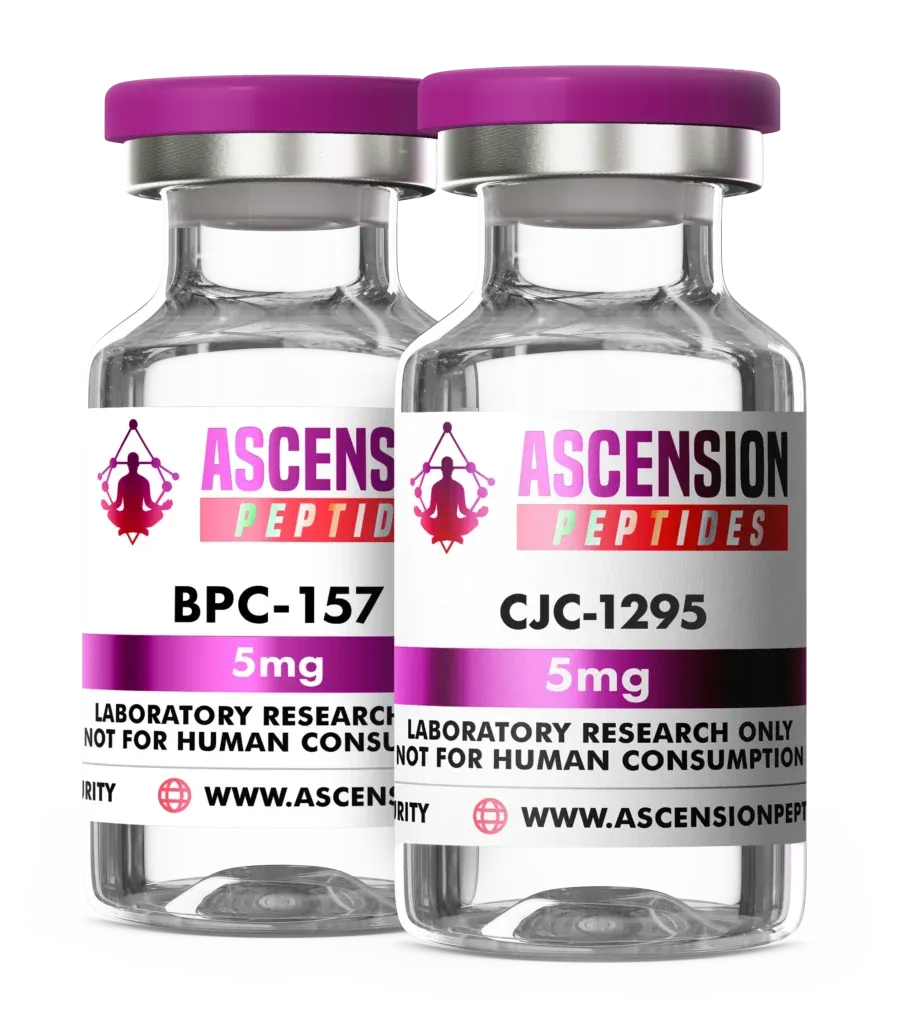
Recovery peptide comparison
BPC-157 vs TB-500 vs GHK-Cu: Recovery Peptides and the Evidence Gap
A source-backed comparison of three popular recovery peptide topics, with a focus on what is human evidence, what is preclinical, and where marketing gets ahead of the data.
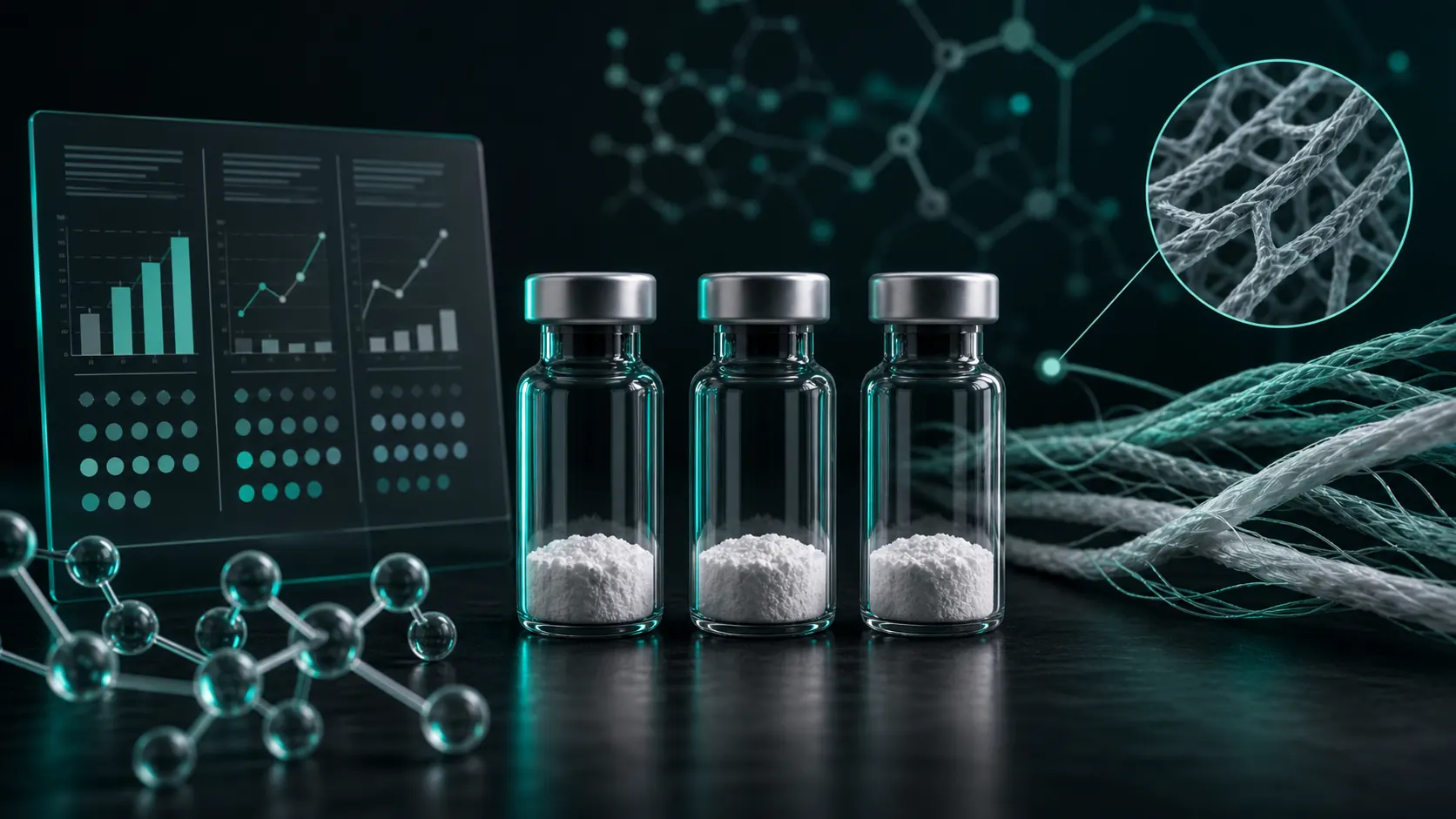
BPC-157, TB-500, and GHK-Cu are often grouped together as "recovery peptides." That label is convenient, but it hides important differences. They are different molecules, tied to different research histories, routes, product identities, and evidence gaps.
The main problem is not that the biology is uninteresting. It is that online claims often jump from cell or animal data to broad human-recovery promises. A careful comparison has to ask what molecule was studied, what route was used, what population was tested, and whether the public product matches the research material.
Quick Comparison
| Peptide | Common online claims | Evidence picture | Main caution |
|---|---|---|---|
| BPC-157 | Tendon, ligament, joint, muscle, gut, and pain-recovery claims. | Mostly preclinical and mechanistic literature, with very limited human data. | Human safety, dosing, product identity, and long-term outcomes remain unresolved. |
| TB-500 | Soft-tissue repair, flexibility, inflammation, and broad recovery claims. | Often extrapolated from thymosin beta-4 biology and studies, not direct TB-500 human evidence. | Full-length thymosin beta-4, ophthalmic formulations, and TB-500 fragments should not be treated as identical. |
| GHK-Cu | Skin quality, collagen, wound-repair, hair, and tissue-remodeling claims. | Stronger literature around skin biology and topical/cosmetic contexts than systemic injection claims. | Topical or cell-model findings do not automatically support injectable recovery claims. |
BPC-157: High Interest, Thin Human Evidence
BPC-157 is commonly marketed around tendon, ligament, muscle, joint, gut, and pain-recovery claims. The published literature is most developed in preclinical and mechanistic models, especially animal models of tissue injury. That makes BPC-157 interesting, but it does not make consumer-level claims settled.
A 2025 systematic review in orthopaedic sports medicine found a large preclinical literature and only very limited clinical evidence. That is the central tension: the research signal is enough to explain interest, but not enough to support the certainty seen in many online summaries.
FDA compounding-risk materials have also identified BPC-157 among bulk drug substances that may present significant safety risks. For readers, the regulatory point is not just whether a mechanism is plausible. It is whether the product, route, sterility, impurity profile, human safety, and clinical endpoint have actually been evaluated.
TB-500: Do Not Confuse It With All Thymosin Beta-4 Evidence
TB-500 is often discussed as if it is interchangeable with thymosin beta-4. That is too loose. Full-length thymosin beta-4 is a 43-amino-acid protein studied in tissue-repair and ocular-surface contexts. TB-500 is commonly sold or described as a synthetic fragment or market peptide related to thymosin beta-4 biology.
This distinction matters because human studies of thymosin beta-4 ophthalmic solution do not automatically prove that injectable TB-500 products produce systemic recovery benefits. A topical eye-drop formulation, an investigational ophthalmic product, and an online recovery-peptide vial are different evidence objects.
The responsible reading is narrower: thymosin beta-4 biology has real wound-healing and tissue-repair research behind it, but TB-500 marketing often borrows that evidence without showing a direct bridge to the product, route, and endpoint being claimed.
GHK-Cu: Stronger Skin Biology, Weaker Systemic Recovery Claims
GHK-Cu is different from BPC-157 and TB-500 because much of its public research discussion is tied to skin biology, collagen, dermal remodeling, and wound-repair mechanisms. The 2015 review on GHK and skin regeneration is often cited because it summarizes molecular and tissue-repair pathways.
That does not mean every GHK-Cu claim is equally supported. Topical cosmetic or skin-focused evidence cannot be casually stretched into claims about injected systemic recovery, tendon repair, or whole-body healing. Route, concentration, delivery system, and tissue target matter.
GHK-Cu is a good example of a peptide where the more conservative claim is stronger than the broad one. Skin and dermal-remodeling research is easier to source than sweeping injectable recovery claims.
Route And Product Identity Matter
Recovery peptide marketing often treats route as a minor detail. It is not. A topical product, ophthalmic solution, injectable clinical product, oral capsule, and lyophilized research vial can produce different exposure, stability, safety, contamination, and outcome questions.
Product identity matters too. A paper may study a defined investigational product under controlled conditions. A seller page may use the same broad peptide name without the same manufacturing, sterility, formulation, or clinical oversight. The name match is not enough.
The Main Evidence Gaps
The biggest gaps are not subtle. For BPC-157 and TB-500, controlled human evidence for common recovery claims is limited. Long-term safety is unclear. Product quality varies outside regulated supply chains. Dosing claims online are often far more specific than the evidence can justify.
For GHK-Cu, the gap is different. There is more credible skin-biology literature, but broad injectable recovery claims are still a stretch unless supported by route-specific human data.
This does not make every study useless. It means the claim should be scaled to the evidence. A reasonable article can say "preclinical tissue-repair signal." It should not leap to "proven injury-recovery protocol."
Reader Checklist
Before trusting a recovery peptide comparison, ask:
- Was the study done in humans, animals, or cells?
- Was the exact product the same as the product being discussed online?
- Was the route topical, ophthalmic, injectable, oral, or something else?
- Was the endpoint objective, such as imaging or wound closure, or subjective, such as pain relief?
- Were adverse events, discontinuations, sterility, and follow-up reported?
- Is the source a peer-reviewed paper, registry entry, label, seller page, or anecdote?
- Does the article separate thymosin beta-4 evidence from TB-500 claims?
The practical conclusion is that these peptides should not be ranked as a simple recovery stack. BPC-157 has the biggest hype gap, TB-500 has the biggest identity-confusion problem, and GHK-Cu has the clearest skin-biology story but weaker support for broad systemic recovery claims.
FAQ
Which peptide has the strongest human evidence for recovery claims?
None of the three has strong human evidence for broad injury-recovery claims. BPC-157 and TB-500 rely heavily on preclinical or indirect evidence, while GHK-Cu has stronger skin biology support than systemic recovery evidence.
Can TB-500 claims be treated as thymosin beta-4 evidence?
Not automatically. Online TB-500 claims often borrow from thymosin beta-4 literature, but product identity, fragments, route, and formulation can differ from the material studied.
Why does route matter?
Topical, injectable, oral, ophthalmic, and research-market products are not interchangeable. Evidence from one route does not automatically transfer to another.
References
- Emerging Use of BPC-157 in Orthopaedic Sports Medicine: A Systematic Review, HSS Journal.
- Regeneration or Risk? A Narrative Review of BPC-157 for Musculoskeletal Healing, PubMed.
- Certain Bulk Drug Substances for Use in Compounding that May Present Significant Safety Risks, U.S. Food and Drug Administration.
- GHK Peptide as a Natural Modulator of Multiple Cellular Pathways in Skin Regeneration, PubMed.
- The Potential of GHK as an Anti-Aging Peptide, PMC.
- Thymosin beta 4 Ophthalmic Solution for Dry Eye: Phase II Clinical Trial, PubMed.
- Research Advances on Thymosin beta 4 in Promoting Wound Healing, PMC.
Next steps
Continue with the closest guide, peptide profile, or research tool.