Fragment evidence
TB-500 vs Thymosin Beta-4: Evidence, Side Effects, and FDA Status
A source-backed guide to TB-500, thymosin beta-4, fragment-versus-parent-molecule claims, wound-healing evidence, side-effect uncertainty, and FDA compounding context.

TB-500 sits in a confusing part of the peptide market because the name is often used loosely. Some pages use TB-500 as if it means full-length thymosin beta-4. Others use it for a short synthetic fragment connected to thymosin beta-4 biology. Those are not small labeling differences. They change what evidence can be applied to a product claim.
Full-length thymosin beta-4 has a real research record. It has been studied in wound biology, corneal injury, dry eye, neurotrophic keratopathy, dermal injury, and early intravenous safety contexts. TB-500, as commonly discussed in research-market settings, is often tied to a fragment rather than the full 43-amino-acid parent peptide. That means many online claims borrow evidence from a related but different molecule.
For the molecule profile, start with the TB-500 peptide guide. This page focuses on the search questions: what is TB-500, what evidence belongs to thymosin beta-4, what side effects are known, and what FDA compounding materials say.
Evidence Snapshot
| Common claim | Evidence picture | Boundary |
|---|---|---|
| TB-500 is the same as thymosin beta-4. | A PubMed-indexed doping-control paper describes TB-500 as a synthetic version of an active region of thymosin beta-4. | A short fragment and full-length thymosin beta-4 should not be treated as interchangeable clinical evidence objects. |
| TB-500 has strong wound-healing evidence. | Full-length thymosin beta-4 has preclinical wound literature and human studies in ophthalmic, dermal, and intravenous contexts. | Those data do not automatically validate research-market TB-500 fragment injections for joint, tendon, or muscle recovery. |
| Side effects are well understood. | Some full-length thymosin beta-4 studies reported protocol-specific tolerability findings. | There is no FDA-approved TB-500 product label with route-specific adverse-event rates for consumer-market products. |
| A COA proves clinical suitability. | Mass and purity data can help identify a product, especially when fragment versus parent molecule is unclear. | A COA does not establish sterility, endotoxin control, medical need, route suitability, or human efficacy. |
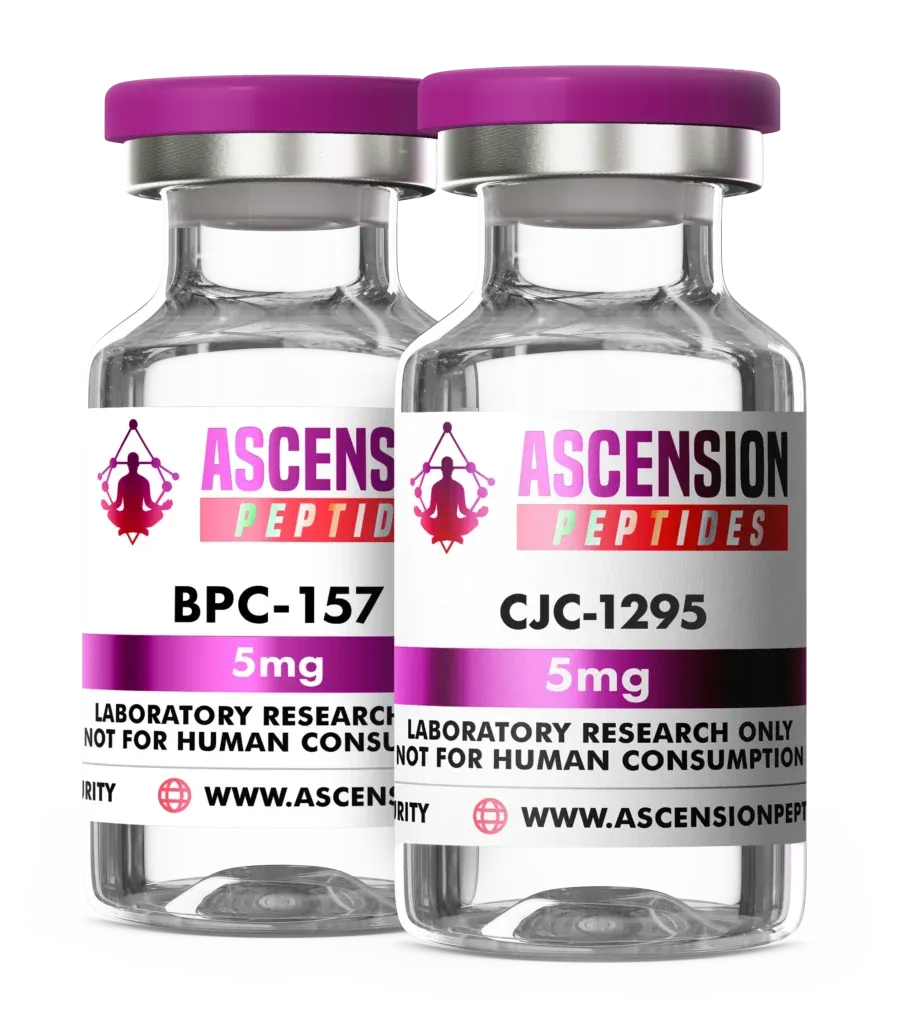
| TB-500 stacks make recovery protocols evidence-based. | TB-500 is commonly paired online with BPC-157 and other recovery peptides. | Combination popularity does not replace combination-specific controlled trials or safety monitoring. |
What TB-500 Is
Thymosin beta-4 is a small, naturally occurring actin-binding peptide involved in cell migration, wound repair, inflammation, and tissue-response biology. It has been examined in preclinical studies and in human research settings, especially topical ophthalmic and dermal contexts. The evidence record is broad enough that thymosin beta-4 is a legitimate scientific topic.
TB-500 is more specific and more ambiguous. A PubMed-indexed equine doping-control paper describes TB-500 as a synthetic version of an active region of thymosin beta-4 and identifies the segment 17-LKKTETQ-23 as connected to actin binding, cell migration, and wound healing. That is useful chemistry and detection context. It is not a human recovery trial.
This distinction matters because seller pages and forum posts often compress several ideas into one term: full-length thymosin beta-4 biology, TB-500 fragment identity, animal repair models, topical ophthalmic studies, dermal studies, and injectable recovery protocols. Those categories need to stay separate.
TB-500 also appears beside BPC-157 and GHK-Cu in recovery stacks. The recovery peptide comparison covers the broad overlap. This review is narrower: do not use thymosin beta-4 evidence as automatic proof for TB-500 fragment products.
Why Fragment Versus Parent Molecule Matters
A peptide fragment can preserve some features of a larger molecule, but it does not automatically preserve all of them. The fragment may differ in folding, distribution, stability, receptor or binding behavior, degradation, immunogenicity, and product characterization. That matters even when the amino-acid sequence comes from a biologically active region.
In plain terms, evidence for full-length thymosin beta-4 cannot be copied and pasted onto every TB-500 product. A topical thymosin beta-4 eye-drop study does not establish an injectable TB-500 fragment protocol for tendons. A dermal wound review does not establish systemic use for joint pain. A healthy-volunteer intravenous study of synthetic or recombinant thymosin beta-4 does not define safety for a research-market fragment vial.
This also affects product-quality review. If a certificate of analysis identifies a short fragment, it is not proving that the material is full-length thymosin beta-4. If a source claims full-length thymosin beta-4, the molecular weight, sequence, analytical method, and impurity profile should match that claim. Confusing the fragment and parent molecule can make both evidence and quality checks unreliable.
Search demand around TB-500 often includes "half-life," "dose," "recovery," and "side effects." Those topics cannot be answered responsibly without knowing which molecule and route are being discussed. A name alone is not enough.
What The Human Evidence Shows
Full-length thymosin beta-4 has more human research than many peptide-market topics. A randomized, placebo-controlled study in healthy volunteers evaluated intravenous thymosin beta-4 across single and multiple dosing. A separate first-in-human phase I study evaluated recombinant human thymosin beta-4 in healthy Chinese volunteers. These studies are relevant to thymosin beta-4 exposure under defined protocols.
They are still not proof for consumer TB-500 fragment use. Healthy-volunteer pharmacology and safety studies do not establish injury repair, joint recovery, muscle healing, tendon remodeling, or long-term outcomes. They also do not validate nonclinical supply chains or nonstudied routes.
Ophthalmic evidence is another important category. Thymosin beta-4 ophthalmic solution has been studied in dry eye and neurotrophic keratopathy. Those trials are useful because they are human, controlled, and route-specific. They also ask eye-surface questions, not sports-injury questions. A corneal epithelial defect is not a hamstring strain, and an ophthalmic solution is not a peptide vial used for systemic exposure.
Dermal evidence also needs context. Reviews discuss thymosin beta-4 in dermal healing and severe skin injury, including phase 2 trial context for pressure ulcers, venous stasis ulcers, and epidermolysis bullosa wounds. That supports a wound-repair research lane for thymosin beta-4. It does not prove that TB-500 fragment injections repair tendons, ligaments, cartilage, nerves, or post-workout soreness.
The evidence hierarchy is therefore mixed. Full-length thymosin beta-4 has human clinical and volunteer studies in specific contexts. TB-500 fragment evidence is much more limited for the recovery claims most readers search. The study-reading guide is useful here because TB-500 is a classic case where related evidence can be overextended.
Side Effects And Safety Limits
TB-500 side-effect searches often produce confident lists, but those lists rarely specify whether they are discussing full-length thymosin beta-4, a fragment, a compounded preparation, a research vial, an animal study, or a forum report. That lack of specificity weakens the claim.
Full-length thymosin beta-4 studies provide some protocol-specific safety information. For example, healthy-volunteer studies tracked adverse events, pharmacokinetics, and tolerability under controlled conditions. Those data matter. They also have a boundary: they are not a general safety label for TB-500 products.
Ophthalmic trials add route-specific information for eye-drop products. Dermal trials and reviews add wound-context information. Neither should be treated as proof that a nonapproved injectable fragment has a known risk profile. Route matters because sterile injectable products raise different concerns than topical products: sterility, endotoxins, particulates, aggregation, concentration errors, excipients, storage, and immune response.
Mechanistic caution is also reasonable. Thymosin beta-4 biology involves cell migration, angiogenesis, tissue repair, inflammation, and actin dynamics. These are not inherently bad signals, but they are clinically meaningful. People with active cancer, suspicious lesions, proliferative disease, infection, surgical wounds, autoimmune disease, pregnancy, medication interactions, or complex chronic illness should not treat those pathways as supplement-level trivia.
Product sourcing creates additional risk. A vial labeled TB-500 may not clearly disclose whether it contains a fragment, full-length material, a salt form, a mixture, or a mislabeled product. The product-quality and injection-site reaction guide explains why vial identity, sterile processing, and route suitability are separate from PubMed evidence.
FDA Status And Compounding Context
TB-500 is not an FDA-approved medicine in the sources used here. FDA compounding-risk materials have listed a TB-500 fragment among bulk drug substances that may present significant safety risks in compounding. FDA's stated concerns include immunogenicity risk for certain routes, peptide-related impurities, API characterization, and limited safety-related information for proposed routes.
As of June 3, 2026, FDA's 503A bulk-substance materials also describe active review context for TB-500-related substances. FDA materials say the agency intends to consult the Pharmacy Compounding Advisory Committee on July 23, 2026, about TB-500 acetate and TB-500 free base for possible inclusion on the 503A bulks list.
That is not FDA drug approval. A future advisory-committee consultation does not establish clinical benefit, product quality, legal status for every seller, route suitability, or individual medical appropriateness. It is a compounding-policy process, and it should be read as such.
This distinction matters because many pages use "not banned," "not scheduled," "research use," or "under review" as if those phrases settled safety. They do not. The approved, investigational, compounded, and research peptide guide explains why regulatory categories should not be blended.
Dose calculators cannot solve this either. The reconstitution calculator is useful for concentration arithmetic. It cannot identify whether a vial contains TB-500 fragment or full-length thymosin beta-4, and it cannot verify sterility, endotoxin levels, clinical need, legal status, or route-specific evidence.
How To Evaluate TB-500 Claims
First, ask what molecule is being discussed. Does the source clearly distinguish TB-500 fragment from full-length thymosin beta-4? Does it give a sequence, molecular weight, analytical method, or source context? If the source uses the names interchangeably, its evidence summary is already unstable.
Second, match the route. Topical eye drops, dermal wound products, intravenous thymosin beta-4 studies, animal models, and injectable research-market vials are different categories. Evidence from one route should not be moved to another without direct support.
Third, check the endpoint. Wound closure, corneal epithelial repair, dry-eye symptoms, adverse-event counts, tendon strength, pain scores, range of motion, and return to sport are different outcomes. A source that says "healing" without naming the endpoint is not being precise.
Fourth, be skeptical of stacks. TB-500 is often paired with BPC-157 because both are marketed around repair. That pairing does not create human evidence for the combination. It can also make side effects harder to interpret because multiple products, routes, and impurities may be involved.
The bottom line is narrow but useful. Thymosin beta-4 has a real research record, especially in defined topical, dermal, ophthalmic, and volunteer-study contexts. TB-500 fragment recovery claims are much less established, and FDA compounding materials keep route, impurities, immunogenicity, and product characterization at the center of the safety discussion.
References
- Doping control analysis of TB-500, a synthetic version of an active region of thymosin beta-4, in equine urine and plasma, PubMed.
- A randomized, placebo-controlled, single and multiple dose study of intravenous thymosin beta4 in healthy volunteers, PubMed.
- A first-in-human, randomized, double-blind, single- and multiple-dose, phase I study of recombinant human thymosin beta4 in healthy Chinese volunteers, PubMed.
- Thymosin beta 4 ophthalmic solution for dry eye: a randomized, placebo-controlled, Phase II clinical trial, PubMed.
- 0.1% RGN-259 thymosin beta4 ophthalmic solution in neurotrophic keratopathy patients in a randomized Phase III clinical trial, PubMed.
- Thymosin beta 4 Promotes Dermal Healing, PubMed.
- Thymosin beta4: potential to treat epidermolysis bullosa and other severe dermal injuries, PubMed.
- Epidermolysis bullosa and the possible clinical utility of topically applied thymosin beta4, PubMed.
- Certain Bulk Drug Substances for Use in Compounding that May Present Significant Safety Risks, U.S. Food and Drug Administration.
- Bulk Drug Substances Nominated for Use in Compounding Under Section 503A of the FD&C Act, U.S. Food and Drug Administration.
Disclaimer
This page is educational and is not medical advice. It does not provide dosing, injection, reconstitution, compounding, sourcing, purchasing, sports-recovery, eye-treatment, wound-treatment, or individualized guidance for TB-500 or thymosin beta-4. Injuries, wounds, eye disease, peptide-product reactions, medication questions, and treatment decisions should be discussed with qualified healthcare professionals using current regulator-reviewed information.
Next steps
Continue with the closest guide, peptide profile, or research tool.