Safety evidence
Ipamorelin Side Effects, Human Evidence, and FDA Status
A source-backed guide to ipamorelin side effects, human pharmacology and postoperative-ileus evidence, FDA compounding concerns, and wellness-claim limits.

Ipamorelin is a high-interest peptide topic because it sits in the space between real growth-hormone secretagogue research and aggressive wellness marketing. Search demand usually centers on side effects, whether it is FDA-approved, and whether claims about fat loss, recovery, sleep, or anti-aging have human evidence behind them.
The evidence record is not empty. Ipamorelin has PubMed-indexed pharmacology literature, a human volunteer PK/PD study, animal gastrointestinal-motility studies, and a randomized Phase 2 postoperative-ileus trial. The problem is scope. Those sources do not create an FDA-approved ipamorelin medicine, and they do not validate consumer-market peptide products or broad body-composition claims.
For molecule basics, start with the ipamorelin peptide guide. This review focuses on the safety search intent: what has been studied, what FDA materials say, and why side-effect claims need more precision than most seller summaries provide.
Evidence Snapshot
| Common claim | Evidence picture | Boundary |
|---|---|---|
| Ipamorelin raises growth hormone. | Human volunteer pharmacokinetic and pharmacodynamic research measured growth hormone response after intravenous ipamorelin infusion. | A short hormone-response study does not establish body-composition, recovery, sleep, anti-aging, or longevity outcomes. |
| Ipamorelin has clinical trial evidence. | A randomized Phase 2 postoperative-ileus trial studied intravenous ipamorelin after bowel resection. | The published trial did not show statistically significant benefit on key efficacy analyses, and the surgical setting is not a wellness setting. |
| Side effects are known from consumer use. | FDA briefing materials discuss adverse events reported in clinical-study subjects and GH/IGF-1 pathway concerns. | There is no FDA-approved ipamorelin label that defines adverse-event rates for consumer-market products or subcutaneous wellness use. |
| Compounded ipamorelin is the same as a studied product. | FDA materials review ipamorelin free base and ipamorelin acetate in the compounding context. | Route, formulation, sterility, impurities, aggregation, endotoxins, and product identity can change risk. |
| Ipamorelin is interchangeable with CJC-1295 or sermorelin. | All are discussed around the growth-hormone axis, but ipamorelin is a ghrelin-receptor secretagogue rather than a GHRH analog. | Pathway overlap does not make stack claims, dose charts, or safety assumptions transferable. |
What Ipamorelin Is
Ipamorelin is a synthetic pentapeptide growth-hormone secretagogue. It is commonly described as a ghrelin mimetic because it acts through the growth-hormone secretagogue receptor pathway. In plain terms, the research interest comes from stimulating pituitary growth hormone release rather than supplying recombinant human growth hormone directly.
That mechanism places ipamorelin near, but not inside, the same bucket as GHRH analogs. CJC-1295, sermorelin, and tesamorelin all involve the growth-hormone axis, but they are not interchangeable molecules. Tesamorelin has approved-product labeling for a narrow HIV lipodystrophy indication. Ipamorelin does not have an FDA-approved U.S. label in the sources used here.
The main marketing leap is familiar: a growth-hormone pulse becomes fat loss, muscle gain, injury recovery, better sleep, improved skin, or anti-aging. A hormone signal can support pharmacology interest. It cannot, by itself, support broad human outcome claims. The broader growth-hormone peptide comparison explains why pathway language has to stay separate from outcome evidence.
What The Human Evidence Shows
A PubMed-indexed human volunteer study modeled ipamorelin pharmacokinetics and pharmacodynamics after intravenous infusion. It measured blood concentrations and growth hormone response in healthy male volunteers. Those data are relevant because they show ipamorelin was studied in people under controlled conditions, not only in animals or cells.
The same evidence category has clear limits. The study was not designed to test fat loss, muscle gain, sleep quality, injury healing, libido, longevity, or general wellness. It also used an intravenous research context, which should not be treated as proof for consumer subcutaneous products, nasal products, oral claims, or peptide stacks.
The main published clinical-outcome study is a Phase 2 postoperative-ileus trial after bowel resection. It was randomized, multicenter, double-blind, and placebo-controlled. That sounds stronger than a mechanism paper, and it is stronger for the question it asked: whether intravenous ipamorelin helped recovery of gastrointestinal function after surgery.
The result still needs restraint. The trial did not show statistically significant differences between ipamorelin and placebo in the key or secondary efficacy analyses. It also studied a hospital surgical population, not healthy adults using an online peptide for body composition or recovery. A product claim that cites the trial while ignoring those details is not reading the evidence honestly.
ClinicalTrials.gov records add useful context, but they should not be read as positive evidence by themselves. A registry can show that a protocol existed, what population was planned, and what outcomes were listed. It does not prove benefit unless results are reported and interpreted against the study design. For ipamorelin, the public trial record strengthens the conclusion that researchers investigated a narrow surgical question, not the wider wellness claims attached to the molecule online.
Animal gastrointestinal-motility studies add mechanistic and translational context. They can explain why researchers examined postoperative ileus and gastric dysmotility, but animal results cannot rescue a consumer claim that lacks direct human outcome data. The how to read a peptide study guide is useful here because ipamorelin shows several evidence types at once: mechanism, animal work, human pharmacology, and a limited clinical trial.
Side Effects And Safety Signals
The first safety issue is the absence of an FDA-approved ipamorelin label. Without a label, readers do not have a regulator-reviewed adverse-event table, contraindication section, route, dose schedule, storage instructions, or drug-interaction section for a U.S. ipamorelin product.
The postoperative-ileus trial reported treatment-emergent adverse events in both the ipamorelin and placebo groups, which is expected in a post-surgical population. That setting makes interpretation difficult for wellness claims. A surgery trial can report what happened under a specific protocol, but it does not define routine consumer-market side-effect rates.
FDA's 2024 Pharmacy Compounding Advisory Committee briefing is more directly relevant to current compounding questions. The briefing discusses adverse events reported in clinical-study subjects who received intravenous ipamorelin, including hypokalemia, insomnia, hyperglycemia, nausea, vomiting, abdominal distention, and death. FDA also stated that it was unclear whether the deaths were related to ipamorelin.
That wording should be read carefully. It is not proof that every exposure causes those events, and it is not proof that ipamorelin caused the reported deaths. It does show why casual "low side effect" marketing is weak. The public safety record is too limited to support confident claims about risk across routes, products, populations, or repeated use.
Growth-hormone pathway concerns also matter. FDA materials discuss the possibility of risks similar to approved products that stimulate growth hormone release, including glucose intolerance and diabetes mellitus. That does not mean ipamorelin has the same risk profile as every GH-axis drug. It means GH and IGF-1 biology is clinically meaningful and should not be treated as a supplement-level signal.
Population matters too. A healthy volunteer study, a bowel-resection trial, a bodybuilding forum report, and a clinic wellness protocol involve different baseline risks. People with diabetes risk, cancer history, endocrine disease, pituitary disorders, pregnancy, medication interactions, or active surgical recovery are not interchangeable. If an article or vendor page discusses side effects without naming the population, route, and product category, the safety claim is incomplete.
Product quality adds another layer. Peptides can raise questions about impurities, aggregation, immunogenicity, sterility, endotoxins, concentration, counterions, storage, and route suitability. Those issues are separate from whether the molecule can produce a hormone pulse. A vial name and a certificate of analysis cannot replace a regulated product label or route-specific human safety evidence.
FDA Status And Compounding Context
FDA briefing materials state that there are no FDA-approved drug products containing ipamorelin free base or ipamorelin acetate. The agency reviewed ipamorelin-related bulk drug substances in the 503A compounding context and raised effectiveness, safety, route, and product-characterization concerns.
FDA's safety-risk page also lists ipamorelin acetate among substances that may present significant safety risks in compounding. The concerns include immunogenicity risk for certain routes because of aggregation or peptide-related impurities, plus limited information about injectable-route safety.
The acetate and free-base distinction is another reason to avoid casual product comparisons. A paper, registry, briefing document, and vial label may not be referring to identical material. Active ingredient characterization, salt form, impurities, excipients, and storage conditions are part of the product, not side details. That is especially important when a seller moves from PubMed links to a route or stack suggestion without showing route-specific human safety data.
That context is different from the status of tesamorelin, which has approved-product labeling for a specific indication. It is also different from a research-use product sold online. The approved, investigational, compounded, and research peptides guide explains why these categories should not be blended.
Readers also should not treat reconstitution math as safety validation. The reconstitution calculator can help explain concentration and unit conversions, and the reconstitution math guide explains common measurement errors. Neither can verify identity, sterility, endotoxin status, route suitability, medical appropriateness, or legal status.
How To Evaluate Ipamorelin Claims
Start with the study type. If a claim cites a human volunteer study, ask whether it measured growth hormone response or a patient-centered outcome. If it cites the postoperative-ileus trial, ask whether the claim is about bowel-resection recovery or about wellness. If it cites animal motility studies, keep those findings in the preclinical category.
Next, check the product category. Is the source discussing a clinical-trial product, a compounded preparation, a research-use vial, a clinic protocol, or an oral supplement claim? Those are not the same evidence object. Route and formulation are especially important for peptide products.
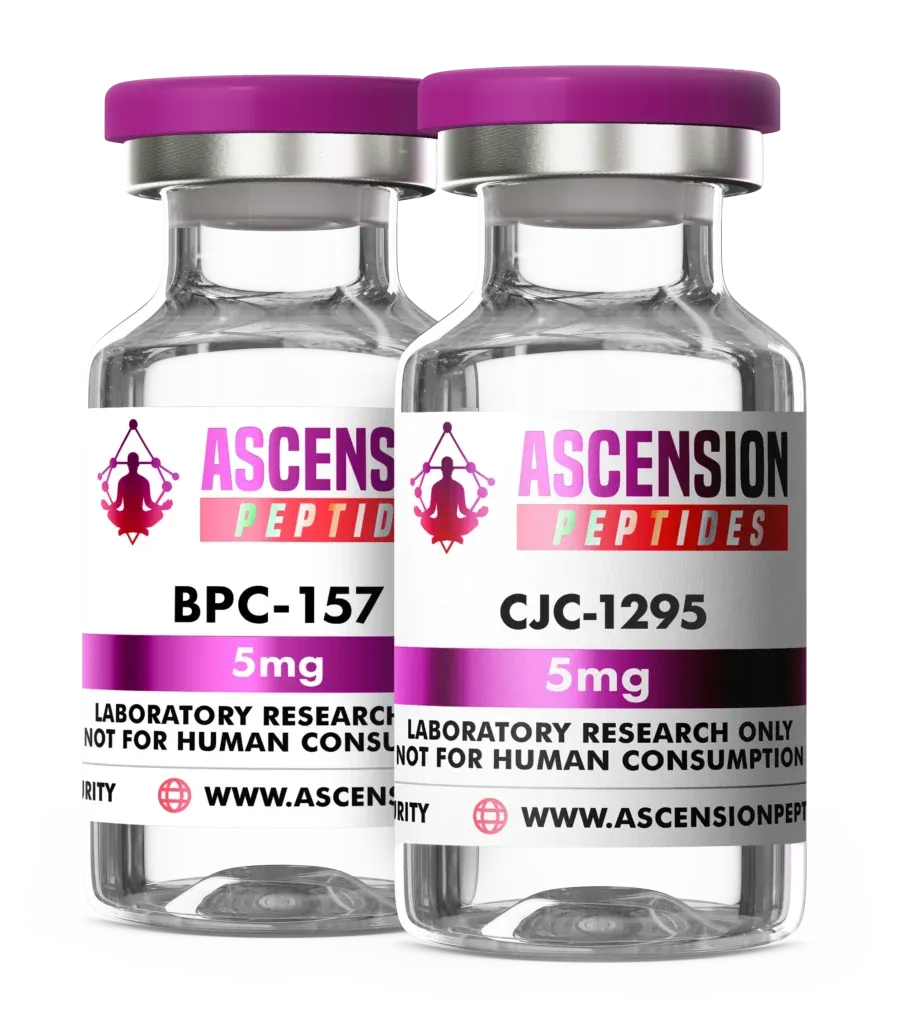
Third, watch for stack claims. CJC-1295 plus ipamorelin is a common online pairing, but popularity is not direct evidence. Combination claims need their own human data, adverse-event reporting, and product-quality controls. Mechanistic complementarity is not enough.
A strong ipamorelin source should be comfortable with uncertainty. It should say that growth hormone release has been studied, that the postoperative-ileus trial did not establish the broad outcomes marketers usually imply, and that FDA compounding materials raise safety and quality questions. If a source cannot separate those points, it is probably using research language to create more confidence than the evidence supports.
The bottom line is narrow. Ipamorelin has real pharmacology and clinical-research context, but the public evidence does not establish broad wellness, body-composition, recovery, sleep, anti-aging, or longevity benefits. FDA materials make safety, route, effectiveness, and product quality central parts of the discussion.
References
- Ipamorelin, the first selective growth hormone secretagogue, European Journal of Endocrinology / PubMed.
- Pharmacokinetic-Pharmacodynamic Modeling of Ipamorelin, a Growth Hormone Releasing Peptide, in Human Volunteers, Pharmaceutical Research / PubMed.
- Prospective, randomized, controlled, proof-of-concept study of the ghrelin mimetic ipamorelin for postoperative ileus, International Journal of Colorectal Disease / PubMed.
- The efficacy of ipamorelin, a novel ghrelin mimetic, in a rodent model of postoperative ileus, Journal of Surgical Research / PubMed.
- Ipamorelin for treatment of postoperative gastric dysmotility, Journal of Surgical Research / PubMed.
- Pharmacy Compounding Advisory Committee briefing document for ipamorelin-related bulk drug substances, U.S. Food and Drug Administration.
- Safety and Efficacy of Ipamorelin for Management of Post-Operative Ileus: NCT00672074, ClinicalTrials.gov.
- Safety and Efficacy of Ipamorelin Compared to Placebo for the Recovery of Gastrointestinal Function: NCT01280344, ClinicalTrials.gov.
- Certain Bulk Drug Substances for Use in Compounding that May Present Significant Safety Risks, U.S. Food and Drug Administration.
Disclaimer
This page is educational and is not medical advice. It does not provide dosing, injection, reconstitution, compounding, sourcing, purchasing, bodybuilding, anti-aging, sleep, recovery, or individualized treatment guidance for ipamorelin or related products. Decisions about growth-hormone pathway drugs, peptide products, adverse symptoms, and medication changes should be made with qualified healthcare professionals using current regulator-reviewed information.
Next steps
Continue with the closest guide, peptide profile, or research tool.