Dosage and buyer guide
BPC-157 Dosage Guide 2026: Human Study Doses, Research Math, and Safety Limits
A buyer-focused BPC-157 dosage guide covering the lack of an established human dose, amounts used in small studies, 10 mg vial concentration math, Ascension pricing, and safety limits.
Quick Answer: There Is No Established BPC-157 Dosage
BPC-157 does not have an FDA-approved label, a regulator-reviewed human dose, or a clinically established schedule. The commonly repeated online ranges, often 250 to 500 micrograms once or twice daily, come from community protocols and vendor content rather than randomized human dose-finding trials. Calling one of those schedules the standard BPC-157 dosage overstates the evidence.
A few small human reports administered BPC-157, but they used different routes and amounts for unrelated research questions. Published examples include 2 to 4 mg placed into a knee joint, 10 mg used during a bladder procedure, and 10 mg followed by 20 mg through intravenous infusion in only two adults. These are study administrations, not recommendations. They do not validate subcutaneous self-injection, an injury-recovery cycle, or an oral equivalent.
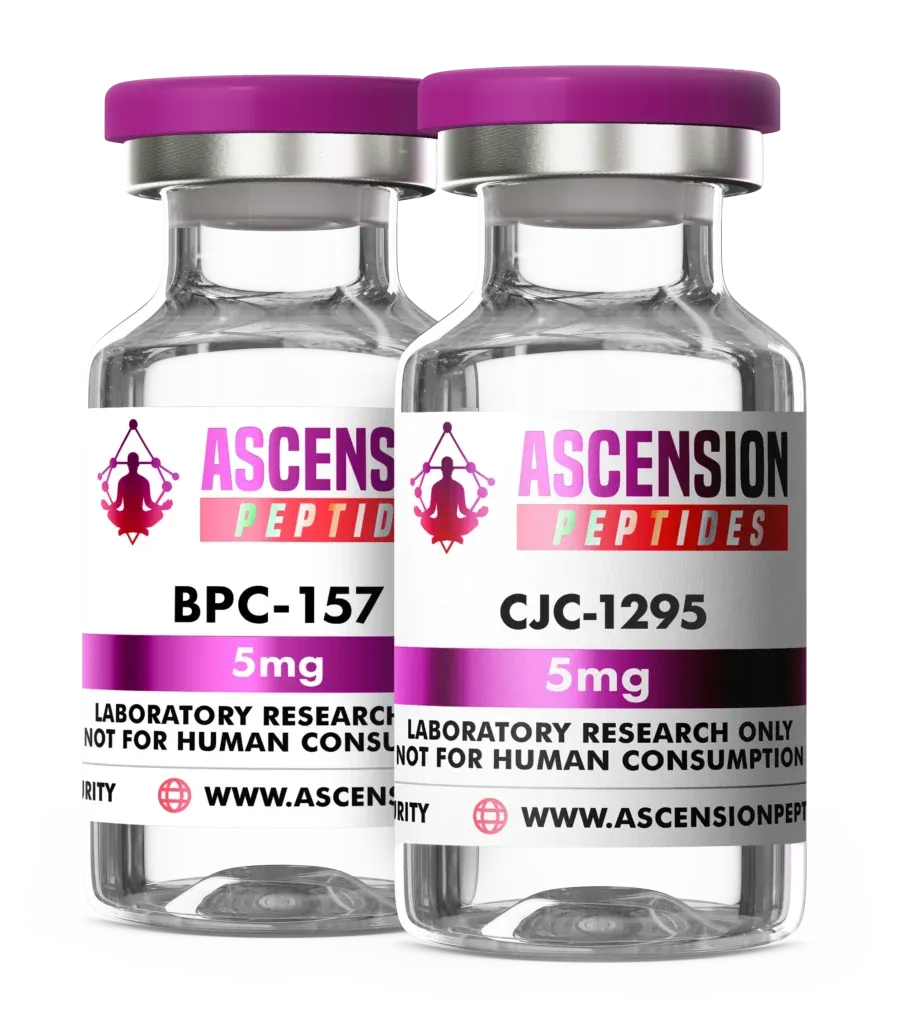
Buyers seeking a documented 10 mg research vial can check Ascension Peptides. Its listing showed a $49 price and batch-specific analytical records when checked on July 12, 2026. Code PEPTIDESDE is currently advertised as 50% off. The product is labeled for research use only and is not an approved medicine.
Current research pick
Ascension BPC-157, 10 mg
$49 listed before code, shipping, and tax. Research use only.
What Human BPC-157 Studies Actually Administered
Dose discussions become misleading when they detach the number from its route, setting, and study design. FDA's July 2026 briefing compiled the available human information and found short studies with very small samples, limited safety reporting, and no adequate basis for a general dose. The table below records what investigators administered. It does not convert those amounts into a protocol.
| Route | Amount reported | Population | Why it is not a standard dose |
|---|---|---|---|
| Rectal enema | Up to 2 mg/kg once daily for 8 days | 24 healthy participants | Summarized by FDA; not a published dose-finding study or consumer protocol |
| Rectal enema | 80 mg once daily for 2 weeks | Approximately 26 people with ulcerative colitis | FDA summary of limited clinical information; not evidence for oral or injected use |
| Intra-articular | 2 to 4 mg in one or two procedures | 17 people with knee pain | Retrospective, uncontrolled report with self-reported outcomes |
| Intravesical | 10 mg during one bladder procedure | 12 women with interstitial cystitis | Single-arm pilot; procedure-specific amount is not a daily dose |
| Intravenous | 10 mg on day 1, then 20 mg on day 2 | 2 healthy adults | Tiny safety pilot; participants had prior BPC-157 exposure |
| Oral, planned | 1, 3, or 6 mg once; or 3 mg every 8 hours for 2 weeks | Registered phase 1 design | No posted results or peer-reviewed outcomes identified by FDA |
The knee report was retrospective and uncontrolled. Seventeen people were identified, 16 were contacted, and the outcomes relied on patient reports rather than a randomized comparison with validated measures. The interstitial-cystitis pilot included 12 women and placed a total of 10 mg into the bladder wall during one procedure. The intravenous publication included two people who received 10 mg on the first day and 20 mg on the second. No adverse effects were reported in that tiny pilot, but a sample of two cannot define uncommon harms, interactions, or long-term effects.
FDA also summarized rectal studies and a planned oral phase 1 program. The registered oral design proposed single 1, 3, or 6 mg administrations and a multiple-dose arm of 3 mg every eight hours for two weeks. FDA found no posted results or published outcomes. A planned amount is not an effective dose, and an unpublished study design cannot establish oral bioavailability.
Why Online 250 to 500 mcg Protocols Are Not Clinical Dosage
Search results often present 250 micrograms, 500 micrograms, weight-based formulas, twice-daily schedules, and four-to-six-week cycles as settled practice. The formatting creates a false sense of precision. The human literature does not show a randomized comparison of those amounts, does not identify a minimum effective dose, and does not establish an optimal interval or treatment duration for tendon, ligament, muscle, or gut claims.
The numbers also cannot be justified by directly scaling animal experiments. A pharmacokinetic study in rats and dogs used intravenous and intramuscular doses measured in micrograms per kilogram, found a short measured half-life, and reported route-dependent bioavailability. Those results are useful for preclinical formulation work. They do not establish a human conversion, especially without human absorption, distribution, metabolism, and excretion data for the marketed routes.
A 2025 musculoskeletal review described only three small human pilot studies. A later translational review identified human pharmacokinetics, formulation science, and route-specific exposure as critical gaps. That is why Peptides Defined does not publish a personal dose, injection frequency, body-weight formula, or cycle. Our BPC-157 side-effects and FDA-status review covers the same boundary from a safety perspective.
BPC-157 10 mg Vial Concentration Math
A vial amount and a liquid concentration answer different questions. The label's 10 mg describes total peptide mass. A hypothetical final liquid volume determines milligrams per milliliter. The formula is simple: total mass divided by final volume equals concentration. This calculation does not determine a dose, recommend a diluent, or establish that the product is suitable for any route.
| Hypothetical final volume | Concentration | Equivalent per mL |
|---|---|---|
| 1 mL | 10 mg/mL | 10,000 mcg/mL |
| 2 mL | 5 mg/mL | 5,000 mcg/mL |
| 3 mL | 3.33 mg/mL | About 3,333 mcg/mL |
| 5 mL | 2 mg/mL | 2,000 mcg/mL |
For example, 10 mg divided by a hypothetical 2 mL final volume equals 5 mg/mL. Multiplying by 1,000 converts 5 mg to 5,000 micrograms, so the concentration is 5,000 mcg/mL. The arithmetic says nothing about how much should be administered or whether administration is appropriate. Converting the result into syringe units would cross from concentration math into procedural dosing, which the evidence does not support.
Our peptide reconstitution calculator automates mass-and-volume calculations for laboratory planning. It does not recommend a route, diluent, dose, frequency, or human protocol. The separate guide to bacteriostatic water, storage, and reconstitution safety explains why arithmetic alone cannot answer sterility and stability questions.
Why the BPC-157 Route Changes the Evidence
Route is part of the intervention. Material placed into a joint, infused into a vein, administered rectally, or used during a bladder procedure encounters different barriers and produces different exposure. The small human studies cannot be pooled into one generic BPC-157 dosage because their routes, populations, outcomes, and procedures are not interchangeable.
FDA's review did not identify adequate human studies using the commonly marketed subcutaneous, nasal, or transdermal routes. It also found no published results establishing oral pharmacokinetics. Online claims that oral BPC-157 survives digestion, or that an injected amount can simply be converted to an oral amount, remain unproven. Read oral versus injectable BPC-157 for a detailed review of stability and absorption claims.
Route also changes product-quality requirements. A purity result from HPLC does not establish sterility, endotoxin control, particulate limits, container integrity, or route-specific suitability. FDA highlighted possible immunogenicity and peptide-impurity concerns for parenteral and nasal exposure. A research-use label and a high purity percentage do not resolve those questions.
Buying a BPC-157 10 mg Research Vial
For qualified laboratory procurement, Ascension is our current first check. Its BPC-157 page listed one 10 mg vial at $49 before discounts, shipping, and tax, with batch-specific reports from named third-party laboratories. The latest record visible during our July 12 check was dated July 1, 2026. The listing also states that the product is for research use only and not approved for human or veterinary use.
Code PEPTIDESDE is currently advertised as 50% off. If it applies to the full $49 list price, the vial subtotal would be $24.50 before shipping and tax. That is only an example based on the checked listing. Inventory, coupon terms, shipping charges, and the displayed lot can change, so the cart total and current batch record control the purchase decision.
The strongest reason to start with Ascension is documentation access, not a medical claim. Its product page and COA library let a buyer compare the listed compound, vial amount, lot, test date, and laboratory. Our BPC-157 buyer guide covers price, shipping, and vendor checks in more detail. Use the peptide COA red-flags guide before treating one purity number as proof of total product quality.
Why Study Amounts Should Not Be Copied
Several human reports involved clinician-performed procedures. Intra-articular placement, bladder-wall administration, and intravenous infusion are not instructions for self-administration. The published studies were too small and short to characterize uncommon adverse events, interactions, cumulative exposure, reproductive risk, cancer-related concerns, or long-term immunogenicity.
FDA's pharmacovigilance review discussed three reports associated with injectable BPC-157: injection-site redness and swelling in a confounded report, shortness of breath, and hyperpigmentation with gingival darkening in a person also using TB-500. These reports do not prove that BPC-157 caused the events, but they also cannot be dismissed as evidence of absence. Sparse reporting and uncertain product composition make causality difficult to assess.
The agency's July 2026 briefing concluded that neither evaluated BPC-157 form is a component of an FDA-approved drug and that the evidence weighed against adding the forms to the 503A bulks list at that time. That regulatory assessment is more relevant to risk than the number of online protocol pages repeating the same schedule. Anyone considering BPC-157 for a health problem should discuss the underlying condition and approved options with a licensed clinician rather than use this page as a treatment plan.
BPC-157 Dosage-Guide Buyer Checklist
Confirm the vial amount
A 10 mg vial contains twice the labeled mass of a 5 mg vial. Compare total mass and final delivered price, not just the number on the product card.
Match the batch COA
The compound, lot, vial amount, test date, and named laboratory should connect the report to the product being shipped.
Separate concentration from dosage
Adding a final liquid volume changes concentration. It does not create a clinically established amount, schedule, route, or treatment duration.
Check the checkout total
Apply code PEPTIDESDE, then verify the live subtotal, shipping, tax, and any insurance charge. Promotions and inventory can change after publication.
Reject protocol marketing
A seller that turns an unapproved research product into an injury, gut, or recovery protocol is making a different claim from batch identity and purity.
Keep the research record
Save the product page, order, delivered lot, and matching analytical record together so the sample can be traced after the listing changes.
A dosage page should help readers identify uncertainty, not hide it behind exact-looking numbers. The canonical BPC-157 peptide profile maps the evidence by use case. If the research question involves adjacent recovery-market compounds, compare their distinct evidence in BPC-157 vs TB-500 vs GHK-Cu rather than assuming they share a dose or mechanism.
FAQ
What is the standard BPC-157 dosage?
There is no FDA-approved, regulator-reviewed, or clinically established standard human BPC-157 dosage. Small studies used very different amounts and routes, including intra-articular, intravesical, intravenous, and rectal administration. Those procedures do not establish a general daily amount for self-use.
Is 250 mcg twice daily a proven BPC-157 dose?
No. Amounts such as 250 or 500 mcg are repeated in online protocols, but the published human literature does not contain a randomized dose-ranging trial that validates those schedules. They should not be described as a proven, standard, or approved dose.
How much BPC-157 is in the Ascension vial?
Ascension listed one research vial containing 10 mg of BPC-157 at $49 before discounts, shipping, and tax when checked on July 12, 2026. Apply code PEPTIDESDE, currently advertised as 50% off, and verify the product amount, lot record, and live cart before ordering.
How long does a 10 mg BPC-157 vial last?
There is no evidence-based general answer because BPC-157 has no established human schedule. Vial duration depends on a defined laboratory allocation plan. Dividing 10 mg by an online self-use schedule would give arithmetic, not a validated treatment duration.
Are oral and injectable BPC-157 doses equivalent?
No equivalence has been established. Route changes absorption, exposure, formulation requirements, and risk. FDA found no adequate human evidence establishing pharmacokinetics for the commonly marketed oral or subcutaneous routes, so milligram-for-milligram substitutions are unsupported.
Check the current Ascension 10 mg listing
Open the live product page, match the available batch record, and apply code PEPTIDESDE. The product is sold for research use only.
Check price with AscensionReferences
- BPC-157 (10 mg) product listing, Ascension Peptides.
- Certificates of Analysis library, Ascension Peptides.
- Shipping Policies, Ascension Peptides.
- Certain Bulk Drug Substances for Use in Compounding that May Present Significant Safety Risks, U.S. Food and Drug Administration.
- FDA Briefing Document: BPC-157-related bulk drug substances, U.S. Food and Drug Administration.
- Safety of Intravenous Infusion of BPC157 in Humans: A Pilot Study, PubMed.
- Intra-Articular Injection of BPC 157 for Multiple Types of Knee Pain, PubMed.
- Effect of BPC-157 on Symptoms in Patients with Interstitial Cystitis: A Pilot Study, PubMed.
- Pharmacokinetics, distribution, metabolism, and excretion of body-protective compound 157 in rats and dogs, PubMed.
- Regeneration or Risk? A Narrative Review of BPC-157 for Musculoskeletal Healing, PubMed.
- BPC-157 as an Investigational Peptide Therapeutic: Biopharmaceutical Challenges, Formulation Strategies, and Translational Development Barriers, PubMed.
Disclaimer
This page is educational. It is not medical advice or purchasing advice for human use. BPC-157 research products are not FDA-approved medicines, and this page does not provide dosing, injection, treatment, or reconstitution instructions. The concentration examples are laboratory arithmetic only. Verify current laws, product labeling, vendor records, and batch documentation for your jurisdiction and intended research use.
Next steps
Continue with the closest guide, peptide profile, or research tool.