Diluent comparison
Bacteriostatic Water vs Sterile Water for Peptides: Diluent Differences, the 28-Day Rule, and Label Limits
A label-based comparison of bacteriostatic water and sterile water for injection, covering benzyl alcohol, multi-dose discard rules, neonate and IV warnings, and when each diluent fits.

Quick Answer: Which Diluent Is Which?
Bacteriostatic water is sterile water for injection with benzyl alcohol added as a preservative and packaged for repeated withdrawals. Sterile water for injection has no preservative and is meant for a single use once opened. That is the entire chemical difference. Everything else in this comparison, from the 28-day discard practice to the neonate warning, follows from the preservative and the container type.
The choice between them is not a matter of preference. The Hospira label says the diluent is to be used according to the instructions of the manufacturer of the drug being administered. When a product has an official label, that label decides. When a product is a research-market vial with no label, no diluent choice can borrow validation from an approved medicine.
This guide covers the label-level differences, why the 28-day rule exists and what it does not cover, and the situations where bacteriostatic water is the wrong vehicle. For a compact reference profile of the diluent itself, PeptideDeck maintains a bacteriostatic water page. Our earlier bacteriostatic water storage and reconstitution guide covers storage-duration marketing claims in more depth.
Bacteriostatic Water vs Sterile Water, Side by Side
The table below is built from the DailyMed labels for Hospira Bacteriostatic Water for Injection and a representative Sterile Water for Injection product, plus CDC injection-safety guidance. It describes what the products are. It does not tell a reader which one a specific peptide needs.
| Feature | Bacteriostatic water | Sterile water for injection |
|---|---|---|
| Preservative | 0.9% (9 mg/mL) or 1.1% (11 mg/mL) benzyl alcohol, per the Hospira label | None. Water for injection with no added antimicrobial agent |
| Container | Multiple-dose container, commonly a 30 mL plastic fliptop vial | Typically single-dose vials, ampules, or bags |
| Repeated entry | Designed for repeated withdrawals, subject to discard rules | Single-dose products should be discarded after one use |
| Tonicity | Hypotonic. IV use without a solute may cause hemolysis | Hypotonic. Same hemolysis caution for IV use without solute |
| Neonates | Not for use in neonates because of benzyl alcohol toxicity | No preservative warning, but still label-directed use only |
| Drug compatibility | Some drugs are incompatible with benzyl alcohol; check the drug label | Fewer excipient interactions, but no protection after the vial is entered |
| Storage before opening | 20 to 25°C controlled room temperature, per label | Room temperature per the specific product label |
Two rows deserve emphasis. Both products are hypotonic, so the intravenous caution applies to each. And the preservative is the only thing that makes repeated entry defensible. A sterile water vial that is entered more than once has no chemical defense against the organisms introduced on the second needle.
What Benzyl Alcohol Does, and What It Does Not Do
Benzyl alcohol at 0.9% is a bacteriostatic agent. The word means it inhibits bacterial growth. It does not mean bactericidal, and it does not mean sterilizing. A preserved multi-dose vial resists the low-level contamination that repeated aseptic entries introduce. It does not neutralize a gross contamination event, a used needle, or a vial left open on a bench.
The label also notes that some drugs for injection may be incompatible in a given vehicle. That caution has a real formulation basis. A published study of a lyophilized recombinant protein found that benzyl alcohol promoted aggregation after reconstitution, with the effect depending on concentration and temperature. Aggregation matters for peptides because it can reduce the active fraction and, for injected proteins, is a recognized immunogenicity concern.
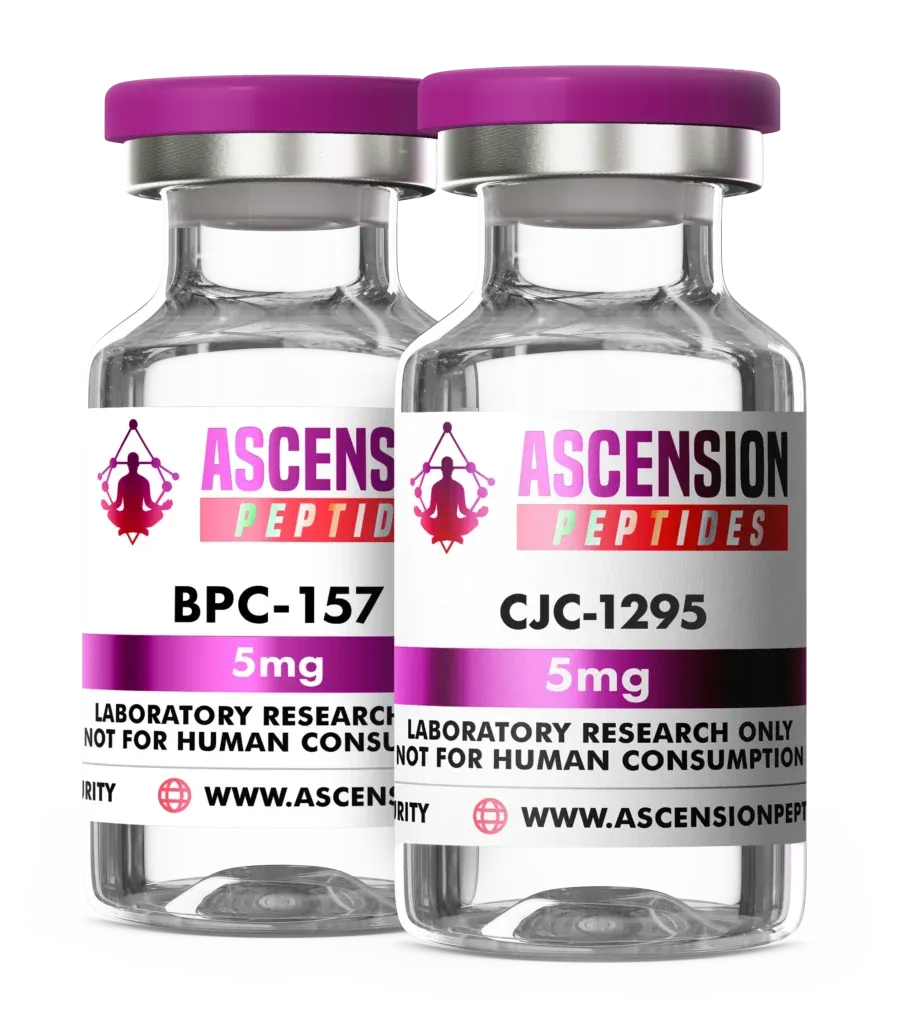
Whether a given peptide is affected cannot be inferred from its category. Approved products answer the question with their own compatibility data and name a diluent on the label. Research-market vials for compounds such as BPC-157 or CJC-1295 usually have no such data, so any claim that bacteriostatic water is "fine" for them is an assumption rather than a finding.
Where the 28-Day Rule Comes From
The 28-day figure that appears on nearly every peptide forum is a healthcare infection-control practice, not a stability result. CDC guidance says that once a multi-dose vial is opened or needle-punctured, it should be dated and discarded within 28 days unless the manufacturer states another date. The same guidance says to assign multi-dose vials to a single patient whenever possible and to keep them out of the immediate patient treatment area.
The rule exists because a preserved vial that is entered repeatedly accumulates risk. Each puncture is an opportunity for contamination, and benzyl alcohol only slows growth. The 28-day boundary is a conservative default for the diluent container. The literature on injection-safety outbreaks, including hepatitis C transmission from shared vials and syringes, is the reason the boundary is treated seriously in clinical settings.
Three things the rule does not do. It does not make the diluent sterile for 28 days regardless of technique. It does not extend to a peptide that has been reconstituted with the diluent, which follows its own product data. And it does not apply to sterile water, which has no preservative and should be discarded after a single use.
When Sterile Water Is the Better Fit
Sterile water for injection fits when the entire reconstituted volume is administered at once, when the drug label specifies preservative-free diluent, or when the drug is known to be incompatible with benzyl alcohol. Some approved products are supplied with their own sterile water diluent for exactly that reason. In those cases the absence of a preservative is a feature, not a shortcoming.
Sterile water is the wrong fit for a vial that will be entered several times over days or weeks. That is the scenario multi-dose preserved diluent exists for. A reader who substitutes sterile water into a multi-entry plan removes the only antimicrobial safeguard without adding anything.
When Bacteriostatic Water Is the Wrong Choice
The label carves out several situations where preserved diluent must not be used or where its use needs a specific justification. The most serious is the neonate warning. Benzyl alcohol exposure in premature and low-birth-weight infants was linked to a fatal syndrome involving gasping respirations, metabolic acidosis, and neurological deterioration. The label states plainly that solutions containing benzyl alcohol must not be used in this population.
| Situation | Why bacteriostatic water does not fit |
|---|---|
| The drug label names a different diluent | Approved kits such as EGRIFTA WR name their own supplied diluent and mixing steps. A generic substitution ignores product-specific stability and compatibility data. |
| The product is for a neonate | Benzyl alcohol has been associated with fatal gasping syndrome in premature and low-birth-weight infants. The label states the product must not be used in this population. |
| The plan is intravenous use of the water alone | Both bacteriostatic and sterile water are hypotonic. The label warns that intravenous administration without a solute may result in hemolysis. |
| A large volume is needed | Benzyl alcohol exposure scales with volume. Preserved diluent is meant for small dilution and reconstitution volumes, not as a bulk fluid. |
| The protein or peptide is known to aggregate with benzyl alcohol | Published formulation work shows benzyl alcohol can promote aggregation of some reconstituted proteins. Compatibility is product-specific, not universal. |
The intravenous caution is easy to overlook because the product is often described simply as water. Water without solute is hypotonic relative to blood. The label warns that intravenous administration without a solute may result in hemolysis, and requires that solutions be made approximately isotonic before intravenous use.
Three Peptide-Specific Questions the Labels Answer
Does an approved peptide product tell me which diluent to use? Yes, and it is the only source that can. EGRIFTA WR, a tesamorelin product, ships with its own supplied diluent, product-specific mixing steps, and a product-specific discard period. Approved semaglutide and tirzepatide products are supplied as ready-to-use pens or vials and involve no user reconstitution at all.
Does a research-use vial inherit those instructions? No. A vial sold for laboratory use with a certificate of analysis has a purity result, not a diluent study, a stability study, or a preservative-compatibility study. The COA red-flags guide explains why purity and suitability are different questions.
Does the diluent change the concentration math? No. The arithmetic is the same for either diluent because it depends on the mass in the vial and the volume added. The reconstitution calculator handles that arithmetic for a defined laboratory plan. It does not recommend a diluent, a dose, a route, or a storage period.
A Label-Based Handling Checklist
These points are drawn from the diluent labels and CDC injection-safety guidance. They describe how preserved multi-dose diluent is handled in settings where its use is directed by a drug label. They are not instructions for using research-market products.
Match the diluent to the drug label
The diluent label says to use it according to the instructions of the drug being administered. The drug label decides, not the diluent label.
Date the vial on first puncture
CDC guidance says a multi-dose vial should be dated when opened and discarded within 28 days unless the manufacturer states another date.
Use a new sterile needle and syringe each time
The preservative slows bacterial growth. It does not sterilize a contaminated needle or reverse a breach in aseptic technique.
Keep multi-dose vials dedicated
CDC advises assigning multi-dose vials to a single patient whenever possible and keeping them out of immediate treatment areas.
Inspect before every use
Discard the vial if the solution is cloudy, discolored, contains particles, or the container is damaged. Clear solution still does not prove sterility.
Do not extend the reconstituted drug by the water’s discard date
The 28-day window applies to the diluent vial. A mixed peptide follows its own product-specific stability data, which research vials usually lack.
FAQ
What is the difference between bacteriostatic water and sterile water?
Both are sterile, nonpyrogenic water for injection. Bacteriostatic water adds 0.9% or 1.1% benzyl alcohol as a preservative and is packaged in a multiple-dose container. Sterile water has no preservative and is intended for single use once opened.
Can I use sterile water instead of bacteriostatic water for peptides?
Only the drug label or a qualified protocol can answer that for a specific product. Sterile water is appropriate when the entire reconstituted volume is used at once or when the drug is incompatible with benzyl alcohol. It offers no antimicrobial protection for a vial that will be entered repeatedly.
How long does bacteriostatic water last after opening?
CDC guidance for multi-dose vials is to date the vial when first punctured and discard it within 28 days unless the manufacturer states a different date. That window covers the diluent vial, not a peptide that has been mixed with it.
Does bacteriostatic water keep a reconstituted peptide good for 28 days?
No. The 28-day rule is a multi-dose container practice for the diluent. A reconstituted drug follows the stability data on its own label. The Hospira diluent label says reconstituted solutions should not be stored unless the manufacturer of the solute directs otherwise.
Why is bacteriostatic water not for neonates?
Benzyl alcohol has been linked to a fatal toxicity syndrome in premature and low-birth-weight infants, often called gasping syndrome. The product label states that solutions containing benzyl alcohol must not be used in that population.
Is bacteriostatic saline the same as bacteriostatic water?
No. Bacteriostatic sodium chloride is 0.9% saline with benzyl alcohol added. It is isotonic, while bacteriostatic water is hypotonic. Drug labels specify which vehicle to use, and the two are not interchangeable by default.
References
- Bacteriostatic Water for Injection, USP label (Hospira), DailyMed.
- Bacteriostatic Water for Injection, USP prescribing information, Pfizer Medical.
- Sterile Water for Injection label (Medefil), DailyMed.
- Preventing Unsafe Injection Practices, Centers for Disease Control and Prevention.
- Safe Injection Practices to Prevent Transmission of Infections, Centers for Disease Control and Prevention.
- EGRIFTA WR (tesamorelin) kit label, DailyMed.
- Effects of benzyl alcohol on aggregation of recombinant human interleukin-1-receptor antagonist in reconstituted lyophilized formulations, Journal of Pharmaceutical Sciences / PubMed, PMID 15614819.
- Assessment of infection control practices for interventional techniques: safe injection practices and use of single-dose medication vials, Pain Physician / PubMed, PMID 22996856.
- Bacteriostatic water profile, PeptideDeck.
Disclaimer
This page is educational and does not provide medical advice, a treatment recommendation, or purchasing advice for human use. It does not provide dosing, injection, reconstitution, diluent-selection, or storage instructions for any specific product. Diluent choice for an approved medicine is governed by that medicine's label and a licensed clinician or pharmacist. Research-market peptides are not approved for human use.
Next steps
Continue with the closest guide, peptide profile, or research tool.